Lakewood Informer

Resident generated news about Lakewood, Colorado

Lakewood Informer

Resident generated news about Lakewood, Colorado
Lakewood Councilors Working to Undermine Zoning Limits Already

The Lakewood City Council Legislative Committee supports two state bills that would override Lakewood zoning code limits: HB26-1001 and HB26-1114. These state bills would further densify Lakewood regardless of the April 7 special election vote on new zoning densification, suggesting Committee Members are ignoring the will of the people.

Zoning By Owner Not By Land Use

The first bill, HB26-1001, called the HOME Act, would allow a nonprofit that is building affordable housing to have a 45-foot height limit as opposed to the 35-foot height limit. Which means any residential development will be subject to having a bigger building next door to them, something Lakewood Council Members have been telling residents is not likely to happen.

The extra height could allow more apartments to be built. Higher apartments could look down into neighboring yards, a concern that is repeatedly raised by Lakewood residents in zoning discussions.

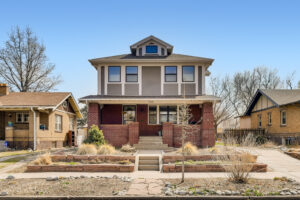
A 2.5 story house with 1 story neighbors
Imagine this photo From 5280.com with ANOTHER STORY for nonprofits (A new pop top in Denver's University neighborhood, by Ascent Contracting, architect John Collins, and Studio 8.18 Engineering. Photo by Virtuance)

The HOME Act is “zoning by owner rather than by land use,” as Deputy City Manager Ben Goldstein points out in the February 26 Legislative Committee meeting. That means that investors or regular residents will not be allowed to compete with nonprofits in height.

Nonprofits add to housing by providing taxpayer-subsidized units. Subsidies create the need for more subsidies. Giving preferential treatment to nonprofits further incentivizes more subsidized nonprofits to form, which is likely to exponentially increase the number of taxpayer-subsidized housing units in Lakewood. As Councilor Dave Rein said, just about anyone can set up a nonprofit in five minutes.

Backstopping Minimum Lot Size

The second bill, HB26-1114, would eliminate minimum lot sizes for single family housing. Lakewood’s new zoning decreases minimum lot size but does not eliminate it. So HB26-1114 is even more densification than Lakewood would allow under the new zoning.

If voters choose to keep Lakewood’s new zoning on April 7th, then HB26-1114 would not impact Lakewood. The bill only pertains to single-family housing and Lakewood has already eliminated single-family zoning. Lakewood claims they have not eliminated single-family but this legislative discussion proves that statement is wrong.  Although single-family is allowed, all property is now changed to multi-family use.

5. I keep hearing that the changes eliminate zoning for single-family homes. Is that true? That is not true. The city is not eliminating single-family zoning. It is creating new residential zone districts in which single-family housing is allowed. The proposed updates change nothing with your ability to live in your current single-family home, sell it, or pass it on. In fact, the city is working hard to protect Lakewood neighborhoods from potential impacts from new state laws. Proposed updates to the zoning code that are before City Council will reduce the allowed building size of homes and, therefore, the number of people living in residential neighborhoods. They will ensure new development is consistent in scale to the surrounding homes.
From https://www.lakewoodtogether.org/zoning-updates-faq

If the new zoning is repealed with a Yes Vote in the April 7th election, minimum lot sizes would still go away  if HB26-1114 passes. 

That suggests that Lakewood Councilors have a backstop in place to override the will of Lakewood voters. Regardless of the special election outcome, Lakewood may densify by decreasing lot size.

Undermining The Will of the People

The new zoning has not yet been implemented and already Council promises such as height restrictions and lot size are being undermined by supporting conflicting legislation.

Lakewood’s support for both these bills show that no matter the election result on April 7th, Lakewood representatives will continue to push a densification agenda with the support of big-money backers. The discussion further showed that Lakewood City Council will not fight for local control on behalf of their local residents.

Scroll to top