
Resident generated news about Lakewood, Colorado
Resident generated news about Lakewood, Colorado
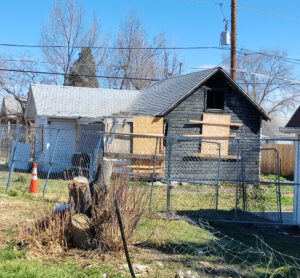
Inability to Rebuild Single-Family Home Shows Lakewood Prioritizes Density Over All
When a Lakewood resident bought a burned-out single-family house to rehabilitate it, he had no idea Lakewood would say no. The house had been vacant and neglected, allowing homeless to move in and cause a fire. The result is an unusable, dangerous eyesore. But those considerations were not as important to Lakewood as changing the property to high-density.
The new owner thought he would do the neighborhood a favor and fix it up. He had no desire to build high-density and no reason to think he could not replace one single-family home with another.
Unfortunately for him, Lakewood has been eliminating single-family zoning for years. During the 2012 rezone, many properties were changed from single-family to multi-use without notifying residents. Although multi-use sounds all encompassing, Lakewood does not permit single-family use here. So when this single-family house burned-out, and the original owner was unable to repair it quickly, Lakewood planners told the new owner he could not fix the house.
This owner has neither the desire nor the money to build high-density. The property remains a dangerous eyesore to this day.
Density Requirements Triple
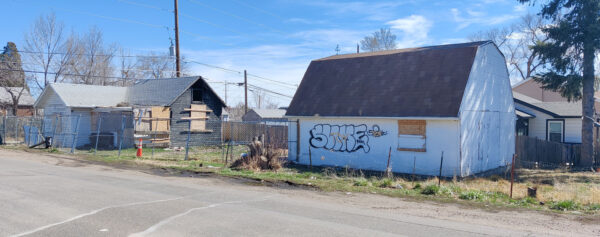
Lakewood Planners told the owner that a minimum of four housing units would need to be built on the 0.148 acre lot to replace a 614 sq ft single-family house.
Under the new zoning, that number has changed to twelve housing units.
Forcibly tearing down old homes and replacing them with multi-family units is exactly what Lakewood residents do not want for their neighborhood.
The change in density means the property will now cost too much to develop. For example, the new water taps will cost about $100,000 more whereas the exiting tap for a single-family home would not cost anything.
Correction 3/22/26: Density requirements have not changed. It remains at 4 units. The water tap example above would cost an estimated additional $36,000.
Invisible Zoning Changes
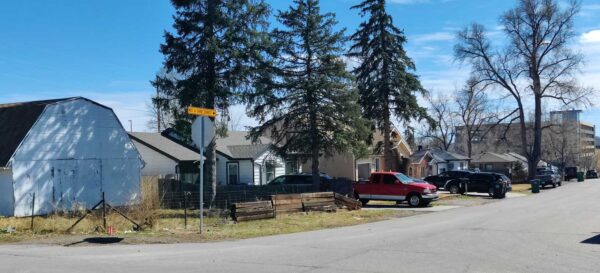
There is no visible indication that this house could not remain a single-family house.
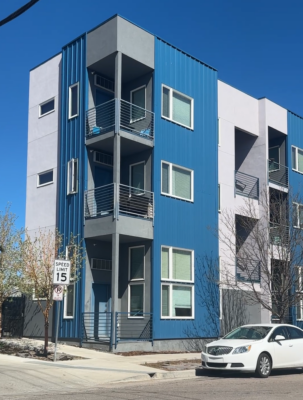
Many single-family homes currently exist on the block near Sheridan. There are old-style, low-form, multi-family units across the street and high-density multi-family on the corner. There would be no reason to think that if you bought the property, you could not rebuild the existing single-family home.
Only a deep dive with specialized knowledge would educate a potential buyer that Lakewood would no longer allow single-family housing on this property. Zoning maps will show that the property is in a multi-use zoning district. Further reading is required to find out multi-use does not include single-family.
The existing single-family homes were allowed to stand during previous zoning changes without specific notice to owners. However, because Lakewood changed the zoning code to disallow single-family, these properties became “non-conforming.” This is similar to being grandfathered in. Therefore, if anything happens to the home, like a fire or significant new construction, Lakewood will not allow a permit.
While Lakewood argues their new zoning is good for property rights, owners do not have the right to single-family, only the right to develop more housing.
Although the Director could use his discretion to allow rebuilding this house, Lakewood did not suggest it in this case.
What You See Is Not What You Get
Current owners and future buyers often do not know about the underlying zoning that makes a property non-conforming. It is an invisible problem that is only revealed during disasters like fire.
Under the new zoning, currently being voted for a citizen repeal on April 7th, some single-family homes will be non-conforming because they are bigger than the current maximum size allowed. Insurance will only cover current zoning standards, and some homes will not be able to be fully insured or rebuilt to the size it is today.
A man-made disaster that may trigger similar results is neglect or abuse. Long-term neighborhoods will often have at least one dilapidated home. Rat houses and hoarding were such a cause for concern that Lakewood strengthened code enforcement provisions a few years ago because homes are in such bad shape that agents sometimes need access through the roof. Now those dilapidated houses that are not economically viable can be torn down and replaced with multi-family units.
Home purchases in Lakewood could become risky ventures because what you see is not what you get.
History of Zoning Problems
Lakewood has been criticized since the 2012 blanket rezoning that caused the rise of soviet-style block apartments. Instead of winding back and removing the provisions that caused so much dissatisfaction, Lakewood doubled-down on high-density in 2025.
The owner is trying to maintain the single-family character of this block that makes it affordable. He is committed to rehabilitating the property. What’s more, he only has the budget for a single-family home. But Lakewood will not permit the building.
So, in trying to increase housing units and make them more affordable, Lakewood sometimes causes the exact opposite to happen, leaving a neighborhood to suffer from neglect.
Trust Issue
Residents are being asked to trust Lakewood to safeguard their property investment with the new zoning but stories like this show that residents have been burned by past zoning decisions.
The 2012 rezone was supposed to bring more affordable housing, but it didn’t.
Zoning is supposed to maintain neighborhood character, but it doesn’t.
Zoning sometimes makes whole classes of property unknowingly non-conforming.
And who knew that there was a specific zoning clause that seems to be Lakewood taking advantage of a disaster like a fire.
Lakewood prioritizes density to the point that city planners will not use a discretionary waiver to release an owner from contentious zoning, not even to allow a dangerous eyesore to be rebuilt to match its existing single-family neighbors. This raises concerns that planners are acting out an agenda, rather than acting in the best interests of the neighborhood.
There is no guarantee that what residents expect from zoning is what will be delivered. The neighborhood at Sheridan and 13th shows once again that residents and city leaders disagree about what constitutes public safety, neighborhood character, and property rights.