Lakewood Informer

Resident generated news about Lakewood, Colorado

Lakewood Informer

Resident generated news about Lakewood, Colorado

Entrenched Bureaucracy

Referendum Petitions Continue Despite Hurdles

There are several updates to the zoning referendum, including sufficiency, new legal challenges and the city staff writing new campaign finance law.

Zoning petition #3 has passed the count for initial sufficiency. Petition #3 was to repeal Ordinance O-2025-29, replacing Article 3 of the zoning code concerning a lot of single-family zoning provisions. Petition #3 will join 1 and 2 in waiting for final approval before going to City Council.

Zoning Petition #4 has been submitted to Lakewood. That completes the signature gathering process to repeal all parts of the newly passed zoning code.

There are rumors that all petition signatures have been challenged and will require a new hearing and costly legal defense. Details pending.

Campaign Finance Challenge

Jeffco Schools Wants a Mill Levy Increase

Recent meetings from the Jeffco School Board Partnership for Fiscal Sustainability discussed raising the mill levy and how to market that decision to residents. This demonstrates yet another government body shaping propaganda to support a future ballot measure. Jeffco Schools, like Lakewood and Jefferson County, hired a consultant to help with a mill levy question. At this point, a community survey has asked about revenue generation. Budget presentations show data about raising the levy. Budget reductions are discussed as a part of the solution.

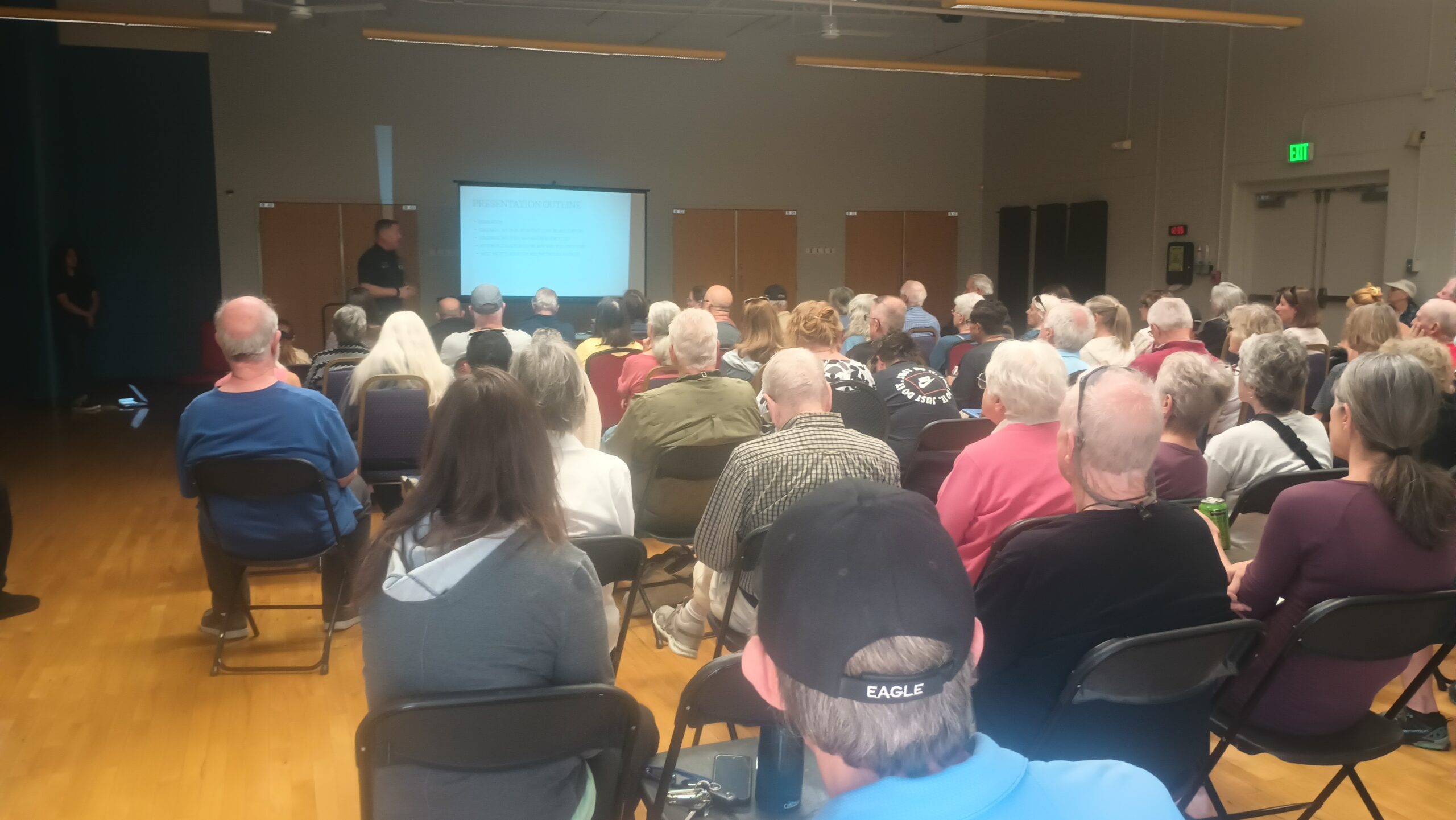
The point of these meetings was to “prepare and involve the community to support future revenue generation,” as seen in the slide below. This is using district resources to get resident support in what will likely be a ballot question on the mill levy. School communications are also a tool to discuss any upcoming cuts or revenue changes.

Emory Sold Amidst School Board Misinformation

Jeffco Schools unanimously voted to sell Emory with barely a stall in the consent agenda on November 13, 2025. Statements made at that time and also at the November 5 study session indicate that Jeffco School Board and staff were heavily influenced by one-sided propaganda. No other ideas were considered and the propaganda was passed along without fully informing the public.

Emory Questions Left Unanswered

The October 27, 2025 City Council meeting demonstrated how determined Council is to approve the Emory sale and Action Center purchase. That date was the first opportunity to approve the multiple transaction after the new zoning was passed – zoning which was required for the new operations. Despite having an injunction in place to stall the vote, Council did everything possible except the actual vote itself. They claimed everything was known, disclosed and proper. They laughed and smiled as if the injunction was a joke. However, despite their claims, below is a list of over 70 lingering questions.

The votes on Emory have been delayed from October 27 to October 29 and now until November 3 while Council desperately tries to vote as soon as possible even while the case is in court and under injunction. The difficulty lies in how to restore trust and enable a public process to answer questions that have been handled behind the scenes for two years.

Lakewood Loses Appeal in Body Cam Case

Lakewood spent two years fighting against releasing body cam footage in a fatal shooting case but has now lost in the Court of Appeals. The issue was first raised by then-City Councilor Anita Springsteen. The original story can be found at Fox31: 17-year-old’s killing by police raises questions for councilor. After turning down multiple requests for the video release, Scripps News filed a lawsuit, naming Springsteen as the requesting official. Lakewood lost in lower court, then appealed and has now lost the appeal. The ruling was made July 10. The footage has not yet been released. By Jeffrey A. Roberts, Executive Director, Colorado Freedom of Information Coalition Appeals court: Children’s Code does not bar public disclosure of blurred body-cam footage showing Lakewood officers killing 17-year-old robbery suspect Colorado’s Children’s Code does not prohibit the public disclosure of blurred body-worn camera footage of Lakewood police shooting and killing a 17-year-old robbery suspect in 2023, the Colorado Court of Appeals ruled Thursday. Affirming a district court decision, a three-judge appellate panel rejected the city of Lakewood’s argument that the statute which protects the confidentiality of juvenile records trumps the footage-release provisions in the 2020 Law Enforcement Integrity Act. The statute, the judges concluded, “unambiguously required the court to release” the video. The body camera footage is not a “juvenile record” under the Children’s Code, the opinion says. Rather, “it is a conduit through which information from a juvenile record might be disclosed absent blurring of the video. And even in that circumstance — where the BWC footage might reveal a juvenile record — the statute does not bar release of the footage. The court must still release the footage, but it must blur the video to account for the juvenile’s privacy interest.” The case concerns the shooting of Mariana Martinez by Lakewood police on March 27, 2023. According to a news story, the department initially said Martinez fired at officers but clarified the next day that she pointed a gun at them. First Judicial District Attorney Alexis King found that the officers’ use of deadly force against Martinez “was legally justified to defend themselves and others from the threat posed by Miss Martinez.” Read the full article at CFOIC…

Residents Accused of Spreading “Misinformation”

Word games and a lack of trust have led city staff to accuse residents of “misinformation.” This time, the issue involves the plans to eliminate or reduce physical printed editions of the Lakewood newspaper, Looking@Lakewood. The plans for this switch are still being formed and testing is currently underway — starting with the July edition, which is digital only. Although Lakewood says this is only a test, the city will only commit to one future, printed edition, which substantiates concerns for a permanent elimination. Full elimination may only be conjecture, but according to a response from Lakewood, some city staff believes that mistake is purposeful “misinformation.” This situation is a good example of the word games Lakewood plays and demonstrates the reason that residents continually struggle to make sense of changing policy. The May edition of Looking@Lakewood (below) announced that the July edition would be digital only. When asked about future plans for printed editions, the city responded that the October election edition will be printed and distributed to everyone. This edition is important not only to voters, but to the City Council members campaigning. However, the city response shows no commitment to future printed editions. Rather, they reiterate the cost and sustainability issues the city is concerned about. As the response shows, not even Lakewood can say that printed editions will stay; they can only say they “understand that some residents prefer” a physical copy. They have also said there is no CURRENT plan to FULLY stop mailing. Both of those statements are political word games that make no commitments. Given that evidence, it is easy to see why some residents may mistakenly believe Lakewood has already decided to stop printing completely. Sharing that belief is not “misinformation” but rather “speculation” or, at worst, an honest error. It may also be based on actual experience dealing with Lakewood because historically, the first step Lakewood takes when making a change has been to form a tentative plan, then take a resident survey, and very often to then proceed with the original plan. As long as a printed version is possible in the future, the city can rightly say “Any information you’ve seen or shared that Looking@Lakewood is going completely digital and won’t be mailed ever again is misinformation,” (bold added). Meanwhile, if you are interested in receiving news from the city, you should sign up for the electronic version because, for good or bad, you may not receive a printed version. Resident input is still being taken through the signup below.

Sacrificing Neighborhoods Allows Homeless Funding

Why the big rush to change the zoning code? Follow the money. The money trail leads to state grant funding, which primarily supports homeless and sustainability initiatives. Without that agenda, Lakewood could decide for itself which, if any, of the state initiatives make sense locally. Colorado has decided to override local zoning in a power grab against local home rule. Other cities are fighting back against Colorado with legal cases. But Lakewood will not fight for home rule. They are not only implementing the state law but going further in densification, all while citing the need to comply with state law Lakewood receives millions of dollars in state grants for initiatives like sustainability and the new navigation center. The purchase and renovation of the old Harley Davidson building was done using state grants. To continue funding sustainability and homeless initiatives, Lakewood must either fund it internally (a political impossibility) or comply with state zoning codes. And if the state zoning codes are not what Lakewood residents had in mind when they discussed “affordable housing” solutions, that’s a sacrifice Lakewood is willing to make on your behalf. Note: For the purposes of this article, “Lakewood” means the majority opinion of city officials. It is hard to tell who is speaking in public workshops, there is a lot of backroom personal communications, as well as conflicting explanations given in ward meetings. To establish personal beliefs, please contact your city official with detailed questions that are beyond the scope of this article. Lakewood’s proposed zoning code sacrifices existing neighborhood stability in the hopes of creating affordable housing. Occupancy limits everywhere are eliminated so there can be 20, unrelated, non-owner residents in a house. The house nextdoor may be torn down and replaced with a duplex or a cottage court*. Small retail is now allowed, mixing business with residential. Every property in Lakewood is now a transition zone. *Cottage Court: According to a 2022 report from AARP, cottage courts are defined as a small collection of bungalow-style homes that are “typically 1 to 1½ stories tall and are oriented around a courtyard that serves as an outdoor community space in lieu of rear yards.” – HousingWIre There is no guarantee that any of these changes will achieve their desired goals. Studies abound on both sides. However, Lakewood has already been promised affordable housing since the 2012 zoning rewrite that spawned the term “Soviet-style apartment blocks” with zero new “affordable” units created. Is there any reason to think this big change will be different? Lakewood’s proposed zoning code is not ready for first reading yet, so residents don’t know all the details. The latest redline is from May 19. However, residents do know that know matter what is in there, it is good and necessary because City Council passed a resolution saying so in December of 2024. Lakewood’s navigation center is a contentious issue that hinged largely on the ability to get “free money” from the state. Many homeless and sustainability measures that were supported by the state did not go through a full public policy debate because that wasn’t necessary if Lakewood wasn’t spending its own money. Now that decision is coming back to haunt Lakewood residents, who will be paying for that money by sacrificing their neighborhood stability.

The Comprehensive Plan Bait and Switch

Comprehensive plans are easily readable documents that explain a vision for the future of the city in a moment of time. It speaks in plain English to what the zoning code describes in technical detail. The problem is that the zoning code details are what carry the force of law and because technical details are harder to read, it is easy for residents to overlook inconsistencies in proposed zoning compared to plans. This is otherwise known as a bait and switch. For instance, in the comprehensive plan, Lakewood promises to maintain neighborhood character; while in the zoning code, Lakewood implements high-density urbanization which resulted in the destruction of Belmar Park-adjacent property. Pieces of Lakewood’s Comprehensive Plan were used as evidence to fight against the Belmar Park development. Lakewood officials discounted all such arguments. Now that residents have caught on to the inconsistencies, Lakewood staff argues against using the Comprehensive Plan to guide zoning. Instead, Lakewood proposes changing the ordinance so that the zoning code is no longer tied to the comprehensive plan. With this change, residents could not form legal challenges based on compliance with the comprehensive plan and there is less room to fight against maximum buildout in adjacent properties. Do Residents Need a “Vision” Document Why have a comprehensive plan at all? This is a long-term plan that locks in the vision for this moment in time. It includes aspirational goals with no implementation details. Therefore, the details are filled in by staff using their discretion to interpret the zoning code. Technically, one government cannot bind future governments to its decisions. If tomorrow’s City Council wanted to change the vision of Lakewood, it could choose to do so. However, having a long-range plan laid down by yesterday’s Council is a roadblock that is not easily overcome. Residents would better understand the zoning code if each change had to be justified with open debate. Instead, as is currently occurring, the entire zoning code can be changed by saying the code matches the ambiguous goals of the comprehensive plan. For example, the as-yet unapproved Comprehensive Plan seeks affordable housing. Therefore, City Council reasons that ANY CHANGE to the zoning code will be acceptable as long as affordable housing is the intent, not necessarily the outcome. There is no need for an updated 100-page vision plan document to update 300 pages of zoning code. Why not just introduce one little change at a time that is easily understood by the residents, and easily tested for effectiveness? The proposed zoning changes are still being discussed and changed. City Council have taken months to understand these detailed changes. Residents will have a couple weeks. However, residents did spend months providing input into the comprehensive plan, that will no longer have much meaning. The Proposed Change Lakewood intends to remove the binding zoning code connection to the Comprehensive Plan. As first noted by savebelmarpark.com: Lakewood zoning code currently states that the Comprehensive Plan is the foundation for the Zoning Ordinance. However, the proposed redline removes the “consistency with the goals and policies of the Comprehensive Plan”. When the new zoning passes, all the aspirational goals laid out in the plan can be disregarded at will. Which really is no different than today, as shown by the Belmar Park debate except that today such a decision could be legally challenged and tomorrow it can’t. This specific change to the zoning code was not discussed at any public meeting. Comprehensive Plan Goals Not Followed The Comprehensive Plan states (pg 4-10): “Through the site plan review process and design guidelines, ensure that new multifamily, mixed use, and commercial developments adjacent to single-family neighborhoods are compatible by incorporating appropriate design, scale, height transition, and connectivity to seamlessly integrate with the neighborhood.” Residents compiled argument after argument to show that 777 S Yarrow St does not integrate with the neighborhood and does not meet environmental goals from the plan. Residents can clearly see that the Comprehensive Plan promises integration with the neighborhood. Residents can also clearly see that is not what staff implemented be allowing trees cut down to develop to the lot line near Belmar Park and new high-density apartments that don’t match the nearby buildings. . 15-minute Cities In other communities, residents are also waking up to this bait and switch. An opinion piece in the Boulder Daily Camera highlights this problem by examining Boulder’s 15-minute cities. This is particularly relevant since Lakewood leadership constantly mentions their desire for 15-minute city amenities. The proposed zoning code allows retail in residential zones for 15-minute planning.   Steve Pomerance, in the Boulder Daily Camera, addresses this issue: “The underlying problem with this whole conceptual framework is the self-contradictory assumption that we can have commercial centers in neighborhoods that provide an adequate variety of goods, services and transit, all within 15 minutes of where people live, but still keep our relatively low-density neighborhoods intact. This is simply not supported by the economics or the geography.” – Steve Pomerance Read the rest of that article to understand the same sense of contrasting values Lakewood is “selling” to residents. The new development at The Bend is promising 15-minute city amenities. “Selling” is the appropriate term used here because the zoning was contracted before the comprehensive plan was finalized. In another eerie coincidence with Boulder, Pomerance wrote, “It’s as if those who wrote these objectives had already decided that the results of the cost/benefit study would support implementing this concept, and thus support the massive densification required to create such neighborhoods. Community Input Into Zoning Up to this point, residents have had no input. It was not a resident-driven development.   Lakewood’s Chief of Sustainability and Community Development, Travis Parker, has been attending ward meetings to educate and also to promote the good points of the new zoning code — as if there are no other options. No one has addressed the dissatisfaction with the current densification in Lakewood. Does a desire for affordable housing mean automatic agreement to sacrifice current neighborhoods? More

Lakewood Does Provide Sanctuary

Lakewood has reason to be concerned about being placed on the Department of Homeland Security (DHS) list of sanctuary cities. Email records show they do not comply with federal immigration law, nor do they plan to. Sanctuary was not granted through official vote of City Council; however, sanctuary from federal immigration law was undertaken behind the scenes while using word games to muddy the issue. From the emails, it appears that some Lakewood City Council Members do not appear to know the full extent of Lakewood’s defiance of federal law. On the other hand, DHS knows more than is publicly apparent – which makes sense because they are the ones that have been stonewalled for years. So although Lakewood does not pay for migrant support, it is clear that there is good reason for Lakewood to be placed on a sanctuary list, no matter the word games Lakewood plays. Lakewood City Council has repeatedly denied being a sanctuary city – which is true if defined by formal vote. However, it is not true that Lakewood does not provide sanctuary for illegals. Lakewood DOES provide sanctuary by not verifying immigration status or cooperating with DHS. In the beginning of the sanctuary city debate, the general public understood that a sanctuary city was just that – a safe place where your immigration status wouldn’t be questioned or held against you. Lakewood never made a public motion or official policy stating that they are a sanctuary city but it is apparent that they fully embrace and enable the state’s sanctuary status rather than federal immigration enforcement. No emails asking for removal When Lakewood was placed on the sanctuary city list, Lakewood did not issue a denial. There are no emails to DHS asking to be removed. That would be the first, honest, response from a city that was NOT acting as a sanctuary and was complying with federal immigration law. That’s what Aurora did. There is no email evidence that occurred in Lakewood. There are no emails asking why Lakewood is on the list. This is despite the fact that there is email from Senator Bennet’s office showing that jurisdictions with questions should reach out via email to SanctuaryJurisdictions@hq.dhs.gov. The official response to City Council was a bland email stating that Lakewood staff didn’t know why they were on the list or that they were concerned. Again, parsing the words carefully, staff “didn’t know why they were on the list” is different than “we have no idea why we are on the list.” Lakewood management may not have known the exact reason DHS was citing, but Lakewood would have known what internal procedural changes have been made over the years. Or perhaps Lakewood assumed they wouldn’t be singled out from other cities in Colorado who may have adopted similar, pro-sanctuary polices. Probably, they could rely on not having an official vote cast for sanctuary, which appears to be the case for some Councilors. Someone must have known there is a reason to be concerned, or they would have asked questions openly and honestly. Instead, Lakewood proceeded by investigating “delicately” (see email below). Lakewood declined to comment to the Denver Gazette and Denver 7 inquiries. A quick Google search could find no comment in any press coverage on the subject although Mayor Strom did reply to an msn.com inquiry. Official Response to City Council Don’t Draw Attention to Sanctuary Policies Nowhere anywhere did our investigation turn up evidence that Lakewood cooperates with DHS and ICE on immigration matters. There was never a suggestion that the situation was a misunderstanding. There was no proof emailed to DHS that Lakewood is indeed cooperating with federal immigration. There was one email showing that a Lakewood employee signed up for e-verify for the first time on Monday, June 2, in what may be a coincidence or a panicked response. In this case, Lakewood appears to have taken the approach that the less said the better because Lakewood cooperates with state law. Colorado sanctuary law is obviously intended to conflict with federal law. Lakewood’s cooperation with the state may be seen in multiple subversive actions, rather than one blanket vote by city council for “sanctuary”. And in fact, Ben Goldstein wrote: “Overall, I think the best strategy is to keep our heads down on this one, but perhaps the cat is out of the bag now” (see below). Lakewood Does Not Cooperate With Federal Immigration Proof that Lakewood provides sanctuary by not cooperating with DHS is shown in several ways besides being unable to deny the charge: There are also a couple things conspicuously missing: Complying with Colorado Law Over Federal Law As one example of City Council opinions, Councilor Jacob LaBure believes being placed on the sanctuary city list is “baseless” (see email below). LaBure’s response is the strong denial of an innocent man – which stands in stark contrast to the “keep your head down approach” from Lakewood management. However, strong beliefs or rewriting definitions of sanctuary does not change Lakewood’s support of migrant polices in 2024 or Lakewood’s vote to help Denver with its influx of migrants or Lakewood’s policy to lessen migrants deportation fears. As previously reported, such support is the original definition of a sanctuary city. In 2024 Lakewood Informer filed CORAs regarding immigration policy and did not receive any answers as to enforcement actions. The responding supervisor said the public information officer would be reaching out – an action that didn’t happen. Verbal responses in public meetings align with Jeffco’s response. They say that checking immigration status, which used to be a routine practice, was not the job of local jurisdictions. There is no federal law that says a home rule police department must check immigration status. This was just a matter of routine, like checking to see if you had an out-of-state drivers license. Lakewood no longer regularly does these routine checks. No Use of DHS Database Colorado law requires Lakewood to NOT share personally identifiable information with DHS non-public databases.

Zoned Out: How Lakewood is Selling Out its Neighborhoods

By Karen Gordey You’d be forgiven if you missed it — after all, the City didn’t exactly roll out the red carpet for public input — but Lakewood is in the middle of completely rewriting its zoning code. And on May 21st, the Planning Commission passed 16 amendments in one night. Sixteen. Because who doesn’t want to restructure the entire city with the speed and clarity of a late-night city hall cram session? Here’s the kicker: Lakewood is a home rule city, meaning we have the power to make our own land use decisions. But instead of using that power to protect neighborhoods or push back on one-size-fits-all state mandates, the City Council passed a resolution last year (Resolution 2024-62) that basically says, “Tell us what you want, Colorado — we’ll make it happen.” Meanwhile, six other cities are suing the state to protect their local control. Lakewood? We’re sending engraved invitations to the bulldozers. If you’re not paying attention yet, you should be. Because staff expects these changes to take effect in September and if residents don’t start showing up and speaking up, we’ll be stuck with zoning we didn’t ask for, can’t undo, and won’t recognize. “Home Rule vs Statutory Rule” Before we go any further, it is important to understand the difference between statutory rule and home rule.  So that there is no confusion, I went to the Colorado Municipal League’s website (www.cml.org).  The following is their explanation of the two:  “Colorado cities and towns operate under provisions of Colorado state statutes (and are referred to as “statutory” cities and towns) unless voters adopt a municipal charter to become a “home rule” city or town. Home rule is based on the theory that the citizens of a municipality should have the right to decide how their local government is to be organized and how their local problems should be solved. Municipal home rule derives its authority directly from the Colorado Constitution. It affords residents of cities and towns that adopt a local charter freedom from the need for state-enabling legislation and protection from state interference in “both local and municipal matters.”  The Lakewood City Charter was established on November 1, 1983.  While it has been modified by the voters 5 times (the latest on November 2, 2004, we are still a home rule city.  Lakewood City Charter and Lakewood Together Page 27 of the City Charter talks about planning and zoning.  According to the charter, the city council could have established Ward Advisory Committees to try to corral all these changes but instead are using Lakewood Together for community input.  In fact, I attended the Ward 5 meeting on June 14th and Councilman LaBure said that he tried to create committees last year and did not have support for this.  Let’s take a look at the Lakewood Together site.  On the front page of the zoning updates section (Lakewood Together Zoning Updates), it clearly references the state law requirements and again we are a home rule city so we are allowed to do what is best for our community. This will be important to remember when I talk about the 16 amendments. The 2024 City Council Resolution: Pre-Commitment to State Zoning Goals The City Council passed a resolution Resolution 2024-62 that sounds harmless — values like affordability, walkability, and sustainability — but when you read the details, it’s a blueprint for surrendering home rule. The resolution adopts state-level zoning goals before zoning code revisions or public feedback were complete. That includes: Bottom line: Lakewood didn’t just “revise” its zoning goals; it absorbed the state’s playbook wholesale.  This was covered briefly by the Lakewood Informer: Jedi Mind Tricks – The New Zoning Code WILL BE Good Why Didn’t Lakewood Join the Lawsuit with Other Home Rule Cities?  Good question! Recently, six Colorado cities banded together to sue the state over its new zoning mandates — arguing that the laws violate their constitutional rights as home rule municipalities. (6 Front Range cities sue over housing laws, governor’s threat to withhold state funds) Lakewood? We sat that one out. At the Ward 5 meeting on Saturday, June 14th, I asked our Councilors a simple question: Was our absence because of Resolution 2024-62, which essentially pre-commits Lakewood to implementing state zoning goals? And if the lawsuit is successful, meaning those cities win back their rights to local control, won’t we be stuck with sweeping zoning changes we didn’t have to make? Councilman LaBure responded: “We are a home ruled city but we are also a state entity. The state passes things all the time that encroach on local control. The argument has been historically well zoning and parking issues and all those things are matters of local concern and not the state concern. And Judiciary had tended to draw a line there. However, the state has increasingly been making the argument that there is a housing crisis statewide so we need more and more control over local zoning issues because it is actually a matter of state concern. I would have been happy to have jumped on that lawsuit however, other cities already did it and we are part of the Colorado Municipal League (CML). And CML has supported that lawsuit and in that sense we are member and if not the largest so in some sense we are part of that because of our CML affiliation. And it is a fair question to ask about if the lawsuit is successful, then we would be stuck with zoning changes that were not needed.” Translation: we could have stood up for home rule; but we’ll just let other cities take the heat and hope our dues to the Colorado Municipal League somehow cover us by association. Councilor Nystrom added that she did ask the City Attorney the same question but didn’t get a clear answer. She also pointed out that HOAs aren’t safe from this zoning overhaul either. While HOA covenants are seen as contracts between homeowners and their associations, local

Scroll to top