
Resident generated news about Lakewood, Colorado
Resident generated news about Lakewood, Colorado
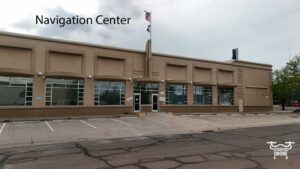
Lakewood Made 30-Year Commitment on Navigation Center
Lakewood purchased 8000 W Colfax Avenue to use as an emergency shelter and Navigation Center using a grant from the state to fund the property purchase and renovation. As a condition to getting the grant, Lakewood committed the property to shelter use for 30 years. No public discussion about this condition occurred when City Council authorized the purchase. At an annual operating cost of $3,000,000, that’s a $90,000,000 commitment that was not disclosed to the public. That makes the Center severely underfunded, with declining neighborhood support, and may be one reason for the proposed city sales tax hike.
Lakewood told residents about the 30-year commitment at a recent neighborhood meeting. The meeting was held to secure a special use permit to operate the shelter, a technicality that has been neglected for years. Officials are reportedly trying to persuade neighbors to support the permit by revealing that Lakewood already committed the property to a 30-year Use Covenant.
To summarize, for Lakewood to get a permit they should have gotten before, officials essentially told residents that now there was no choice because of a commitment Lakewood knew about in 2023 but the residents found out about in 2026.
This chain of events shows that Lakewood is willing to do things to support this Navigation Center that residents may not agree with. Investigations into the Use Covenant show that there additional hidden details in a private deed.
Lakewood is now saying they will operate this shelter one way or another. Officials are also asking for a sales tax hike to pay for homeless initiatives, such as shelter operations and new initiatives that are not yet fully functional. Withholding significant information such as a 30-year Use Covenant can be viewed as lying by omission and damages trust. Significant work may be needed for residents to trust Lakewood with increased sales tax funds for similar initiatives.
This article examines where Lakewood missed opportunities for transparency, including:
- Use Covenant provision in the grant
- Emergency declarations
- 2024 staff memo recommending purchase
- Purchase agreement
- Public deed
- Budgetary Impacts section
Use Covenant
A Use Covenant is a legal provision attached to the property to restrict the property to certain uses. Use Covenants should be recorded with the property deed and available for public review.
The Colorado Division of Housing (DOH) demanded Lakewood sign and record a Use Covenant by 9/24/2024 as a condition to receive the $9.5 million grant. The Use Covenant required that 8000 W Colfax only be used for housing or shelter, including a day shelter, for at least 30 years.
Why agree to a covenant? Use Covenants lock in future administrations despite other legal protections to ensure future governments can make their own decisions.
Sloppy Paperwork Masks Transparency
City Manager Kathy Hodgson did not sign the agreement until January 2025. That is four months after Lakewood bought the property with grant funds.
After it was signed, and before funds were distributed, the Use Covenant should have been recorded with Jefferson County. As of May 13, 2026, there is still no public recording of the Use Covenant on file. Per the grant, Lakewood was responsible for recording the covenant with Jefferson County. Restricted Use Covenants are generally a matter of public interest so that any interested party in the future will know that it can only be used for certain things.
Colorado DOH did not get proof of the recording prior to dispersing funds. Per the contract, Colorado could have withheld payments until they had such proof. They did not. All of these actions would have increased transparency and accountability.
Shelter Permit
Neighbors have seen crime go up and safety go down since Lakewood starting using 8000 W Colfax Ave. These facts are grounds to deny a special use permit, because the shelter will “substantially impair the appropriate use or development of adjacent property”.
Despite having grounds to disapprove, residents worry that Lakewood will rubber stamp the special use permit because the property is already in use and funds were spent. By going around the normal permit process, Lakewood and Colorado bypassed procedural safeguards.
Redefining “shelter”
Lakewood is now saying a special use permit is only needed for an overnight shelter. This stipulation is not found in current zoning and constitutes a redefinition by city staff so that Lakewood can operate the shelter, that includes 100 beds for unhoused individuals.
Making new definitions for the zoning code typically requires a vote of City Council.
Even if city staff was legally able to redefine “shelter” to mean “overnight shelter”, the grant stipulates the money was for an emergency shelter or day shelter. The Use Covenant also seems to be tied to using the beds in the shelter.
By any definition, to meet the grant conditions, 8000 W Colfax Ave seems to require a special use permit to operate.
“Subject to Terms and Contingencies”
According to the staff memo, dated June 14, 2024, the Navigation Center was ready to purchase. City funds, including those gained through the grant, had previously been approved in the budget. All that was needed was a vote by City Council to approve the purchase. Lakewood can claim that the vague words that are highlighted in the summary statement below, gave proper public notice that a Use Covenant was included:
After this statement, the staff memo continues with two pages regarding the housing crisis, the rising homeless population and the benefits that could be achieved with the grant money.
In contrast, there was not a single paragraph to describe the terms and contingencies.
At the time of purchase, contingencies that were discussed included receiving money from the federal government or partner matches. Or removing the businesses leasing the property.
Only people reading the original state grant application would know the Use Covenant was a term of the purchase agreement.
Off-Record Title
The purchase agreement that Council voted on was a 21-page long public document.
The purchase agreement excerpt below shows typical, boring details. Realtors usually go over the important parts so clients can’t claim ignorance of what they are signing. Most people reading the page below would see nothing concerning. But see line 5 for “off record title deadline.” This sale included private terms that are off the record and tied to the property.
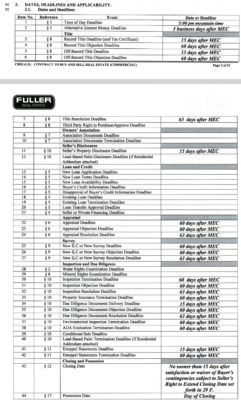
Other Terms?
Jefferson County Assessor shows a special warranty deed to record the 2024 sale. The only details on the special warranty deed were property boundaries and that Lakewood paid $10 in hand.
According to Jefferson County staff, the real record of all the terms, including the full purchase price, was recorded in a private trust deed.
The Assessors’ office says Lakewood would have to release that record on their own. It is not public and can only be voluntarily released through CORA. Lakewood did not provide the deed through CORA.
Trust deeds are typically used to keep certain transaction details private, such as private funders or private lease arrangements.
The existence of private arrangements was not publicly discussed but are of public interest. Lakewood residents will never know the full terms of purchase.
Foreclosure
Early termination of the Use Covenant can only be achieved through foreclosure of the property, which does not apply here since Lakewood bought the property without a mortgage.
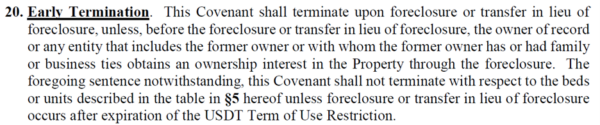
It is not necessary that Lakewood own and operate the shelter. It could be sold to someone interested in taking on the burden. Lakewood tried to get someone to do this when they hired the Volunteers of America (VOA). The VOA declined the opportunity to buy the property.
The VOA currently earns 15% “overhead” on top of the non-personnel and personnel costs.
No Detail in Budgetary Impacts
The other place Lakewood could have shown transparency was in the required “budgetary impact” section of the staff memo, quoted below. Again, Lakewood provided notice that future operations will cost money, but neglected to say how much or for how long.
“BUDGETARY IMPACTS: The acquisition is through grant funds and will not come from the City of Lakewood’s monetary resources. The City will incur future costs to support the operation of the navigation center. The City will utilize partnerships and other funding sources to share the costs of the navigation center.”
At the time of the grant, Lakewood committed to spending $1,066,953 over three years by matching staff funds. In the latest hearing for the special use permit, city staff revealed the annual operating costs was $3,000,000 – roughly three times as much as Lakewood initially committed to spending. Future grants and partnerships may cover some of these costs, but there has been not yet been a long-term commitment to that affect.
Local Government Budget Law
The Local Government Budget Law mandates that expenditures must be approved annually. This is protection for exactly this type of long-term agreement for future spending. There was no analysis of Local Government Budget Law implications.
Near-Unanimous Vote
Purchase of the Navigation Center was approved by nine Council Members: Strom, Mayott-Guerrero, Stewart, Rein, Shahrezaei, LaBure, Nystrom, Low, and Sinks. Councilor Isabel Cruz was absent. Only Council Member Rich Olver voted against, previously calling the Housing Plan a “poisoned pill”, because it contained provisions that did not have public support.
Loveland Closes with Similar Budget
In related news, the city of Loveland recently closed their Resource Center. Loveland, like Lakewood, started the Center with COVID pandemic funds but now can’t afford the high operations cost.
Sales Tax Hike
Unlike Loveland, Lakewood is not interested in cutting their losses. Penalties for not following the Use Covenant include paying back the money. Paying back $9.5 million would save $90 million over the next 30 years.
City Council is proposing a sales tax hike for the November ballot. Mayor Strom specifically mentioned the need for additional funds for homeless initiatives. She did not say whether they were new homeless initiatives or whether Lakewood needs funds for severely underbudgeted projects like the Navigation Center.