Lakewood Informer

Resident generated news about Lakewood, Colorado

Lakewood Informer

Resident generated news about Lakewood, Colorado

economic development

How the West Is Being Lost

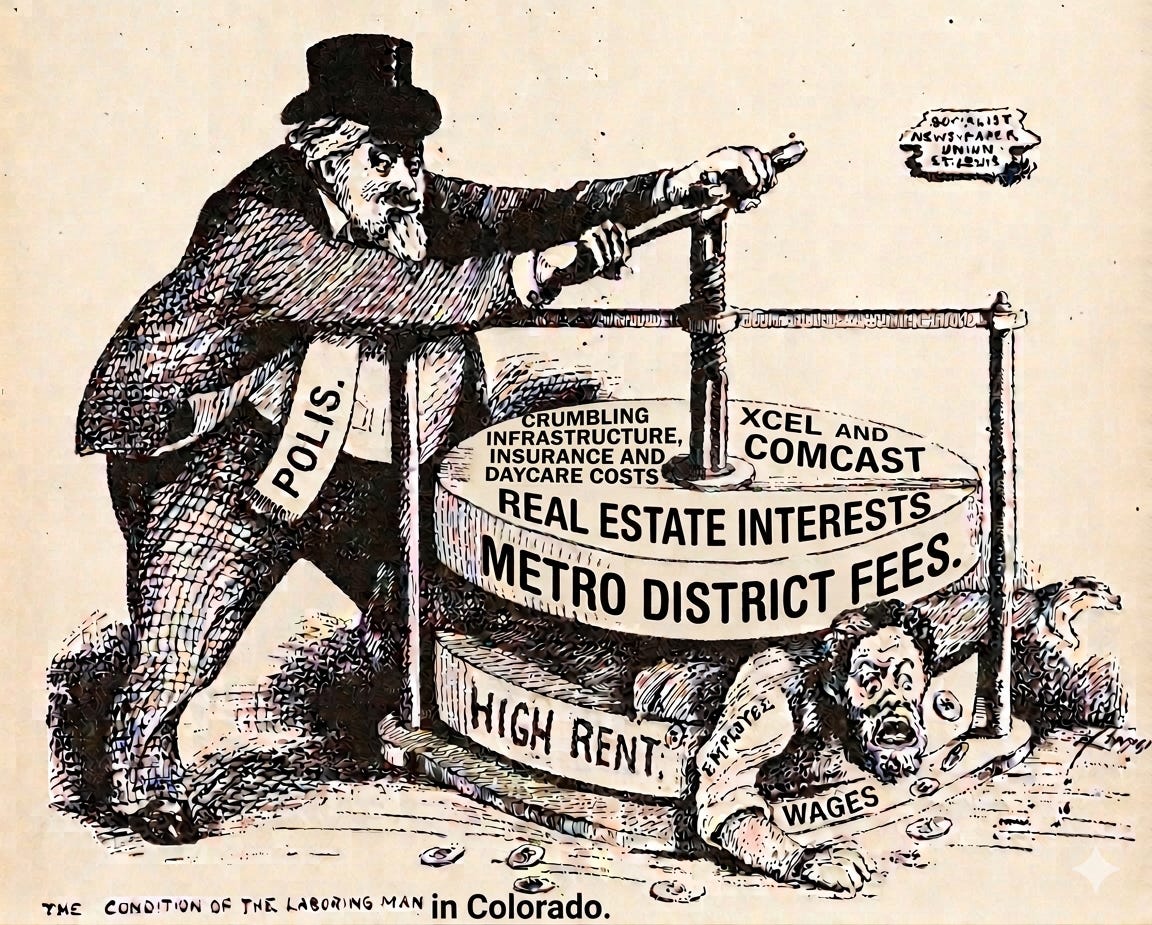
From Alex at Somebody Should Do Something A note: Originally, the article was published on YourHub at https://yourhub.denverpost.com/blog/2022/09/politics-and-development-in-colorado/296507/ We had hand delivered a copy of of it to Jared Polis, Brittany Pettersen, and Ed Perlmutter at some get-together the progressive thought leaders were having in Lakewood: The “representatives” immediately studied the input from the citizens, and drew up a comprehensive set of policies addressing the input. Just kidding. Polis has doubled down on squashing the local governments’ right to govern (as long as corporate-owned rentals continue to be built), in addition to driving the state to a billion-ish dollar budget shortfall this year, while trying to dog-whistle the public with a bridge to nowhere and that nobody had asked for. Pettersen has been shilling for the real estate industry and Mr. Perlmutter is off to… Not sure what – may or may not have something to do with lobbying. The irony of the latest spat of policies trying to squash the home rule rights of cities and towns around Colorado is that when we had reached out to the governors office in 2018 about the actions of the local governments that were destroying the economic potential of the Rooney Valley, we were told that the governor’s office “does not get involved in local land use decisions.’’ I guess, the times are a changing. On to the origional post. “Mortgage lenders are starting to look at the risks of lending for somewhere that doesn’t have a water supply, as that’s not a good investment. Capital markets are getting wise to this stuff. We are seeing the limits to growth and housing affordability and the impacts of poor-quality decision making of where and how to build. We are paying the price for all that now.” Read https://www.theguardian.com/us-news/2022/jul/20/us-fastest-growing-cities-risk-becoming-unlivable-climate-crisis Despite the “growth is good” mantra, we are faced with closing schools, massive fires within the city limits, rising crime, polluted air, lackluster public transit system, and a slew of other problems, such as the dying Colorado River. To see where we could be heading next, look at the work by a group of MIT scientists called “Limits to Growth.” Numerous city council members and other representatives in Colorado have continuously ignored the citizens’ pleas and suggestions when it comes to development. Instead they cater to the providers of the largest campaign donations, constantly using diversion tactics such as “affordable housing”. Yet, nobody has provided an explanation as to how the high-priced rentals, rising crime, more traffic, lack of true city planning and economic development, along with thousands of dollars (per unit, per year) in metro district fees, are affordable. Affordable housing and other political dog whistles have become doublespeak for privatizing the profits for those who donate the most to the “representatives”, while socializing the costs the citizens have to pay in the form of taxes, fees and their time to: Additionally, millions are spent on city and county unelected bureaucrats (think planning, zoning, legal, “economic development”, and the managers’ offices) who, instead of working for the citizens, spend their time pushing through projects which further contribute to the stress on the already-crumbling infrastructure, limited water resources and do not create localized, well-paying jobs. Perhaps, if the money was not wasted on those proactively working against the public, the public would be more open to lifting some of the TABOR limits to pay for things the public actually needs. In Lakewood and Jefferson County, such failures are unfolding in real time. The majority on the city council and others have ensured that Lakewood has made next to no progress in the areas of: They have corrupted the democratic process, pandering to the one-sided narrative, which is already resulting in financial and ecological impacts on the city and the county. A sea of houses with exorbitant metro district fees and high-density rentals is being built to bolster big money profits, instead of doing actual business development and city planning. Thousands have to drive across the Metro for better paying jobs, while the city has been proactively destroying a local business corridor and making excuses as to why barely any local high-tech/software jobs have been brought to the city in the last decade, especially when compared to other cities in Colorado. The dog whistle of “public transit” has not helped as RTD and Colorado are decades behind Boston and New York in public transit and additional decades behind most cities in Europe and other parts of the world. A trip on a well-planned and well-built-out public transit system should be financially and temporally better than using a car, which is not the case with RTD. We are also constantly reminded how growth is good for us and how we need to conserve water. What good is conservation if, instead of retaining the conserved amounts for real economic development and the day when there is a severe drought or to ensure healthy waterways, that water is, instead, used for more unbridled growth? https://www.nbcnews.com/politics/politics-news/feds-declare-first-colorado-river-shortage-order-water-cuts-2022-n1276934 https://phys.org/news/2022-06-colorado-river-reservoirs-western-states.html You may think that “your” candidate will fix it. There is no “your” candidate. There are those who take large campaign contributions, and a few people who will be pushed out in the next election if they dare to truly stand up for people’s interests. Have a look at who donates to whom; do not presume that those who talk about affordability, fiscal responsibility or climate change intend to address them. The public has already lost in a lot of areas, and what’s left is slipping away rapidly. The degrading quality of life in Colorado along with the ongoing collapse of the Colorado River Basin and Colorado forests is only the beginning. One can only hope that very soon the younger generations will realize what the politicians (and bureaucrats) of all stripes have done to them and will start holding them responsible. Perhaps, that’s what you can do – start campaigns to enact reforms to hold mayors, council people, city staff, and state legislators liable for blatant pandering to those who donate the most to their

2 + 2 = … Or doing math the developer boot-licker’s way

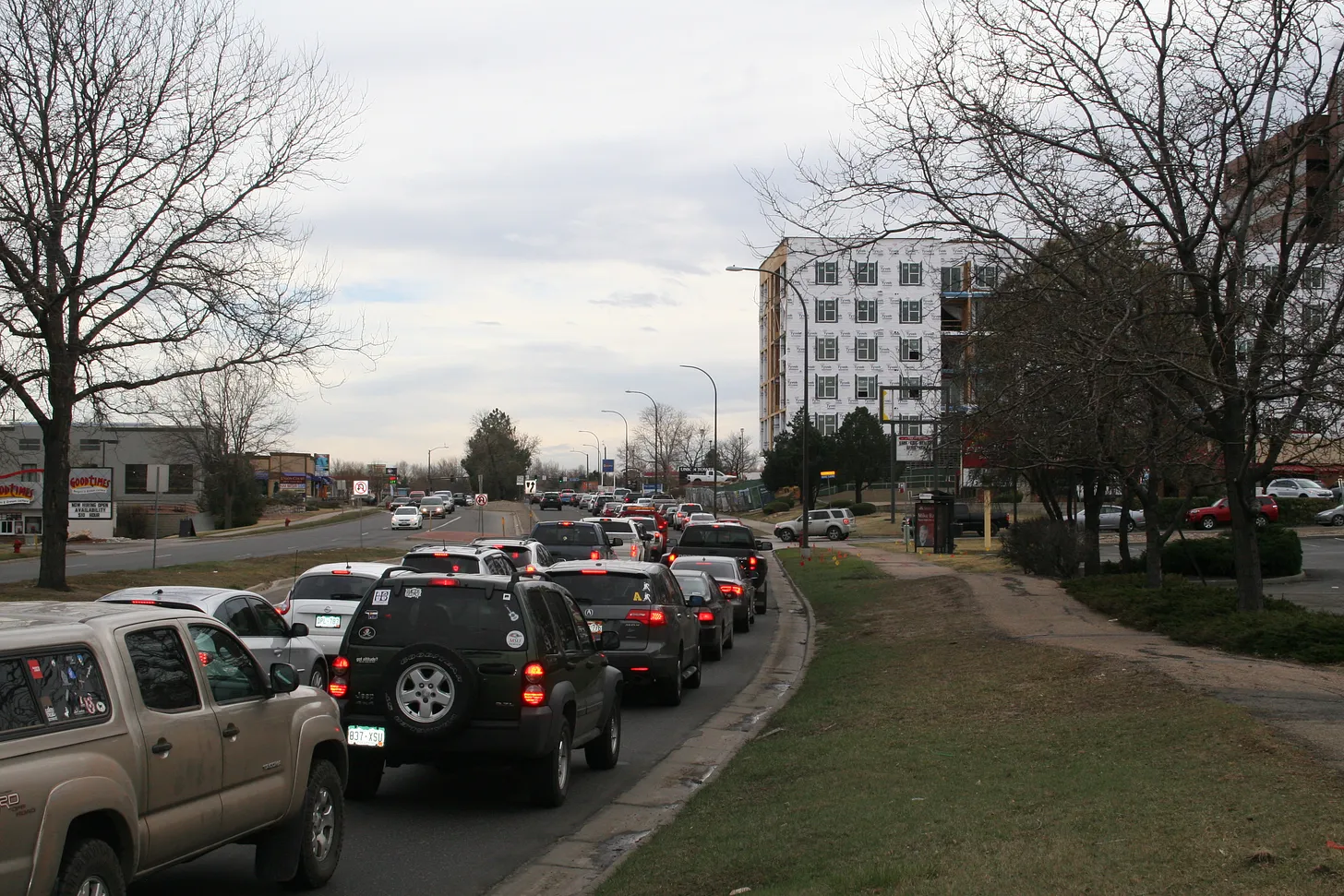
Alex at Somebody Should Do Something posted a lengthy set of articles regarding The Bend development with specific attention to traffic and economic development. Summary: Highlights from Alex at Somebody Should Do Something Part 1 “Environmental injury is often the very definition of irreparable harm — often permanent or at least of long duration,” Arguello wrote. In the latest installment of the “how can a self-proclaimed progressive city council enrich a developer to the detriment of the environment and the community’s well-being”, City of Lakewood is allowing a developer to push forward with a development which will significantly increase traffic on a major thoroughfare, further strain our environment, potentially expose the future residents to toxic hazards AND, again, bring no meaningful economic development to the city. Royal Lakewood Land Partners has made a submission for a development called “The Bend”, situated on the NW corner of the Federal Center, close to the intersection of the 4th Avenue and Union Boulevard, and, just a hop and a skip away from the off and the on-ramp from the 6th Avenue. To add the insult to the many more injuries to come, as shown in the 2007 Master Plan, the site was originally slated for Office Development – a perfect potential use, considering the proximity of the LightRail tracks and the dire need for this city to stoke actual economic development. As usually is the case, the math does not add up. The developer is using the tactic of “here is a traffic study… but it’s only for a part of the development, but we won’t even tell you how many poor souls we want to stuff in to these chicken coops. Then they talk about how this will “hardly” affect traffic, etc. By the time the locals realize just how badly it will have screwed them, the city council and the bureaucrats, who had enabled this environmental and economic disaster, will have moved on to something else, such as being a State Representative, where they continue to shill for the developer profit (ahem, Rebecca Stewart). So, lets see if 2 + 2 equals 4, or, maybe, 17, or maybe a dumpster fire for decades to come. Who knows. The math is very political-contribution-size-dependent these days. Lets look at some of the documents in the submission provided by the developer. 01 – The Bend Minor Subdivision Plat – Traffic Study_2024-10-10 There are only details show for the Southern part of the plat – what about the Northern part of the plat? This is where the math gets hazy, quick. A tactic of piece-mealing the development plans is frequently used (just as is the case with the development near Belmar) to, lets say, omit, the actual impact of the additional car-travel-per-day numbers on the area surrounding the development. Not only will this adversely impact the surrounding area, but also add to the already high total of vehicles having to travel out of Lakewood, since Lakewood has failed to attract localized, high-tech, well-paying employment. Read the rest about environmental and drainage problems at Somebody Should Do Something Part 2 Lakewood (and Colorado at large) are not exactly known for keeping up with building up infrastructure needed to support the additional thousands of people they keep stuffing here. Nor are they known for making the developers pay their fair share for the traffic created, parks overloaded, or the schools needed. However, Lakewood is well known for enabling Metro Districts and the potential resident abuse that comes with them. Of course, there will be a Metro District. Following are some of the snippets from the Metro-District-related documents submitted by the developer for The Bend “The population of the District at build-out is estimated to be approximately 3,350 people, based on a projected number of 2,000 multifamily units and 100,000 square feet of commercial, and a population estimate of 1.5 persons per multifamily unit and 3.5 employees per square foot of commercial property.” So, HOW MANY UNITS WILL THERE BE? And just as was the case with the Red Rocks Ranch, the development might potentially work out as a net negative to the county and the city? The Bend @ Lakewood MD Service Plan Application Memorandum 4875-7617-6597 4 .DOCX “The existing service in the area to be served by the proposed project is inadequate for present and projected needs. There is currently no other jurisdiction or entity, including the City, that considers it feasible or practical to provide the Development with the water, sanitation, street, storm sewer, or other improvements and services described in the Service Plan necessary to serve the anticipated Development. Current services are inadequate, and it is necessary for the District to be organized to provide such Public Improvements and services for the benefit of its future inhabitants.” In fact, there IS sanitation service and fire service and storm-water service. These are all covered by existing city and special districts in which the property is located. However, there is no taxpayer funding for development, and that is what the metro district will provide. And of course, any service provided would have to follow the rules in place, rather than creating their own rules, right? For example – lets look at the Rules and Regulations of one of the nearest Water and Sanitation Districts, Green Mountain Water and Sanitation. Read the rest of Part 2 at Somebody Should Do Something


What Did You Expect?

From Alex at Somebody Should Do Something “What did you expect? Welcome Sonny, make yourself at home? Marry my daughter? You gotta remember that these are just simple [progressives and RINOs]. These are people of the land. The common clay of the new West. You know? Morons.” Progressives (and, the RINOs) in Colorado all but ensured that many people can no longer afford to start a family (or to keep their family comfortable), as it is way down the list of the Best & Worst States to Raise a Family. While ranking 18th overall, unsurprisingly, it ranks 40th in Health & Safety and 36th in Education & Child Care. Furthermore, if one looks at Massachusetts (ranked 1st): “Massachusetts is the best state to raise a family, in large part because it provides a good blend of economic opportunities and safe conditions for children. The Bay State has one of the lowest unemployment rates in the country and lots of job opportunities relative to the labor force, which ensures that parents will be able to provide for their children. It’s not the cheapest state, as housing and childcare costs are relatively high compared to most of the nation, but residents make up for this with fairly high incomes.” And Minnesotta (ranked 3rd): “Minnesota is the third-best state to raise a family, at least if you’re not averse to its harsh winters. Minnesota is a great place to find a job to support your family, as it has one of the highest median family incomes after adjusting for the cost of living and one of the lowest unemployment rates. In addition to good pay and job stability, residents also receive reliable long-term benefits, as Minnesota ranks at the top for employer-based retirement plan access and participation.” Even looking at other states in the top 10, the theme is common, “the housing is expensive, BUT, the people living there have much better economic opportunities, being able to secure better pay relative to the cost of housing and, in turn, being ale to pay for the housing, regardless of it being expensive.” In the meantime, Colorado’s common clay of the new West has spent close to a decade destroying the economic potential of the state. They finally succeeded – “Colorado’s economic growth fell from 5th in the nation to 41st, according to new report.” It is as if only focusing on building “luxury apartments” and metro-district infested suburbs is not the way to create a vibrant, multi-faceted state economy. Colorado now has an imbalance of well-paying jobs vs. some of the most expensive housing in the country. A single person in Colorado needs an income of $106,579 and a family with two children, an income of $272,314, just to ‘live comfortably’ in Denver. The common clay of the new West has decided that we need gobs of boxes ensuring profit for the corporate entities, under the guise of “if we build more housing, there will be more jobs”. What jobs? While adding thousands of Metro-District-fee-paying and rental units, Lakewood, one of the largest cities in Colorado, has lost jobs. The common clay in the Jefferson County, Colorado, not only rolled over for the developers, but all but ensured that large swaths of the county are now setup for an economic failure (and a potential wildfire disaster). When I was a director on the Board of one of the water and sanitation districts in Jefferson County, after inquiring about the insufficient water pressure in some of the fire hydrants in parts of the District, I got the good-ole-don’t-worry-about-it. With some follow-up claims of how “pumps would keep pumping if needed” or something to that effect. One now wonders if such assurances were made to the residents of Pacific Palisades? In the meantime, Jefferson County’s common clay of the new West ensured that thousands more houses have been built on the other side of the hill from the said district, in a high fire risk area, with “interesting” wind patterns and with questionable water availability. Nor did they seem to study the findings of the report on the Marshall fire, with one of the findings being that the structures were placed too close to each other. Who wants to place bets on who and what will be blamed if another calamity takes place? To add ever more icing on that shit-cake, Colorado’s common clay of the new West (namely, representatives from Lakewood and Morrison) also turned what should have been a job-generating development with public transit options, in to a sea of houses. Even the developer-provided study showed what a shit deal it was for the county. Instead of wisely allocating water to the purposes of driving economic development, the common clay handed over the precious drops that remain to the big business interests to bolster their profits, while the rest of us get told to conserve. Not to be outdone by Morrison in the “we have no clue what economic development means” department, Lakewood’s common clay of the West has been working overtime to ensure that one of the largest cities in Colorado is set up for an economic implosion. The signs are all over the place: Continue reading here…

Lakewood Sacrifices Future Economic Development for Residential

Guest post from Alex “The general formula is that it costs more to provide services to residential… Than [they] bring in tax revenue.”  (15th of May, 2017, Mr. Tim Cox, former city attorney for Lakewood). (15th of May, 2017, Mr. Tim Cox, City of Lakewood meeting) Although Lakewood should know this basic planning fact, the city continues to replace commercially zoned properties with high-density residential development. The current administration is continuing down the route of seemingly intentional avoidance of doing real economic development.  Real is the key here, since, to Lakewood “economic development” seems to mean car washes, pot shops, failing retail, and storage units. Not world-class companies and world-class education opportunities to ensure a supply of highly-skilled workers who would then have much better economic opportunities available to them within the community. Lakewood does not even bother to enforce the spirit of mixed use development. City administration has been doubling down on high-priced rentals and metro districts, while claiming “affordability” and that this, somehow, replaces actual economic development.  Perhaps, they missed the recent story about a price fixing scheme by a company which advises the corporate rental owners (think, large scale apartments, such as the ones been built in Lakewood, instead of “middle” housing): https://www.theverge.com/2022/11/26/23479034/doj-investigating-rent-setting-software-company-realpage It is as if those talking about “affordability” actually want to ensure that more people are locked into perpetual financial servitude, instead of working on bringing in local, well-paying jobs into the city. More often, than not, Lakewood makes it in the news for these types of stories: https://www.denver7.com/news/local-news/two-firefighters-taken-to-hospital-after-ambulance-struck-by-suspected-stolen-vehicle Unsurprisingly, some of the Lakewood City Council and city staff are failing to understand (or intentionally avoid?) the link between the failure in economic development and the unfortunate consequences this leads to when it comes to the increase in crime.  A “rising tide lifts all the boats” indeed and if the city had a robust economic engine (which it does not), other economic opportunities would follow. Lakewood Continues to Setup for Economic Failure Residential properties, generally, are a net negative to the municipality as they cost more to provide services to, while not bringing enough revenue in to cover those costs.  Furthermore, Lakewood has completely failed to properly scale up and maintain the needed infrastructure and amenities (such as parks, grocery stores, public spaces and playgrounds, collocated with the high density developments).  Nor are there well-paying employment opportunities within walking distance. By “well-paying employment opportunities”, we mean: Not another car wash, storage unit, or a quick food joint. So as Lakewood doubles down on destroying the commercial potential of the city and adding bedrooms which will likely cause more expense to the city, we just ask ourselves if the city administration and planning staff understand the importance of maintaining a balance between residential and commercial development.

Scroll to top