Lakewood Informer

Resident generated news about Lakewood, Colorado

Lakewood Informer

Resident generated news about Lakewood, Colorado

high-density

Save the Land at the Old Lutheran Hospital

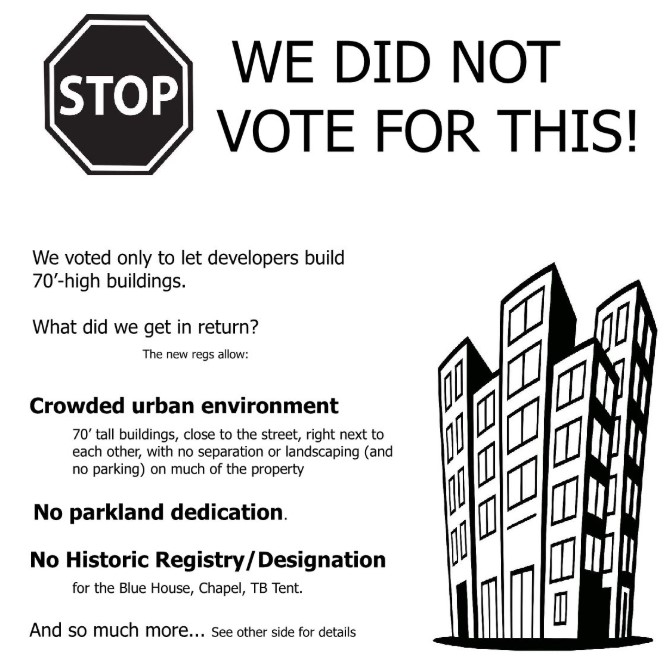
Wheat Ridge is facing the same pressures as Lakewood. Both cities want to turn established neighborhoods and properties into something completely different with little public input. Does any of this sound like the Belmar Park problem to you? High-density, no setback, no parking… a big change that the city has to make big changes for while not listening to big public pushback. Update: A quick count of the days shows that Wheat Ridge is giving residents 9 days to petition instead of 10 because July 4 is a holiday. There’s always another challenge. Let your Wheat Ridge friends know to get over to sign soon! From Stop Zoning of High Density Housing in old Lutheran Hospital Save the land at the Old Lutheran Hospital from becoming a high-density housing project! 1,200 Signatures needed. Wheat Ridge residents: Meet at The Historic Blue House @ Old Lutheran Hospital to sign June 24-July 3 , 7am-7pm What’s up with the new zoning of the old Lutheran campus?Here’s what people are saying: A change of this magnitude should be voted on by all citizens of Wheat Ridge. Allows the creation of a crowded urban environment on much of the property: More than 2,000 housing units can be built, according to the developer. [Sec. 26-1404]Maximal building coverage. [Sec. 26-211, 26-1405] No setbacks. [Sec 26-1405] Minimal landscaping and open space [Sec. 26-1405; 26-1409, 26-502]. No parkland dedication to the City is required. [Sec. 26-414] Minimal parking [Sec. 26-1407, wheatridgespeaks.org/items/1522] Variances from even these minimal standards are allowed, including variances of morethan 50%. [Sec 26-1416] No Historic Designation or Registry of the Blue House, Chapel or Tuberculosis Tent. Nothing about affordable homeownership. [It’s not found anywhere in MU-LLC regs.] No limit on the number of units that can be rentals. [It’s not in the MU-LLC regulations.] NO traffic studies have been done. Read more about this issue on their facebook page And find time to sign their petition at one of the meeting times: at The Historic Blue House @ Old Lutheran Hospital to sign June 24-july 3 , 7am-7pm

Zoned Out: How Lakewood is Selling Out its Neighborhoods

By Karen Gordey You’d be forgiven if you missed it — after all, the City didn’t exactly roll out the red carpet for public input — but Lakewood is in the middle of completely rewriting its zoning code. And on May 21st, the Planning Commission passed 16 amendments in one night. Sixteen. Because who doesn’t want to restructure the entire city with the speed and clarity of a late-night city hall cram session? Here’s the kicker: Lakewood is a home rule city, meaning we have the power to make our own land use decisions. But instead of using that power to protect neighborhoods or push back on one-size-fits-all state mandates, the City Council passed a resolution last year (Resolution 2024-62) that basically says, “Tell us what you want, Colorado — we’ll make it happen.” Meanwhile, six other cities are suing the state to protect their local control. Lakewood? We’re sending engraved invitations to the bulldozers. If you’re not paying attention yet, you should be. Because staff expects these changes to take effect in September and if residents don’t start showing up and speaking up, we’ll be stuck with zoning we didn’t ask for, can’t undo, and won’t recognize. “Home Rule vs Statutory Rule” Before we go any further, it is important to understand the difference between statutory rule and home rule.  So that there is no confusion, I went to the Colorado Municipal League’s website (www.cml.org).  The following is their explanation of the two:  “Colorado cities and towns operate under provisions of Colorado state statutes (and are referred to as “statutory” cities and towns) unless voters adopt a municipal charter to become a “home rule” city or town. Home rule is based on the theory that the citizens of a municipality should have the right to decide how their local government is to be organized and how their local problems should be solved. Municipal home rule derives its authority directly from the Colorado Constitution. It affords residents of cities and towns that adopt a local charter freedom from the need for state-enabling legislation and protection from state interference in “both local and municipal matters.”  The Lakewood City Charter was established on November 1, 1983.  While it has been modified by the voters 5 times (the latest on November 2, 2004, we are still a home rule city.  Lakewood City Charter and Lakewood Together Page 27 of the City Charter talks about planning and zoning.  According to the charter, the city council could have established Ward Advisory Committees to try to corral all these changes but instead are using Lakewood Together for community input.  In fact, I attended the Ward 5 meeting on June 14th and Councilman LaBure said that he tried to create committees last year and did not have support for this.  Let’s take a look at the Lakewood Together site.  On the front page of the zoning updates section (Lakewood Together Zoning Updates), it clearly references the state law requirements and again we are a home rule city so we are allowed to do what is best for our community. This will be important to remember when I talk about the 16 amendments. The 2024 City Council Resolution: Pre-Commitment to State Zoning Goals The City Council passed a resolution Resolution 2024-62 that sounds harmless — values like affordability, walkability, and sustainability — but when you read the details, it’s a blueprint for surrendering home rule. The resolution adopts state-level zoning goals before zoning code revisions or public feedback were complete. That includes: Bottom line: Lakewood didn’t just “revise” its zoning goals; it absorbed the state’s playbook wholesale.  This was covered briefly by the Lakewood Informer: Jedi Mind Tricks – The New Zoning Code WILL BE Good Why Didn’t Lakewood Join the Lawsuit with Other Home Rule Cities?  Good question! Recently, six Colorado cities banded together to sue the state over its new zoning mandates — arguing that the laws violate their constitutional rights as home rule municipalities. (6 Front Range cities sue over housing laws, governor’s threat to withhold state funds) Lakewood? We sat that one out. At the Ward 5 meeting on Saturday, June 14th, I asked our Councilors a simple question: Was our absence because of Resolution 2024-62, which essentially pre-commits Lakewood to implementing state zoning goals? And if the lawsuit is successful, meaning those cities win back their rights to local control, won’t we be stuck with sweeping zoning changes we didn’t have to make? Councilman LaBure responded: “We are a home ruled city but we are also a state entity. The state passes things all the time that encroach on local control. The argument has been historically well zoning and parking issues and all those things are matters of local concern and not the state concern. And Judiciary had tended to draw a line there. However, the state has increasingly been making the argument that there is a housing crisis statewide so we need more and more control over local zoning issues because it is actually a matter of state concern. I would have been happy to have jumped on that lawsuit however, other cities already did it and we are part of the Colorado Municipal League (CML). And CML has supported that lawsuit and in that sense we are member and if not the largest so in some sense we are part of that because of our CML affiliation. And it is a fair question to ask about if the lawsuit is successful, then we would be stuck with zoning changes that were not needed.” Translation: we could have stood up for home rule; but we’ll just let other cities take the heat and hope our dues to the Colorado Municipal League somehow cover us by association. Councilor Nystrom added that she did ask the City Attorney the same question but didn’t get a clear answer. She also pointed out that HOAs aren’t safe from this zoning overhaul either. While HOA covenants are seen as contracts between homeowners and their associations, local

Rezoning affects Milestone Property

By Russha Knauer, Cross-post with permission from nextdoor.com, The upcoming Rezoning Ordinance meeting is being held on Wednesday evening at 7pm at 480 S Allison Pkwy. This meeting will cover several rezoning issues. If you live in the area of Kipling and Alameda or Alameda and Garrison, this meeting will be especially important for you to submit public comments or attend and make your voices heard. Find information about the meeting and how to submit public comment here: https://lakewoodspeaks.org/items/4256. Specifically, the zoning ordinance updates will allow for the land along Alameda and Kipling informally known as the Milestone Property to be rezoned to allow for high-density, mixed use urban development. That means that high-rise, high-density development up to 96′ can be developed. This will go against the current zoning and surrounding development of the area. There are several things that are important to know about this rezoning proposal. First, the rezoning proposal was included in the non-residential zoning map, so many people are unaware that this could happen and how it could directly affect them. Second, this is one of two properties slated for rezoning in this manner; the second is already developed and the rezoning ensures the current development is allowable within zoning regulations. Third, the city stated that the Milestone property is one of 10 “difficult to develop within current zoning regulations” pieces of property. To be clear, this land is currently zoned to be developed as single family homes with mixed commercial use on the corner of Alameda and Kipling. However, the developers have fought the neighborhood for two decades to rezone the property to allow for high-density development. The only thing difficult about developing this land is the developers, not the zoning. Fourth, the city planning department recently told the Planning Commission in a meeting on 4/9 that the implementation of “Envision 2040” is the “city’s”, meaning there is no duty for the City to engage neighborhoods when development or re-development is proposed. Further, the city’s planning department stated in a presentation on 4/18 that going forward, developers will be the ones who have the option to engage neighborhoods when development is proposed, further abdicating the City of their role in engaging neighborhoods. Finally, the City has made this information difficult to understand and find when it comes to identifying nuanced information and how it will affect specific areas and neighborhoods. Please come and make your voices heard! Make sure the City knows that developers should not be valued more than tax-paying residents; that the City has a duty to engage neighborhoods when development is proposed; and that rezoning should not be allowable in plans that are difficult to understand and provide no clear forewarning to affected areas.

People catching onto the “affordable housing” scam

A pair of articles in the Denver Post show that Colorado residents are catching onto the fact that “affordable housing” isn’t the universal panacea that is being promised. New housing is not affordable, unless it’s government-backed, while higher densities are killing the very reason that people enjoyed their city in the first place. Pro-development progressives in Boulder won’t solve the housing crisis “Building a lot more housing won’t reduce prices because there’s an unlimited supply of people nationwide who’ll pay whatever it takes to live here. Boulder is a unique blend of access to culture and nature in a small city. There are plenty of people who want to move here and have the means to do so.” This sentiment also applies to Lakewood, revealing the lie to all the promises that more housing will solve problems. Denser housing vs. the ’burbs “While Colorado lawmakers require upzoning and offer incentives in their push for denser housing concentrated at Regional Transportation District bus and train hubs, thousands of metro Denver residents like the Wellners are migrating to suburbs. They give multiple reasons for their moves: affordability, elbow room, quietness, safety and parks — things that transit-oriented development (TOD) often lacks.” Many people moved to Lakewood for exactly this reason – wanting elbow room and safety. But Lakewood aspires to become more like urban Denver, in the name of affordability. Meanwhile, there are plenty of people who will pay “whatever it takes to live here.” Lakewood is planning on changing the zoning code to increase density even more. The Planning Director is already out talking about the change. It was baked into the results of the latest comprehensive plan, whether residents wanted it or not. Those people who do not want increased densification have until the new code is adopted to object.

Scroll to top