Lakewood Informer

Resident generated news about Lakewood, Colorado

Lakewood Informer

Resident generated news about Lakewood, Colorado

zoning code

Referendum Can Be Signed at 820 Simms #11

For the many residents asking where and how to sign, there is now an ongoing opportunity to sign Zoning Code Referendum Petitions in a suite located at 820 Simms Street, #11, situated behind the 7-11 building.  This venue is open from 10:30 am to 6:00 pm, Monday through Saturday.

There are THREE active grassroots referendums to repeal Lakewood’s recent zoning codes. Signers are asked to keep track of which they have signed in order to reduce duplication.

The volunteer efforts are one way that residents are getting engaged at a rapid rate. Nextdoor is also full of chatter. It’s a rare time in nextdoor history where residents can feel safe in criticizing city efforts. Historically, city supporters attack and drown out those with opposing views so that many have turned away from nextdoor – leading to the creation of alternate sites like the Lakewood Informer.

The office location is staffed with volunteers so please be patient with any unexpected closures, although currently there are numerous people helping. Volunteers span different neighborhoods, different political parties, and different reasons for supporting a repeal. This is truly a grassroots effort with room for everyone.

Hearing Dates Changed for Zoning

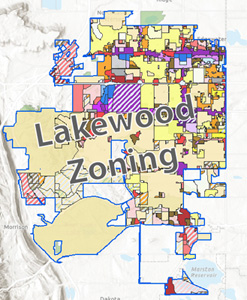
City Council decided to break up the zoning code into four separate public hearings. There will now be 4 separate ordinances that will have second readings on separate dates. Council expressed the strong desire to have voting completed BEFORE the November elections. These changes are big enough to be an election issue, but City Council is taking that off the table by guaranteeing that residents’ votes will not matter for zoning changes. The new dates for second reading are: The original motion was to delay the second reading and also break up the code into digestible pieces. There was more talk of making the code easier to understand than there was of making changes, but the break-up was mostly agreeable. However, with some Councilors disagreeing with the delay, that was changed to maintain a second reading on the Aug 25 date for the first piece. It is unclear if Council is hearing opposition from residents or whether Council believes people just don’t understand what’s going on. “Education” was mentioned several times. Councilor Low read off many city “touchpoints” that would indicate everyone had been informed enough, and any delay was unjustified. About half the council, including Councilors Mayott-Guerrero and Shahrezaei, argued that people were expecting the second reading on August 25 and may not understand that the dates had changed so that wasn’t an option. In reality, even this first reading was delayed due to pressure against these sweeping changes, so that argument was unconvincing. Several Councilors mentioned that they had to have the final vote before elections. So the final opportunity to vote would be a special meeting November 3. No one seemed willing to let this issue be settled as an election matter or be voted on by new councilors. Deputy City Manager Ben Goldstein said that new maps will be available as of Tuesday, August 12, 2025, on https://www.lakewoodtogether.org/zoningupdates. Until now, there was no map that was clear enough to see individual neighborhoods for people to see how changes would affect them.

Zoning Fact Sheet Summary

Below is a one-page summary of zoning code changes and concerns from Lakewood residents. Lakewood Informer authors have posted multiple pages of content and more will be coming but this is a starting point to communicate with neighbors. Feel free to share and help people understand the issues. The fact that there is more to say than can fit on one page is a great indication that the changes are overly complex for a single vote by City Council. It’s very hard for residents to understand all the ways this will affect our neighborhoods, especially with no trials and everything changing at once. Much like the last zoning change which the city promised would solve problems and make things wonderful. In real life, the changes sparked backlash that last to this day. To this day, the city is not correcting those problems, just moving forward with bigger, denser growth. Other articles for more information: For a quick handout, the page below is available:

First Reading on Zoning Code Pushed

Councilor Ken Cruz announced that the first reading of the proposed zoning code has been pushed from July 28 to August 11. From Councilor Ken Cruz’s newsletter: “Lakewood Zoning Code Timeline Extended A Real Opportunity to Engage “The City of Lakewood is extending its zoning code update timeline to allow for deeper review and stronger community engagement. 🔹 Final Draft Release: Monday, July 14🔹 First Reading at City Council: August 11🔹 Public Hearing (Second Reading): August 25 “This update isn’t just about timing, it’s about trust. With this additional time, we have a real chance to dig in, ask questions, and have meaningful conversations before any votes are cast. “💬 In the coming weeks, I’ll be hosting a series of roundtable conversations here in Ward 3. These won’t be presentations or lectures. They’ll be real, two-way conversations grounded in the actual text of the proposed zoning code and the realities of housing and land use in Lakewood.” As of the last public meeting on zoning, City Manager Hodgson argued that the meeting schedule was full so keeping to the July 28 first reading made the most sense. Council agreed. However, as of the Lakewood Informer Community Potluck on June 26, the new redlined draft was still not available. At that time, inquiries to the city revealed the redline was due out the first week of July. The new redline was not produced the first week of July but was also pushed back to coincide with the new first reading date. Residents will have a month to review the document before first reading. The roundtable discussions by Councilor Ken Cruz is a new format by a Council Member. Some other Councilors have expressed the opinion that their constituents overwhelmingly support affordable housing solutions, and therefore they assume that means any zoning code changes will be accepted.

Sacrificing Neighborhoods Allows Homeless Funding

Why the big rush to change the zoning code? Follow the money. The money trail leads to state grant funding, which primarily supports homeless and sustainability initiatives. Without that agenda, Lakewood could decide for itself which, if any, of the state initiatives make sense locally. Colorado has decided to override local zoning in a power grab against local home rule. Other cities are fighting back against Colorado with legal cases. But Lakewood will not fight for home rule. They are not only implementing the state law but going further in densification, all while citing the need to comply with state law Lakewood receives millions of dollars in state grants for initiatives like sustainability and the new navigation center. The purchase and renovation of the old Harley Davidson building was done using state grants. To continue funding sustainability and homeless initiatives, Lakewood must either fund it internally (a political impossibility) or comply with state zoning codes. And if the state zoning codes are not what Lakewood residents had in mind when they discussed “affordable housing” solutions, that’s a sacrifice Lakewood is willing to make on your behalf. Note: For the purposes of this article, “Lakewood” means the majority opinion of city officials. It is hard to tell who is speaking in public workshops, there is a lot of backroom personal communications, as well as conflicting explanations given in ward meetings. To establish personal beliefs, please contact your city official with detailed questions that are beyond the scope of this article. Lakewood’s proposed zoning code sacrifices existing neighborhood stability in the hopes of creating affordable housing. Occupancy limits everywhere are eliminated so there can be 20, unrelated, non-owner residents in a house. The house nextdoor may be torn down and replaced with a duplex or a cottage court*. Small retail is now allowed, mixing business with residential. Every property in Lakewood is now a transition zone. *Cottage Court: According to a 2022 report from AARP, cottage courts are defined as a small collection of bungalow-style homes that are “typically 1 to 1½ stories tall and are oriented around a courtyard that serves as an outdoor community space in lieu of rear yards.” – HousingWIre There is no guarantee that any of these changes will achieve their desired goals. Studies abound on both sides. However, Lakewood has already been promised affordable housing since the 2012 zoning rewrite that spawned the term “Soviet-style apartment blocks” with zero new “affordable” units created. Is there any reason to think this big change will be different? Lakewood’s proposed zoning code is not ready for first reading yet, so residents don’t know all the details. The latest redline is from May 19. However, residents do know that know matter what is in there, it is good and necessary because City Council passed a resolution saying so in December of 2024. Lakewood’s navigation center is a contentious issue that hinged largely on the ability to get “free money” from the state. Many homeless and sustainability measures that were supported by the state did not go through a full public policy debate because that wasn’t necessary if Lakewood wasn’t spending its own money. Now that decision is coming back to haunt Lakewood residents, who will be paying for that money by sacrificing their neighborhood stability.

Zoned Out: How Lakewood is Selling Out its Neighborhoods

By Karen Gordey You’d be forgiven if you missed it — after all, the City didn’t exactly roll out the red carpet for public input — but Lakewood is in the middle of completely rewriting its zoning code. And on May 21st, the Planning Commission passed 16 amendments in one night. Sixteen. Because who doesn’t want to restructure the entire city with the speed and clarity of a late-night city hall cram session? Here’s the kicker: Lakewood is a home rule city, meaning we have the power to make our own land use decisions. But instead of using that power to protect neighborhoods or push back on one-size-fits-all state mandates, the City Council passed a resolution last year (Resolution 2024-62) that basically says, “Tell us what you want, Colorado — we’ll make it happen.” Meanwhile, six other cities are suing the state to protect their local control. Lakewood? We’re sending engraved invitations to the bulldozers. If you’re not paying attention yet, you should be. Because staff expects these changes to take effect in September and if residents don’t start showing up and speaking up, we’ll be stuck with zoning we didn’t ask for, can’t undo, and won’t recognize. “Home Rule vs Statutory Rule” Before we go any further, it is important to understand the difference between statutory rule and home rule.  So that there is no confusion, I went to the Colorado Municipal League’s website (www.cml.org).  The following is their explanation of the two:  “Colorado cities and towns operate under provisions of Colorado state statutes (and are referred to as “statutory” cities and towns) unless voters adopt a municipal charter to become a “home rule” city or town. Home rule is based on the theory that the citizens of a municipality should have the right to decide how their local government is to be organized and how their local problems should be solved. Municipal home rule derives its authority directly from the Colorado Constitution. It affords residents of cities and towns that adopt a local charter freedom from the need for state-enabling legislation and protection from state interference in “both local and municipal matters.”  The Lakewood City Charter was established on November 1, 1983.  While it has been modified by the voters 5 times (the latest on November 2, 2004, we are still a home rule city.  Lakewood City Charter and Lakewood Together Page 27 of the City Charter talks about planning and zoning.  According to the charter, the city council could have established Ward Advisory Committees to try to corral all these changes but instead are using Lakewood Together for community input.  In fact, I attended the Ward 5 meeting on June 14th and Councilman LaBure said that he tried to create committees last year and did not have support for this.  Let’s take a look at the Lakewood Together site.  On the front page of the zoning updates section (Lakewood Together Zoning Updates), it clearly references the state law requirements and again we are a home rule city so we are allowed to do what is best for our community. This will be important to remember when I talk about the 16 amendments. The 2024 City Council Resolution: Pre-Commitment to State Zoning Goals The City Council passed a resolution Resolution 2024-62 that sounds harmless — values like affordability, walkability, and sustainability — but when you read the details, it’s a blueprint for surrendering home rule. The resolution adopts state-level zoning goals before zoning code revisions or public feedback were complete. That includes: Bottom line: Lakewood didn’t just “revise” its zoning goals; it absorbed the state’s playbook wholesale.  This was covered briefly by the Lakewood Informer: Jedi Mind Tricks – The New Zoning Code WILL BE Good Why Didn’t Lakewood Join the Lawsuit with Other Home Rule Cities?  Good question! Recently, six Colorado cities banded together to sue the state over its new zoning mandates — arguing that the laws violate their constitutional rights as home rule municipalities. (6 Front Range cities sue over housing laws, governor’s threat to withhold state funds) Lakewood? We sat that one out. At the Ward 5 meeting on Saturday, June 14th, I asked our Councilors a simple question: Was our absence because of Resolution 2024-62, which essentially pre-commits Lakewood to implementing state zoning goals? And if the lawsuit is successful, meaning those cities win back their rights to local control, won’t we be stuck with sweeping zoning changes we didn’t have to make? Councilman LaBure responded: “We are a home ruled city but we are also a state entity. The state passes things all the time that encroach on local control. The argument has been historically well zoning and parking issues and all those things are matters of local concern and not the state concern. And Judiciary had tended to draw a line there. However, the state has increasingly been making the argument that there is a housing crisis statewide so we need more and more control over local zoning issues because it is actually a matter of state concern. I would have been happy to have jumped on that lawsuit however, other cities already did it and we are part of the Colorado Municipal League (CML). And CML has supported that lawsuit and in that sense we are member and if not the largest so in some sense we are part of that because of our CML affiliation. And it is a fair question to ask about if the lawsuit is successful, then we would be stuck with zoning changes that were not needed.” Translation: we could have stood up for home rule; but we’ll just let other cities take the heat and hope our dues to the Colorado Municipal League somehow cover us by association. Councilor Nystrom added that she did ask the City Attorney the same question but didn’t get a clear answer. She also pointed out that HOAs aren’t safe from this zoning overhaul either. While HOA covenants are seen as contracts between homeowners and their associations, local

New zoning rules propose to take Lakewood back to “bedroom” community concept

Repost from Dave Weichman On top of everything else going on these days, the Lakewood establishment is planning to change the city’s comprehensive plan and zoning codes to allow for more population density and cheaper housing. As usual there is way too much devil in the details to wrap one’s head around. However, there is one area that gives me a deja vu. Back when I was on City Council (in 2012) there was a major change in zoning. One of the innovations was the concept of “mixed-use” zones. We on Council bought into the idea there could be buildings with multiple uses. The example we were sold on was a vision where the first floor of the building could have commercial uses like restaurants or shops. The second floor could be offices for businesses. The third and fourth floors could be apartments or condos for residential use. Therefore there could be three different types of uses within the same building. This would reduce the need for traveling to different zones for a range of uses – i.e. one could work, shop, play and live all within a single building. So city zoning was changed to create “mixed-use” zones that would allow for several different types of uses within the same structure. However, when it came time to actually build this type of zoning ALL these buildings were 100% housing. Commercial uses and offices remained located in other parts of the metro area. The City argued mixed-use did not mean there actually had to be more than one use going on in a building but rather there was a range of possible uses to choose from. According to this line of reasoning, the builder could choose to either build all housing, or all commercial or all offices. When voters complained about this bait and switch tactic, there was an effort to require that mixed-use buildings actually have more than one use going on. There was a major City Council effort led by Ward 4’s David Skilling to change the zoning rules for properties in Mixed-Use Employment (MU-E) districts. Mr. Skilling was able to pass an ordinance that changed MU-E zones to prohibit more than 50% of the building being used for housing. However, since developers never had any intention of building mixed use projects but rather were just interested in finding a way to build housing in zones previously limited to commercial or office use, not a single project was eventually build using this model. After these zoning rules went into effect, developers with properties zoned as MU-Employment came back to the city and requested permission to re-zone these properties into a category that would allow them to build 100% housing. Fast forward to 2025. The current proposed “reform” of the City’s zoning codes seeks to just get rid of the 50% limit on housing in MU-E zones. That way developers could continue to just focus on building more housing. As for commercial and office uses, the proposed zoning would go back to the old scheme of making Lakewood the “bedroom” community for metro Denver. So this new zoning is essentially a GOING BACK to the glory days of multi-family residential housing and riding the train into Denver for work or shopping.

Scroll to top