Lakewood Informer

Resident generated news about Lakewood, Colorado

Lakewood Informer

Resident generated news about Lakewood, Colorado

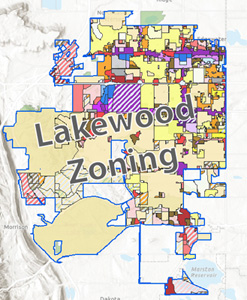
zoning

Emory Not Purchased Yet but is Already Scheduled to Sell

Emory Not Purchased Yet but is Already Scheduled to Sell The sale of Emory has already been scheduled for October 27, the same day Lakewood will authorize buying the current Action Center for more homeless services. There is no mention of when Lakewood will complete the purchase of Emory, but Lakewood must be confident since it is already scheduled for sale. There is no update on the Jeffco website and calls for comment have not been returned. No evidence of a public meeting with Jeffco schools can be found. Lakewood has consistently told residents that the purchase and sale of Emory Elementary was not a “done deal” and that the community would have plenty of opportunity to weigh in. But so far, that hasn’t been the case. While there have been many meetings where the Action Center has explained their plans, there has been no opposing views presented. Resident concerns have been brushed aside. The only real discussion about Lakewood’s homeless policy was during a Council workshop at which no votes were taken and public comment allowed. The sale date of October 27th is the day before the District Court trial involving Lakewood’s alleged violations of the Open Meetings Law. Former Lakewood Councilor and attorney Anita Springsteen filed three lawsuits against improper notice of executive sessions for Emory purchase discussions. Losing Money Jeffco will not disclose the market valuation of Emory, claiming negotiation privilege. However, the discussion from the Action Center presentations suggests: the property is worth around $10 million Lakewood will purchase the building for $4 million. Lakewood will then sell the building to the Action Center for $1 million. If true, that’s a $9 million loss to the taxpayers. Add in the cost for Lakewood to buy the current Action Center property and the cost goes up. Meanwhile, Jeffco has been cutting costs elsewhere — including reducing school resource officer coverage. Residents can’t help but connect these decisions to recent tragedies like the Evergreen school shooting, which happened when the SRO was off duty and a replacement had been “deprioritized”. Biased Presentations The Action Center has sponsored a couple of one-sided presentation meetings. Ward 2 residents expecting a zoning discussion on September 13 were instead met with a surprise Action Center presentation. The Action Center meeting scheduled for September 17 has turned into a Ward 3 meeting. It is scheduled for 5:30 at Emory Elementary. What’s missing is any balanced discussion of: The real taxpayer costs The impact on nearby neighborhoods Program effectiveness Whether these programs can stand financially without ongoing government support Expanding Homeless Services City Manager Kathy Hodgson previewed this direction back in December 2023, saying “… we are talking about a partnership with the Action Center to move them to one of the schools that’s been closed…. then Lakewood would have a presence in the existing two buildings of the Action Center to complete the navigation concept and allow for more housing for our homeless population….“ Since the City Manager made that comment, the Navigation Center has proven to be more expensive than anticipated and has drawn criticism as a magnet for the homeless. Even Governor Jared Polis recently questioned “Housing First” strategies like Lakewood’s. In a September 12 interview with CPR, Polis said Denver’s model hasn’t worked and shouldn’t be emulated. Instead, he pointed to Colorado Springs and Aurora, which emphasize mental health and individualized approaches over housing alone. (See Lakewood Informer news article for a comparison) From CPR interview with Governor Polis, 12 September 2025 Zoning Changes on a Fast Track Lakewood’s City Council is expected to vote on the final zoning changes, including the Emory site, on October 13. The move would “spot change” Emory’s zoning without the typical public hearing process. All of this is scheduled to be finalized before the next election, effectively locking in the decision before residents can have their say at the ballot box. The Bigger Picture Lakewood’s leadership continues to move forward without presenting residents with a full picture of costs, tradeoffs, or alternative models. Governor Polis himself has warned against relying on “Housing First” — yet Lakewood is doubling down on that very approach. The new zoning enables this approach while bypassing normal public hearings on controversial site changes.

Second Zoning Ordinance Passes in a Desperate Rush

Second Zoning Ordinance Passes in a Desperate Rush Lakewood City Council adopted zoning sections 1, 2, 4, and 5 in a desperate rush that lasted until 2:30 AM, brushing aside pleas to adjourn and take more time for review to reconvene at a reasonable hour. The final vote followed: About three hours of public comment About three hours of council debate 34 amendments discussed Several denials of substantive changes The zoning vote didn’t even begin until around 11 PM, which is the time council typically adjourns. From that moment on, amendments came in rapid succession, but when anything meaningful surfaced, someone, typically Councilors Low or Mayott-Guerrero, shut discussion down because it was not the time for substance. Although few to begin with, any amendment that could have had an impact was defeated. By the time the ordinance passed at 2:30 AM, bleary-eyed councilors had pushed through a highly anticipated but largely unchanged plan. This vote showed that even though there was rhetoric from some Councilors about taking time and listening to residents, approval was a done deal. A Night of Symbolism, Not Substance The first amendment set the tone for the night. Councilor Sinks proposed a feel-good goal about “working toward homeownership.” It wasn’t binding, just aspirational, and even that failed. Throughout the night, councilors debated minor wording changes while dodging big-picture issues. At one point, Councilor Mayott-Guerrero bluntly asked staff, “So does this do anything?” The answer: “No.” The takeaway: most amendments were political window dressing, not policy shifts. Passage Highlights Council’s Predetermined Path The sheer volume of amendments revealed just how unprepared the code may have been. Many changes corrected errors or reversed recent decisions—like minimum lot size and setback rules that had been approved just weeks earlier. The public was not able to review or comment on any of these amendments. Still, nothing altered the trajectory: higher density, fewer restrictions on development, and a zoning overhaul designed to move forward no matter the objections. Mayor Strom signaled the strategy in an interview, saying “big issues” would be postponed until later to ensure passage. Councilor Low reiterated this unofficial policy, saying that Council has been talking about zoning for months and there shouldn’t be complex amendments at this point. The strategy played out in real time, as council rejected or watered down anything remotely impactful. In other words, and as residents have complained, it’s a “done deal” by the time it gets to public vote. Residents’ Concerns Addressed in Name Only Amendments seemed more aimed at appearances than solutions. For example, several amendments were made to increase transparency. Written justification for discretionary decisions will now be posted online. But while transparency is good, DISCRETION was the issue, not transparency. Residents are concerned about the many areas where decisions are made by one unelected bureaucrat. That core issue remains unresolved. Transparency without accountability is meaningless. In fact, a motion by Councilor Paula Nystrom to grant Council the ability to review Major Site Plans died for lack of a second. No one else on Council took the opportunity to address the core issue of discretion by adding Council review and accountability, even if the concept needed additional discussion. Another example involves waiving city fee for housing projects, which is a sore point for some residents. Instead of rethinking the policy, the council opted to simply post a justification online. A brief victory for the public came when council initially voted to require a special-use permit for pickleball courts in residential areas, only to reverse the decision 10 minutes later. One last example: an amendment calling for a comprehensive report on the effectiveness of the new zoning code was made by Councilor Nystrom. Councilors Rein, Isabel Cruz and others watered it down until it was not comprehensive and could not suggest there was any reason for a report. The worry was that asking for a report implied there might be problems to report on. In other words, the present-day City Council protected itself from anyone finding any problems in the future. A Late-Night Sprint By the end, fatigue was palpable. Most of the public had left by the time Council started deliberating at 11 PM. Council had the option to table the motion at any point, which meant discussion would pick up where they left off, so no repeat would be necessary and there would be no time lost. Council procedures mandate that a decision to continue the meeting start at 11 PM in order to maintain reasonable hours. Despite this, Council started the discussion without a check-in and continued far past normal. Councilor Low used the late hour as a reason to skip deeper discussions. Staff were scrambling for reasonable suggestions when fatigue set in. Discussion was curtailed starting at 12:30 AM with multiple “call the question” votes. Councilor Sinks motioned to adjourn at 1:30 AM. That call was rejected. The majority pushed ahead, determined to pass the ordinance. Councilor Mayott-Guerrero argued that public supporters had been organized for this meeting and it would be “irresponsible” to stop. No one mentioned the grassroots residents who showed up without City Council organizers, who felt Council was irresponsible to continue the meeting so late on items the public couldn’t review. The majority who voted to push on were Strom, Rein, Mayott-Guerrero, Shahrezaei, I. Cruz, and Low in a 6-5 decision. Councilor Rein’s vote was key to moving this forward, even if eventually he voted down the measure when his vote was not critical. The Nature of the Changes Here’s what came out of three hours of amendments: 5 amendments on trees, solar panels, parks, and other sustainability-related items 4 amendments for transparency without accountability 4 amendments rephrasing items resulting in no change 3 amendments that were too substantial to consider 4 amendments that reversed prior decisions 4 times the question was called One of the biggest changes the public couldn’t preview may be the shift to make Lakewood multilingual, or at least bilingual, for physical mailings. This is a big policy

Latest Amendments

Latest Amendments Below is a summary listing all the amendments discussed on September 8, 2025, to accompany the general meeting description. These are in addition to the amendments found on LakewoodSpeaks, which are also additions to the many changes that were made before. Amendments have been constant. Residents were unable to preview these. Councilor Sinks suggests adding a goal for home ownership. Failed on first try Councilor Ken Cruz made an amendment to protect the tree canopy and increase green resilience. Passed unanimously. Councilor Ken Cruz suggested another amendment to say that the zoning code is not retroactive. Passed unanimously. Councilor Roger Low restated the amendment from Sinks so that it passed unanimously. Councilor Nystrom suggested an amendment to mandate staff create a report detailing affordable housing generated from the zoning. Such “lookbacks” are common but don’t often generate results or change. Nevertheless, Councilor Mayott-Guerrero argued vehemently that staff don’t have time to do this level of review. Councilor Isabel Cruz said Nystrom’s amendment suggests there will be problems that need to be reviewed. Reasons to have a lookback needed to be taken out and reframed so that future Councilors remain neutral. Nystrom’s amendment took 3 votes to pass. Mayott-Guerrero argued that looking for a specific list of things of concern suggests there is something to be concerned about. All hints of concern needed to be deleted before finally passing the amendment to have another ineffective and neutral lookback pass unanimously at 11:25 pm. Councilor K. Cruz made an amendment to have written justification for any waivers granted by the Director. This motion was only for waivers, not for other matters that rely on Director’s discretion. Director Travis Parker says this is already standard practice. Passed unanimously at 11:30 PM. Councilor K. Cruz suggested an amendment to clarify the Director’s ability to grant waivers so that park property can be used for non-park purposes, like fencing. Mayott-Guerrero asked staff bluntly, “so does this do anything?” Answer, “no.” Passed 8-3 at 11:41 pm. Councilor Nystrom made a motion to delay the ability to cut down trees until the development is going to start. But as proposed, the language suggested that existing homeowners would need permits to cut down sick trees, which was a problem in previous versions. Motion fails with only Nystrom voting for it. On second try it passes with only Low against. Nystrom moves another amendment regarding the fact that Lakewood waives fees for certain projects in the name of the public good. Nystrom wants written justification for such decisions posted on the website.  Such justification is already made. Passed unanimously. Councilor K. Cruz moves that all public notices be posted on the website and that physically mailed notices be multilingual. Passed unanimously at midnight. Councilor Nystrom made an amendment to include public information on the preplanning application review that after completion. Again, not for any public action, just to make information public. Councilor Shahrezaei had researched this topic and said that similar proposals had been rejected several times before because of the amount of work for Council and staff on answering questions for projects that don’t get completed. Motion failed at 12:17 AM with all of Council voting against it except for Nystrom and K. Cruz. Councilor Nystrom motioned an amendment to grant Council the ability to consider any Major Site Plan within 17 days of the Directors decision for public hearing. This amendment is actionable by the public and Council, not just a transparency item, and it is in place in other cities. The motion failed for lack of a second. On a second try, the motion was seconded and discussed. Councilor Furman said he thinks this may allow Council to make arbitrary decisions. Low says this leads to weaponization of NIMBYism and would chill development. Shahrezaei called the question for the first time that night on this issue. Motion fails again at 12:30 AMwith nays being almost everyone – Strom, LaBure, Rein, K. Cruz, Mayott-Guerrero, Shahrezaei, Sinks, I. Cruz, Low and Furman. Nystrom suggested an amendment to have additional environmental assessments for development that impact parks. Mayott-Guerrero expressed concern for how much work this would be for staff. She says delays could affect government funding and that she is working for government funding. There was no dissenting discussion to show it’s not just a timing issue; this decision prioritized development over the environment. Once the site plan is approved, it is hard, if not impossible, to get a new plan based on environmental considerations. Director Parker says it may not be possible to meet Prop 123 deadlines when having an environmental review. Motion fails at 12:42 AM with only Furman and Nystrom in support. Councilor Sinks made a motion for pickleball courts require a special use permit in residential areas but allowed outright in commercial and light industrial areas. This amendment would keep pickle ball noise away from residential areas. Mayott-Guerrero says that’s not a good idea. Low and Rein needed more information. Motion fails the first time. With modifications to remove express allowances in commercial and light industrial areas, the motion passed 8-3 at 12:58 AM. Nays were LaBure, Mayott-Guerrero, and Low. Councilor Sinks made another motion pickleball and sport court use definition. Low says it is too late in the process and too late at night to consider this. A motion to call the question passes. Motion fails at 1:05 AM 5-6 vote. Amendment 20 negated the first pickleball motion so there was a motion to reconsider. The pickleball court amendment was then repealed at 1:10 AM in a 10-1 vote. Discussion sped up after this point. Councilor Isabel Cruz motioned for plant nurseries to be allowed in R-L-B and R-L-C zones as a special use. There was no discussion. Unanimous approval at 1:12 AM. Councilor K. Cruz made an amendment so that roadside stands can include produce from other properties. The original motion failed. The motion was reworded to have produce from the host property be labeled as such. This made produce

Safety Committee for Some

Safety Committee for Some Previously deprioritized investigations got a slap in the face after City Council made a new police oversight committee to serve only the LGBTQ+ community, rather than providing oversight for all residents. Instead of learning a lesson from a member of a vulnerable community, Lakewood is now marginalizing others. The new committee is “to ensure Lakewood police achieve the goal of serving LGBTQIA residents and other marginalized communities with integrity, intelligence, and initiative.”   City Councilors Shahrezaei and Isabel Cruz made the motion, which ultimately passed unanimously. However, creating a police oversight or public safety committee is a big step that has been declined several times before. The committee, as envisioned, would potentially involve granting subpoena powers. Giving political appointees special powers could lead to the political weaponization of the justice system. Download Repeated calls for police oversight have been made over the years. So why is this special committee needed now? Why is it serving only one sector of the population? Is City Council suggesting Lakewood Police do not serve ALL LAKEWOOD with integrity, intelligence, and initiative? Are they calling all Lakewood Police homophobic? Or are they suggesting that Lakewood Police are just incompetent to begin with? What is the exact problem? Shahrezaei said that action was necessary because for weeks there was “a packed house”. Public from all over the Front Range asked for oversight in the case of Jax Gratton, who was found dead of unknown causes. Jax’s death was a tragedy. Many people came to City Council to express feelings of loss and said how much they will miss Jax and her impact on the trans community. Asking for answers is a common reaction in such cases where loved ones want closure, and the trans community is especially vulnerable. However, this new committee is unlikely to help in Jax’s case because of slow-moving government processes. While this specific case deserves attention, so do many others. This isn’t a question of equity. City Council has been asked by other grieving family members for more oversight or increased attention to other cases involving death from unknown causes and they didn’t act. For perspective, there were 18 new death investigations started in August alone. None of them are getting oversight or attention by City Council. Many stay open forever with no further leads. Location of 18 death investigations started in August, 2025. History of Neglect by Council Even on the same August 25, meeting, a Lakewood resident stayed until midnight to make public comment on the amount of crime in North Lakewood. That is the same area represented by Councilors Shahrezaei and Isabel Cruz who have ignored so many other members of the public before on crime. Why does some crime get personalized attention and others get ignored? “We are going into a blight situation caused by the city [ignoring crime]” – David Rothenberger, Lakewood resident In 2023, then-City Councilor Rich Olver also made a request to add a safety committee to City Council. Denied. Denied by the same Jeslin Shahrezaei, now Mayor Pro Tem, who is requesting a special “oversight committee” for ONLY the LGBTQIA community. Former City Councilor Anita Springsteen asked for additional transparency from the police department. She helped win a victory in the release of body cam footage of a shooting involving the Lakewood Police killing a 17-year-old girl involved in a robbery. Springsteen asked for additional transparency and oversight for this case and Councilor Shahrezaei, who was on Council at the time, did not support her efforts.  The same thing happened when Springsteen asked for increased attention to the case of Patricia Dillworth, an African American disabled woman. That would seem to meet the definition of “marginalized community,” but Shahrezaei and the rest of Council did not support the public pleas from her grieving daughter. Again, only specific marginalized people matter. Former City Councilor Mary Janssen called for the formation of a safety committee when she was on Council. She suggested it at the annual retreat, where it got turned down and morphed into “public safety = street lights” nonsense. Later, Janssen suggested forming a public safety committee, and Shahrezaei argued against it. Janssen Request for Council Action 29, calling for a Public Safety Committee, dated November, 2022. Former City Councilor Michael Bieda and Springsteen both made legislative requests in 2021 for oversight on use of force. Declined. Hundreds of residents have come out to request more oversight and equal enforcement of the law.  Landlords report having problems renting their property because of all the crime that is allowed. Death investigations have increased. There are multiple calls for police oversight. What’s the Difference? What are the differences in these cases that ended without Council action? Many involved marginalized community members but none were LGBTQ+ Do Council Members feel they can score political points specifically with the LGBTQ+ community? Do they feel that safety concerns of the rest of Lakewood residents do not need to be addressed? Unfortunately, Council may have been denying the requests because sunlight on police investigations may reveal non-enforcement policies, aka de-prioritization, that Lakewood does not want you to know. It seems that Lakewood Police are trapped with having laws on the books that residents want, but that leadership do not want. As a result, sometimes police enforce crime penalties, sometimes they do not. Sometimes they handle investigations differently than others. It is all situational – not as a result of the police force members, but as a result of conflicting directives. One written and one unwritten. And now, Council approved direct action with special powers but only for LGBTQ+. More situational discretion. How will this committee strengthen justice for all?  How does this hold City Councilors accountable for representing all constituents? Unfortunately, this motion may show that Lakewood now needs an oversight committee to identify which City Councilors will only listen to you if you identify as LGBTQ+. The Motion Not even five minutes after a Lakewood resident made yet another plea for increased public safety, Shahrezaei

Lakewood Passed the First Sections of the Zoning Code

New Zoning For Racism, Equity and Climate Change At the time of breaking up the zoning code, Councilor Mayott-Guerrero argued that she had people lined up to speak at the August 25th meeting and, therefore, no delay was possible. On August 25th, residents got to see what she meant as speaker after speaker from her influence bubble came to speak. Almost all the speakers were young, connected to the nonprofit world, many from Ward 2, and believed these zoning changes were critical to climate change. Mayott-Guerrero was pleased with the results, saying it was overwhelming to have so many people in favor. A running theme throughout these public comments was that supporters believed the new zoning was necessary for racism, equity, and climate change. Lakewood HOAs are Racist The new zoning code overrides HOAs and mandates high-density developments, no matter what the HOA or individual homeowners want. Lakewood has the option of exempting HOAs, but they have not taken it. Zoning change supporters made a flurry of requests to deny an HOA exemption because they stated that HOAs were started to keep Black people out of neighborhoods. Speakers seemed to believe that if left unregulated, HOAs across Lakewood would exhibit racist behavior. Apparently, racist behavior includes saving single-family neighborhoods from high-density mandates. Equity The equity argument is a bit of a bait and switch. To back up, affordable housing advocates have been pushing density for years, starting with transit areas. The reasoning is that areas near a bus or train route would be the perfect place for high-density because residents could walk to the bus, therefore they wouldn’t need a car. They also wouldn’t need a parking space. That reasoning worked and a state law was passed that mandated high-density along transit routes. Then, Lakewood officials quickly changed their story and said that wasn’t fair. Transit zones are more common in some areas of Lakewood, often in areas of higher diversity, and therefore changing zoning along transit areas are racist. Now, EVERY AREA should have high-density because Councilors have said that it wouldn’t be fair if Wards 4 and 5 didn’t change their zoning code just because there were fewer transit routes in the area. It is unclear as to why it is “unfair” to have too much of a good thing. If these affordable housing measures are so wonderful that everyone wants them, wouldn’t everyone embrace the changes rather than label them a burden that others must also bear? Climate Change Supporters say that high-density means less cars and more efficient building standards.  Many people made general comments on climate change, transportation, even home energy and appliances. It remains unclear why an urban-jungle-concrete-heat-sink is better for the environment than low-density homes that promote healthy lawns and landscaping. Public Support Although online there were more comments to oppose or amend, Council seemed impressed by the number of people in person supporting the changes. It’s rare to find City Council impressed with public comments unless it favored their original position. People attending the meeting also noticed the special treatment given to these members of the public. They were allowed to stand in corners and aisles and have signs on little poles. Typically, these actions are not allowed. Supporting Nonprofits Clean Energy Lakewood Neighborhood Development Collaborative (Representing Metro West Housing, Archway Community, Elevation Community Land Trust and others) Livable Lakewood Colorado Nurses Association AARP Colorado Southwest Energy Efficiency Project (SWEEP) Conservation Colorado Natural Resources Defense Council Metro West Housing Solutions Good Business Colorado Elevation Community Land Trust The Redress Movement- Denver Together Colorado – Jeffco Chapter West Colfax Lampstand Jeffco Food Council 350 Colorado RTD Board Director Paglieri

Lakewood Passed the First Sections of the Zoning Code

Lakewood Passed the First Sections of the Zoning Code   The first portions of the new zoning code have already been passed as of August 25, 2025. Before then, public opposition caused City Council to delay the vote for two weeks, because the final version wasn’t ready on time and the public wanted adequate review time. But opposition was ongoing. Finally, City Council voted to break the approval into four parts, amidst public talk of third readings. These actions comforted residents with the thought they would have more time to change Council minds. Those residents were wrong. The first sections, 6-14, were passed without delay. No Council Member suggested a third reading was necessary and no one suggested tabling discussion for a fresh meeting despite the late hour of the proceedings (final vote was around midnight). Every member of council approved an amendment making it clear that single-family zoning was eliminated in the definition to “residential”. These changes started the densification process already. These votes showed that the delays and speeches were political ploys meant to appease residents, rather than make substantial change. As stated above, when the proposed code was broken into separate hearings, it was understood that the whole code must pass together or the entire legislation would fail. It was written as a whole, by a contractor, with instructions to increase density. It would be difficult to enforce the newly approved sections without passing the rest of them. Passing one set practically guarantees the rest will be passed just as quickly. During approval, a total of 10 amendments were made that the public could not comment on because there was no public notice. None of the amendments were substantive changes to the overall high-density plans of the zoning code. This one single hearing means approval of elimination of single-family housing and parking minimums. The votes for the amendments ranged from unanimous to 8-3, with details below. The final vote approving all sections 6 through 14 passed 8-3 with no further discussion. Nays were LaBure, Rein, and Nystrom. No reason was given for any support or denial of the motion. Amendments made Councilor Nystrom made an amendment on the details for special glass to be used in new buildings to protect against bird strikes. Interesting notes were that many Councilors had questions about this amendment and pointed out the lack of data, the contradictory data, or the number of more effective alternatives. This is emblematic of the most details in the zoning code. Mayott-Guerrero pointed out that if the data shows that this won’t help birds, then why do it? (The same thought “why do it?” could be said of the entire zoning code change, which data shows is not effective for affordable housing.) This bird strike amendment passed 9-2 (nays being Shahrezaei and Mayott-Guerrero) Mayor Pro Tem Shahrezaei suggested an amendment related to parking lot islands to add an option to allow for drought-tolerant plants. Shahrezaei says she’s concerned by all the sprinkler system usage along Colfax. After only 30 seconds of discussion, there was unanimous approval of the parking island amendment. Councilor Ken Cruz made an amendment to allow on street parking to count for developer credit towards any requirements, only where it can be proved safe. This discussion proved slightly longer, with one minute of congratulations, before there was unanimous approval. Interesting to note on this item is that the public documents available show that there was a change between the redlined and final version of the code so that the words “may be counted toward the minimum number of parking spaces required only if spaces are new, indented parking outside of the lanes of traffic” were eliminated. The new amendment takes the place of the safer provision that was there to begin with.  Councilor Ken Cruz made another amendment to require sites that will have three or more homes on one lot to share a driveway… unless sharing driveways don’t work. Councilor Low says this was aimed at “cottage court” configurations and would necessitate driveways for people who don’t need them because they don’t have cars.  Councilor Nystrom pointed out that there were several neighborhoods in Lakewood that were not suitable for on-street parking. She asked to make sure that property will not be developed without the required off-street parking in those areas. Staff answered that parking is not required in transit areas. Since that doesn’t answer the question at all and has built-in assumptions that transit areas will have no parking problem, this was a significant dodge by Director Travis Parker. Mayor Strom points out that banks require parking and Lakewood will now be relying on banks to make parking happen. The amendment passes 8-3 (nays being LaBure, Mayott-Guerrero, and Low). Councilor Roger Low suggested an amendment regarding the timing allowed for natural disaster repair. The amendment was drafted during the meeting, in response to a suggestion made during public comment by Karen Gordey, who pointed out that 18 months was not long enough time to rebuild from a disaster.  The amendment increased the time allowance up to three years in some cases. There was a lot of discussion about this amendment because there were problems like this during the Marshall fire. At that time, people asked to rebuild the way their houses were, not having to build them to new sustainable standards, which were considerably more expensive and required permits to bypass. That amendment passed 9-2 (nays being Mayott-Guerrero and I. Cruz). Mayor Pro Tem Shahrezaei made an amendment to the exemptions granted to affordable housing developers with regards to sustainability provisions. With the amendment, the definition of affordable housing changed from 120% AMI to 100% AMI to match Prop 123. (To better understand this amendment, please research Prop 123 and the expensive “EDM” sustainability measures that Lakewood now requires on all new buildings.) The final amendment passed unanimously with no discussion. Shahrezaei made another amendment to change religious institutions to make sure “schools” include vocational schools and universities. In other

Littleton citizen-led charter amendment likely heading to November ballot

Littleton citizen-led charter amendment likely heading to November ballot Nextdoor to Lakewood, the same battle over zoning continues. In Littleton, the residents mounted a coordinated effort to stop the city from changing zoning. Now they propose to change the charter with a ballot vote on the subject. Meanwhile in Lakewood, City Council will not even postpone the zoning code changes until after the regular election. By: Danielle Kreutter from denver7.com LITTLETON, Colo. — There’s a big decision for voters in Littleton coming this November after a community-led citizen group was able to gather enough signatures to put a proposed charter amendment on the ballot. Like many residents, Mark Harris was enamored with Littleton’s small town charm when he moved there eight years ago. “We wanted a hometown feel. We wanted nice, quiet neighborhoods,” he said. That’s why a recent city council ordinance caught his eye. “We spent a good part of 2024…—we had five public meetings, we had public outreach, talking about what it would look like to allow duplexes, triplexes, quadplexes, into single-family residential areas,” said Littleton Mayor Kyle Schlachter. It was part of the city’s effort to take a look at inclusionary housing options for the growing city. “We had about 300 residents show up in our council chambers at that meeting saying that they hadn’t heard about this. They didn’t like the changes. So, council listened to them, and we said, ‘Okay, fine. Well, we will stop this and pause this,’ Schlachter said, “We didn’t want to make some policy changes that we felt like the whole community, or a portion of the community, didn’t understand, and so that’s why we paused that then.” Read the rest of the story here…

Kinney: Interview with Mayor Strom

Kinney: Interview with Mayor Strom Lakewood Informer contributor Jim Kinney interviewed Mayor Strom on the new zoning changes. The changes are sweeping and, as Kinney points out, they are “bold” and “imaginative”. Just eliminating single-family housing will impact 75%-95% of Lakewood property, and that’s just one provision. Kinney examines the consequences of these changes. Thanks, Jim, for your participation in local news and thank you, Mayor Strom, for your willingness to go on the record with Jim. Bold and Imaginative – Eliminating Single-Family Per State Law Starting the conversation with “why make these changes now?”, Strom answers that the time is right. “We just finished with our Comprehensive Plan process, that was the vision…. The zoning code is the tool.” Kinney says Lakewood’s zoning resolution uses words like “bold” and “imaginative” when he was thinking “slow” and “careful.” Lakewood is currently the only city in the state eliminating single-family throughout the entire city. Strom says Lakewood got an early start because of the comprehensive plan (passed unanimously July 28) and the resolution to change zoning (approved 10-1 by resolution using “bold” and “imaginative” in December, 2024). Strom says, “The elimination of single-family housing is tricky because it wasn’t necessarily actively eliminated, so much as the state eliminated the cap and by virtue of that, the other zone categories were not as accurate.” She continues, “It wasn’t an intentional removal of anything, it was purely ‘How do we address state law.’” Single-Family Housing in Name Only When Kinney asks if eliminating single-family housing will eliminate a wealth-building mechanism, Strom replies that single-family housing is “in name only”. She says this zoning change just matches what people are doing anyway. She then segues into the process for zoning changes, including developing a comprehensive plan and incorporating state law.   Strom says that the biggest concern right now is not single-family but limiting the number of people that can live in a home by limiting square footage.  Currently, Lakewood allows an 18,000 square foot house in some places. Lakewood is trying to get that number down to 4,000 square feet across Lakewood, rather than per unique neighborhood. The current zoning code does not allow 18,000 sq ft, 30-bedroom homes for MULTIPLE FAMILIES because they were zoned single-family. The 30-bedroom McMansion problem is a creation of the new zoning code. Strom says she doesn’t know if people will want to buy property in Lakewood under the new zoning code yet, but feels addressing the square footage problems puts Lakewood ahead of challenges. Real Estate Effects Kinney notes that realtors have already lost contracts because Lakewood is eliminating single-family. People shopping for homes know that the house next door could now be turned into a multi-family home. Strom was unable to reply directly but said that if other cities decide to eliminate single-family in future, those cities may not consider the 10,000 square foot problem. She says the zones should keep buildings similar in size to what’s there now, if not in usage. The current zoning code and comprehensive plan also claim to maintain neighborhood character. This argument was made and dismissed in the Belmar Park case. What Makes Lakewood Different Than Other Failed Zoning? Kinney asked how Lakewood will be different from all the other cities that failed to produce more housing through zoning. He cites a study by the Urban Institute that examined the results of zoning changes implemented in 1,136 cities over the last seven years. From the Urban Institute As a former City Council Member of the first city to try this said, the study “showed zoning changes across 1,136 cities resulted in less than a 1% increase in [cheap and abundant] housing supply.” Housing supply is the reason for the proposed zoning changes in Lakewood. Strom replies that the zoning changes themselves will not move the needle on “affordable housing”, which is a legal term. She says this will help “attainable housing” or “workforce housing.” NOTE: See “Lakewood Commits to More Housing Under Prop 123” for more information on “affordable housing” and the only defined housing crisis in existence. Home Rule On standing up for home rule, Strom expects cities to lose the home rule cases pending in court. She points out that the Governor has said for over three years that housing is a statewide concern, not a local issue. She also says that Lakewood already incorporated all the high-density elements the state asked for in HB24-1313 so that’s not a consideration. Only the new state parking requirements in HB24-1304 are an issue for Lakewood. As for the parking, she feels Lakewood can sacrifice required parking because banks will ask for it anyway. Strom feels Lakewood is “letting the market decide on parking.” This issue remains confusing because in previous discussion, Strom says the city is accommodating state law by eliminating single-family zones. She references following state law several times in general, but during this discussion on state law, it sounds like Lakewood has decided independently to take action on parking outside of state law, in order to follow state law. No further clarification was possible in the time allowed. When Kinney asked about the funding tied to state law compliance, Strom claimed she did not know any details. Oversight Kinney asks what oversight provisions there are in the code in case staff do not implement as envisioned. Kinney says there are a lot of places in the code where the decision gets made by the Director. Strom replied that there is a limited amount of staff discretion built into the code. The larger decisions already go to the Planning Commission for a public hearing. City Council will not be a part of that oversight, but can change the code when necessary, like when they changed the parkland dedication provision. The explicit duties of each party in the new zoning code are provided below. Note that there are many more discretionary items explicitly defined in each zone section. Public Funding Kinney says that research shows that the biggest

Residents Fighting Back Against Zoning Changes

Residents Fighting Back Against Zoning Changes Across the country, cities and states are experimenting with new taxes on so-called “luxury” homes. The pitch is simple: target properties above a certain value, often $1 million or more, and funnel the money into local programs. But the reality is far more complicated—and the impacts often hit ordinary homeowners, not just the wealthy.

Special Zoning Treatment for The Action Center at Emory

Lakewood is adding a new word to the dictionary — an innocuous move that covers up a dedicated zoning change for the Emory-Action Center swap while also shutting down future resident protests. Lakewood is planning on adding a new “Community Resource Facility” use to the zoning code to enable an “Amazon” warehouse-type low-income distribution center to operate anywhere in Lakewood. This new use is necessary for changes to the Emory Elementary property that Lakewood proposes to sell or exchange with the Action Center, which will convert it into a “Community Resource Facility”. That swap is not mentioned in the May 19th meeting on the zoning code change, even though the swap is what prompted the change in the first place. To listen to that meeting, one would think that there has just been a glaring oversight for the past 50 years, and no non-profits have been able to operate food pantries. Taken in isolation, residents could be forgiven for thinking that Lakewood didn’t have the ability to allow what is clearly already allowed in multiple places. Therefore, once again, residents must dig deeper to understand what is going on. In this case, allowing high populations of low-income support services in every zone in the city, including those previously reserved for schools. (For background, read Lakewood news at https://lakewoodinformer.com/springsteen-files-injunction-regarding-emory/) Travis Parker, Chief of Planning and Community Development, says Lakewood hasn’t had a request for something like this during his time with Lakewood, which may give residents an idea of the scale of the facility that is envisioned. The Action Center currently operates in a commercial area and sometimes has customers lined up down the block. The new “Facility” will be much larger. Envision the difference between the local retail shop and the Amazon warehouse. Are residents prepared for the warehouse of low-income services anywhere in the city? *Another word game warning: since places like the Action Center and Recovery Works are paid for by donations, Lakewood claims they are different from commercial activities, so they use the word “guests” instead of “customers”. They say this is a “distribution of goods and services” instead of commercial activity. The medium of exchange might be different, but the underlying intent is the same. The new code discriminates against for-profit businesses that are not eligible to operate everywhere in the city.  Lakewood is a government, not a charity, and this type of special treatment drives out other commercial businesses who cannot compete with special favors granted by the government. It also discriminates against smaller non-profits that currently operate throughout the city but are not getting financial favors from the city to host a “facility” — like the one envisioned by Lakewood for the Action Center. In a city where small businesses are closing everywhere, why give special treatment to organizations that don’t pay taxes? When a City Council member asked how existing operations were allowed, the answer was that they were in a mixed-use zone, but it was unknown under what technical use definition. Historical precedence seems to be pertinent to the discussion. Is it possible the man in charge doesn’t know how this could have been accomplished in the past? Or is the change specific to something that could be pertinent only to the Emory property swap Councilor Isabel Cruz asked what this change would look like outside of the school disposition process. Her question suggests an understanding that the change is driven specifically by the Action Center swap, even if that is not communicated directly. Councilor I. Cruz asks about smaller non-profits, but they are already allowed under existing rules. This change is necessary only to allow the Action Center’s mega-warehouse tied to land swap. Lakewood is making changes behind the scenes to preempt resident objections. Under current zoning, residents would have a chance to protest the Emory Elementary use change later. Adding this definition makes the change happen now, without specific public notice.

Scroll to top