Lakewood Informer

Resident generated news about Lakewood, Colorado

Lakewood Informer

Resident generated news about Lakewood, Colorado

Author : Lakewood News from Karen

Special Zoning Treatment for The Action Center at Emory

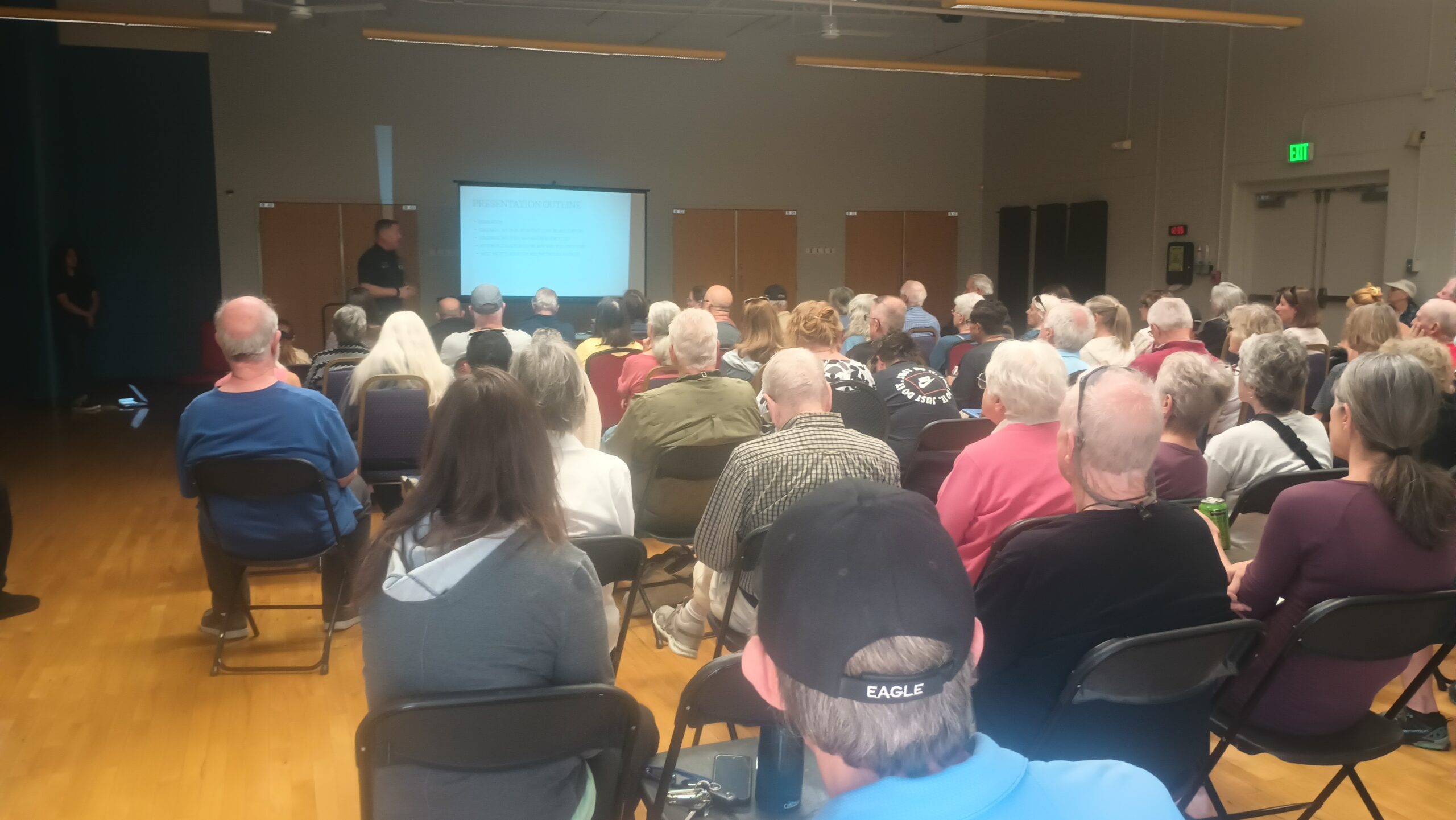
Lakewood is adding a new word to the dictionary — an innocuous move that covers up a dedicated zoning change for the Emory-Action Center swap while also shutting down future resident protests. Lakewood is planning on adding a new “Community Resource Facility” use to the zoning code to enable an “Amazon” warehouse-type low-income distribution center to operate anywhere in Lakewood. This new use is necessary for changes to the Emory Elementary property that Lakewood proposes to sell or exchange with the Action Center, which will convert it into a “Community Resource Facility”. That swap is not mentioned in the May 19th meeting on the zoning code change, even though the swap is what prompted the change in the first place. To listen to that meeting, one would think that there has just been a glaring oversight for the past 50 years, and no non-profits have been able to operate food pantries. Taken in isolation, residents could be forgiven for thinking that Lakewood didn’t have the ability to allow what is clearly already allowed in multiple places. Therefore, once again, residents must dig deeper to understand what is going on. In this case, allowing high populations of low-income support services in every zone in the city, including those previously reserved for schools. (For background, read Lakewood news at https://lakewoodinformer.com/springsteen-files-injunction-regarding-emory/) Travis Parker, Chief of Planning and Community Development, says Lakewood hasn’t had a request for something like this during his time with Lakewood, which may give residents an idea of the scale of the facility that is envisioned. The Action Center currently operates in a commercial area and sometimes has customers lined up down the block. The new “Facility” will be much larger. Envision the difference between the local retail shop and the Amazon warehouse. Are residents prepared for the warehouse of low-income services anywhere in the city? *Another word game warning: since places like the Action Center and Recovery Works are paid for by donations, Lakewood claims they are different from commercial activities, so they use the word “guests” instead of “customers”. They say this is a “distribution of goods and services” instead of commercial activity. The medium of exchange might be different, but the underlying intent is the same. The new code discriminates against for-profit businesses that are not eligible to operate everywhere in the city.  Lakewood is a government, not a charity, and this type of special treatment drives out other commercial businesses who cannot compete with special favors granted by the government. It also discriminates against smaller non-profits that currently operate throughout the city but are not getting financial favors from the city to host a “facility” — like the one envisioned by Lakewood for the Action Center. In a city where small businesses are closing everywhere, why give special treatment to organizations that don’t pay taxes? When a City Council member asked how existing operations were allowed, the answer was that they were in a mixed-use zone, but it was unknown under what technical use definition. Historical precedence seems to be pertinent to the discussion. Is it possible the man in charge doesn’t know how this could have been accomplished in the past? Or is the change specific to something that could be pertinent only to the Emory property swap Councilor Isabel Cruz asked what this change would look like outside of the school disposition process. Her question suggests an understanding that the change is driven specifically by the Action Center swap, even if that is not communicated directly. Councilor I. Cruz asks about smaller non-profits, but they are already allowed under existing rules. This change is necessary only to allow the Action Center’s mega-warehouse tied to land swap. Lakewood is making changes behind the scenes to preempt resident objections. Under current zoning, residents would have a chance to protest the Emory Elementary use change later. Adding this definition makes the change happen now, without specific public notice.

It’s Not Just a Housing Shortage. It’s a Rigged System

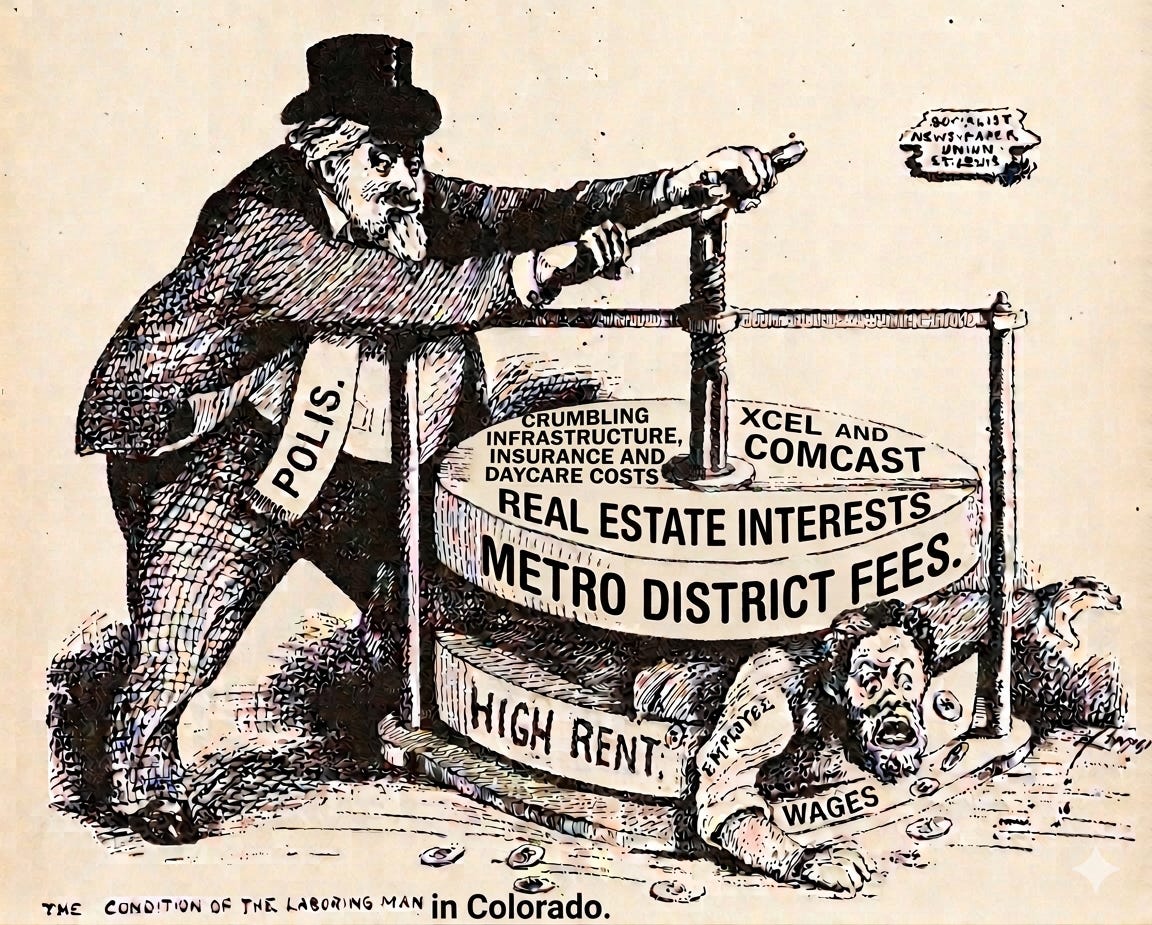
From Crash Davis You’ll hear it all the time, especially from pundits and politicians: “The solution to the housing crisis is simple. Just build more.” It sounds nice. It fits on a bumper sticker. But it’s not the full story. Not even close. We’re not just short on homes. We’ve built an entire system where housing has become the best way to build wealth, and where insiders control access to that wealth. I was talking to a friend the other day, and he mentioned a few people he knew who were doing very well financially. Every single one of them had made their money in real estate. That says a lot. Here in Colorado, you see the distortion everywhere. In Lakewood, homes are sitting on the market. The “supply” is technically there, but prices still start around $500,000 and go well past $1.4 million. That’s not a starter home. That’s not attainable for most working families. And it’s not just because we didn’t build enough. It’s because we’ve flooded the system with easy money for decades. It didn’t start with the pandemic. That just poured fuel on a fire that had already been burning since the financial crisis, the dot-com bust, and even before. Every time the economy hiccups, we inject liquidity, drop interest rates, and do whatever it takes to prop up asset values. The result is a distorted market where real estate becomes a magnet for cash, speculation, and institutional investment. Now we’re sitting on the flip side. High mortgage rates were needed to fight the very inflation we created, and a generation has been locked out of homeownership. And let’s talk about access. Realtors and brokers often have first shot at listings. Many flip properties before they ever reach the public. Investors buy homes in bulk with cash offers and zero contingencies. It’s not a level playing field. It’s insider baseball, and everyday buyers are the ones striking out. Some might say, “Well, you could become a Realtor too.” Maybe. But that’s not the point. I’m not asking to join the club. I’m asking whether the club should be allowed to set the rules for the entire market. Housing isn’t just another asset class. It’s where people live. And when those licensed to facilitate transactions also get first crack at the inventory, sometimes before the public even knows it exists, we’ve blurred the line between broker and player. In most financial markets, we call that insider trading. It’s illegal. But in real estate, it’s not only legal, it’s standard practice. Realtors can access private “pocket listings,” buy before a home is ever made public, and flip it, all within the rules. There’s no regulation that stops it. No disclosure requirement. No cap. It’s an advantage built into the structure, not earned through risk or innovation. This isn’t about more government control. It’s about a market that actually behaves like one. And here’s where it ties into something even bigger. We protect systems like this because we’re afraid to let them fail. When cracks appear, whether it’s the housing market, the student loan industry, or some part of the financial sector, we inject money, cut rates, float bailouts, or push subsidies to keep it all from collapsing. The result is inflated assets, moral hazard, and even more consolidation of advantage. We say we want affordability. But we prop up prices. We say we support markets. But we rig them to protect insiders. We’re not just creating housing problems. We’re institutionalizing them. Data shows this isn’t fringe theory. In markets like Phoenix, Las Vegas, and Miami, researchers have shown that speculative investor behavior directly drove price spikes and increased default risk during boom cycles. And it’s not just Wall Street firms. Small-scale investors now account for nearly 30 percent of all single-family home purchases nationwide. In California, nearly one in five homes is investor-owned. In some mountain and resort regions, it’s far higher. That’s not building community. That’s extracting profit and boxing out would-be homeowners. You can see it in housing. You can see it in student loans. We’ve created a culture where financial risk is absorbed by the system instead of the individual. Yes, many student loans were predatory, with poor disclosure and complex repayment terms that borrowers barely understood. And here’s the part no one talks about. More student loan debt is held by people over 50 than under 25. That’s not just a youth issue. It’s a long-term debt trap. And when people are carrying that kind of burden, along with auto loans and other monthly obligations, homeownership gets pushed further out of reach. Some expenses are personal choices, sure. But the bottom line is this. Housing affordability depends on more than home prices. It depends on what’s left after the system takes its cut. We’ve also created a generational split. Asset-holders benefit while asset-seekers fall behind. The longer we ignore that, the more brittle the system becomes. Meanwhile, the “just build more” crowd ignores a basic reality. Places like Colorado aren’t limitless. Buildable land is inherently scarce. Water is limited. Infrastructure can only stretch so far. And people want to live here, which means demand is high and growing. When you combine that kind of demand with natural constraints on supply, prices are going to rise. That’s not politics. That’s economics. And when people point out that only high-income households can afford to live in Boulder, the response is usually to push “affordable housing” into surrounding communities like Lakewood. That’s where things like ADUs, lot splits, and small infill units come in. The idea is to add supply by allowing people to subdivide their lots, build small houses, and either rent them out or sell them. On paper, it sounds practical. In reality, it often erodes the very character of the neighborhoods that make these places livable to begin with. Density without planning isn’t affordability. It’s just chaos with good intentions. And here’s another truth we rarely say out loud. Not everyone can or

Stop the Lakewood Zoning Code Fiasco

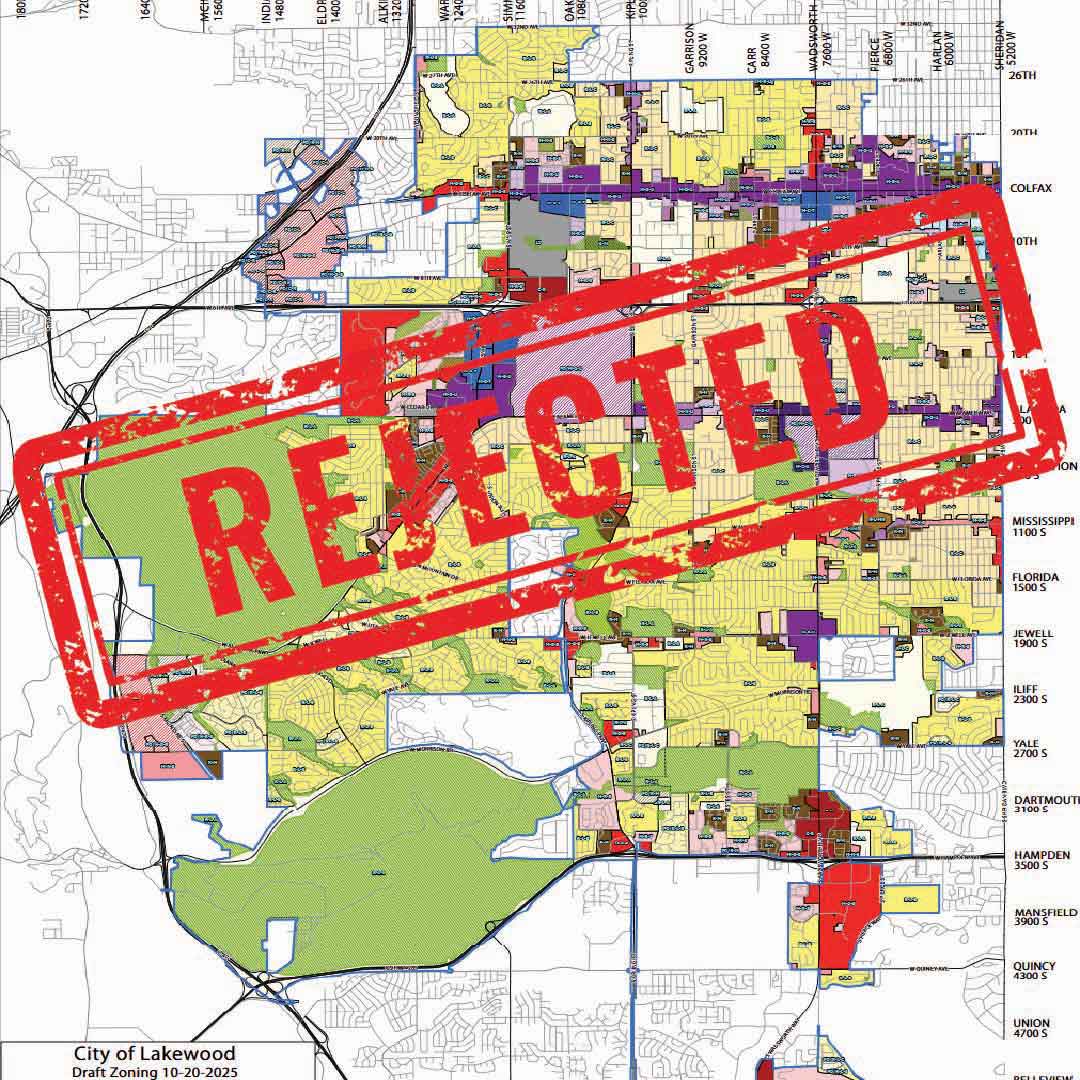
From Jim Kinney Friends and neighbors, I hope you all have had a chance to study the draft City of Lakewood Zoning Code being pushed forward by what appears to be the majority of City Council, the Mayor, and the City Manager and the Director of Planning. The new code is being “sold” as the answer to fix the problem that our City needs affordable housing. Minneapolis was the first city in the nation to abandon the single family zoning category, in about 2018, thinking that action was the answer to magically have the city filled with affordable housing. The article, Counterpoint: Upending Single-family Zoning Isn’t the Answer: Like many zombie ideas, the idea that zoning changes will magically provide abundant affordable housing just doesn’t die, was written by Linda McDonald, of Minneapolis, who is a former City Council member and is one of the founding members of the citizen group Minneapolis For Everyone. The following quote is taken from her article (my highlighting). “In addition, the Urban Institute found no evidence that more low-cost housing was built, or that lower-cost housing became less expensive when zoning was reduced. This isn’t surprising. The real reason new housing is so expensive is that the costs to build — lumber, copper, labor, etc. — have been increasing much faster than inflation. The private marketplace simply cannot produce deeply affordable housing, the housing critical for truly low-income persons. In Minneapolis, there has been an increase in deeply affordable housing, but only because the city has provided hundreds of millions of dollars in subsidies.” The draft Lakewood zoning codes proposes abandoning single-family zoning to solve the City’s lack of affordable housing. It has already been shown this approach has very little effect producing affordable housing. Tell City Council, the City Manager and the Director of Planning to abandon these draft new zoning codes, that abandoning single-family zoning is not the answer. If there is a reason to rewrite our current City Zoning codes, it is not to remove single-family zoning as the answer to magically adding abundant affordable housing. Educate yourself. Stand up and speak up. Council is planning on voting to make these disastrous draft codes our City law on August 25, 2025. In democracy,Jim Kinney

Now or Never Event

From Republican House Districts 28 and 30 Join us for a night to connect with local conservatives to discuss schools, elections, how we lost Colorado and how we win it back Who will be speaking Where & When Westfax Brewing: 6733 W Colfax, Lakewood 08.26.2025, 6:30PM – 8:30PM See pricing on the flyer

Why shouldn’t we pave over Graham Park?

From Eve S Build! Build! Build! That is the priority of the Ward 1 Council members. I live within a mile of Graham Park and this is the first I have heard of this new Build project. Who asked them to build at Graham Park? Have they done any environmental impact studies? How many trees will they cut down?   Graham Park is located at 2345 Routt St. in Ward 1. See Graham Park Improvements | Lakewood Together.      Before ruining this park, Lakewood should be required to study the impact of redevelopment on the native and migrating species that have been surviving on this small green space. This research should be done across all seasons so migrating species of insects and birds are not excluded. The existing trees should be examined and their uses should be included. The Lakewood forestry experts do NOT value old growth trees, but these are essential to many insects. Chickadees and raccoons build nests in the rotten spots of old trees, but Lakewood regards big, old trees as worthless. The city removes them and replaces them with non-native saplings. At Belmar Park Lake, the city ignored the requests of many residents to consider our wildlife and our ordinances. Among other negative decisions, they declared that roof tops fulfill the “open space” requirements. The Council members love concrete and asphalt and they hate all natural creatures and plants.     Lakewood said: “2025: Funding is allocated in the 2025-2026 budget for the removal of the Graham House and to incorporate passive-use park improvements at Graham Park.” Why do Jeslin and Glenda hate our natural areas so much? Why do they want to pave over every square foot that can be used by wildlife?  Ward 1 meeting is scheduled for August 9 at 9:30 am at Holy Shepherd Church at 920 Kipling. 

Lakewood Sacrifices Home Rule For No Reason

Lakewood seems to be giving up local control through home rule: The sacrifice is being made in order to gain state funding for local initiatives that ALSO have not been transparent and do not have resident support. Lakewood City Council is throwing away the bedrock of local representation – home rule – in a bid to win political support for zoning changes. New Colorado statutes preempt local zoning code, a move other cities are fighting. But Lakewood is using Colorado’s preemption to show: The majority of Lakewood City Council agree with the proposed zoning changes and have already voted by resolution to accept the proposal (only Councilor Olver dissenting – Ken Cruz and Bill Furman not yet on Council).   No Reason With the majority of Council in favor of the proposed code, Council should not have to worry that the changes will pass. There is no need to sacrifice home rule in order to pass the new code. Lakewood could fight for the principle of home rule – a principle Lakewood was FOUNDED ON over 50 years ago – and still enact the zoning code changes that Council feels are necessary. Instead, Lakewood will change its code so that for the first time state statutes will override local zoning (see highlighted insert from the version 3 redline proposal below). No Transparency According to resident Karen Gordey in Lakewood Informer news, the authority for  the zoning came from home rule itself. She wrote: “… the Authority section (17.1.5). It originally cited “the city home rule charter” — a key phrase affirming Lakewood’s autonomy. That language? Now redlined. Gone. Instead, we’re left wondering whether the City is scrubbing references to home rule on purpose… or just by accident (which, frankly, would be just as troubling).” There has been no public policy discussion nor vote on whether to yield home rule. Instead, it’s just being quietly edited out. This language may be extended next year because City Council has engaged a City Charter Committee to discuss changes. Note: cities zone to keep order and make sure there is a good balance between residents (cost burden) and businesses (fund providers). But in order to do that, property rights had to be violated to tell people what they could and couldn’t do with their property. Now Lakewood is saying they are “de-regulating” to give property owners more choices, but they are still picking the choices. An owner cannot go back to agriculture property, for example. State Preemption Governor Jared Polis signed an Executive Order forcing states to comply with housing laws in order to receive state funding. From ColoradoPolitics.com, the laws include those listed below: Colorado also passed TEN new laws in 2025 that the Colorado Municipal League determined preempted local control. Instead of fighting against any of these, Lakewood supported key legislation, such as HB25-1093, which reversed a vote of Lakewood residents. Lakewood Council Will Not Fight for Rights Lakewood did not take the opportunity to join the lawsuit that six cities are bringing against Colorado for overstepping home rule boundaries.  Thornton recently passed a resolution backing the lawsuit of those six cities. So far, no member of Lakewood City Council has brought something similar forward as a Council initiative. Most Council Members have made comments that Lakewood must comply with the state law. False Argument The argument that Lakewood has no choice but to comply with state law is completely false, as proven by history, other active lawsuits, and a legal opinion provided by the Colorado Municipal League (CML). The Colorado Sun reports that “the Colorado Municipal League this month advised cities in an email that it views the governor’s executive order as illegal. ‘It is CML’s position that this order exceeds the governor’s authority … and promotes arbitrary and capricious agency action.’” State Perspective Lakewood resident Lenore Herskovitz voiced concerns over home rule to a panel of Colorado Democrat leaders. She pointed out: Colorado Representative Rebekah Stewart responded by: Watch the video below: Local Support Lacking Ms. Lenore Herskovitz is one of many residents to bring up mountains of evidence about the abundant housing availability, such as her article titled “Affordable v Housing Crisis” or an article by savebelmarpark.com on Debunking the Supply and Demand Myth. These alternative points of view are not part of official presentations and are routinely dismissed. There doesn’t seem to be an answer to the question of how can a statewide, or even nationwide, affordable housing problem only be solved by changing multiple, unique, local zoning codes. What is known is that Lakewood already has the authority to change its zoning code if the residents support it. Lakewood officials seem to be using the state law as a crutch to win local support, but in the meantime, they are sacrificing home rule control without even bringing it to the attention of residents. As previously reported, Lakewood seems more concerned with getting state funding than gaining resident support for zoning changes. The state deadline for funding is in October 2025. That funding is used for other initiatives that don’t get resident support. Does Lakewood need a City Council if the only concern is what the state would do?

Lakewood Does Provide Sanctuary

Lakewood has reason to be concerned about being placed on the Department of Homeland Security (DHS) list of sanctuary cities. Email records show they do not comply with federal immigration law, nor do they plan to. Sanctuary was not granted through official vote of City Council; however, sanctuary from federal immigration law was undertaken behind the scenes while using word games to muddy the issue. From the emails, it appears that some Lakewood City Council Members do not appear to know the full extent of Lakewood’s defiance of federal law. On the other hand, DHS knows more than is publicly apparent – which makes sense because they are the ones that have been stonewalled for years. So although Lakewood does not pay for migrant support, it is clear that there is good reason for Lakewood to be placed on a sanctuary list, no matter the word games Lakewood plays. Lakewood City Council has repeatedly denied being a sanctuary city – which is true if defined by formal vote. However, it is not true that Lakewood does not provide sanctuary for illegals. Lakewood DOES provide sanctuary by not verifying immigration status or cooperating with DHS. In the beginning of the sanctuary city debate, the general public understood that a sanctuary city was just that – a safe place where your immigration status wouldn’t be questioned or held against you. Lakewood never made a public motion or official policy stating that they are a sanctuary city but it is apparent that they fully embrace and enable the state’s sanctuary status rather than federal immigration enforcement. No emails asking for removal When Lakewood was placed on the sanctuary city list, Lakewood did not issue a denial. There are no emails to DHS asking to be removed. That would be the first, honest, response from a city that was NOT acting as a sanctuary and was complying with federal immigration law. That’s what Aurora did. There is no email evidence that occurred in Lakewood. There are no emails asking why Lakewood is on the list. This is despite the fact that there is email from Senator Bennet’s office showing that jurisdictions with questions should reach out via email to SanctuaryJurisdictions@hq.dhs.gov. The official response to City Council was a bland email stating that Lakewood staff didn’t know why they were on the list or that they were concerned. Again, parsing the words carefully, staff “didn’t know why they were on the list” is different than “we have no idea why we are on the list.” Lakewood management may not have known the exact reason DHS was citing, but Lakewood would have known what internal procedural changes have been made over the years. Or perhaps Lakewood assumed they wouldn’t be singled out from other cities in Colorado who may have adopted similar, pro-sanctuary polices. Probably, they could rely on not having an official vote cast for sanctuary, which appears to be the case for some Councilors. Someone must have known there is a reason to be concerned, or they would have asked questions openly and honestly. Instead, Lakewood proceeded by investigating “delicately” (see email below). Lakewood declined to comment to the Denver Gazette and Denver 7 inquiries. A quick Google search could find no comment in any press coverage on the subject although Mayor Strom did reply to an msn.com inquiry. Official Response to City Council Don’t Draw Attention to Sanctuary Policies Nowhere anywhere did our investigation turn up evidence that Lakewood cooperates with DHS and ICE on immigration matters. There was never a suggestion that the situation was a misunderstanding. There was no proof emailed to DHS that Lakewood is indeed cooperating with federal immigration. There was one email showing that a Lakewood employee signed up for e-verify for the first time on Monday, June 2, in what may be a coincidence or a panicked response. In this case, Lakewood appears to have taken the approach that the less said the better because Lakewood cooperates with state law. Colorado sanctuary law is obviously intended to conflict with federal law. Lakewood’s cooperation with the state may be seen in multiple subversive actions, rather than one blanket vote by city council for “sanctuary”. And in fact, Ben Goldstein wrote: “Overall, I think the best strategy is to keep our heads down on this one, but perhaps the cat is out of the bag now” (see below). Lakewood Does Not Cooperate With Federal Immigration Proof that Lakewood provides sanctuary by not cooperating with DHS is shown in several ways besides being unable to deny the charge: There are also a couple things conspicuously missing: Complying with Colorado Law Over Federal Law As one example of City Council opinions, Councilor Jacob LaBure believes being placed on the sanctuary city list is “baseless” (see email below). LaBure’s response is the strong denial of an innocent man – which stands in stark contrast to the “keep your head down approach” from Lakewood management. However, strong beliefs or rewriting definitions of sanctuary does not change Lakewood’s support of migrant polices in 2024 or Lakewood’s vote to help Denver with its influx of migrants or Lakewood’s policy to lessen migrants deportation fears. As previously reported, such support is the original definition of a sanctuary city. In 2024 Lakewood Informer filed CORAs regarding immigration policy and did not receive any answers as to enforcement actions. The responding supervisor said the public information officer would be reaching out – an action that didn’t happen. Verbal responses in public meetings align with Jeffco’s response. They say that checking immigration status, which used to be a routine practice, was not the job of local jurisdictions. There is no federal law that says a home rule police department must check immigration status. This was just a matter of routine, like checking to see if you had an out-of-state drivers license. Lakewood no longer regularly does these routine checks. No Use of DHS Database Colorado law requires Lakewood to NOT share personally identifiable information with DHS non-public databases.

Why should habitats including Belmar Park be protected?

From SaveBelmarPark.com Because “biological annihilation” is happening NOW according to Stanford biologists Paul Ehrlich, Rodolfo Dirzo and colleague Gerardo Ceballos.  Key quotes from the paper: “Earth’s sixth mass extinction episode has proceeded further than most assume.” What is Lakewood City Council doing locally to help the planet deal with this crisis? Lakewood’s answer is to ignore science and promote luxury housing that will harm a riparian habitat while citing the fake ‘housing shortage’. Yet the city council wants everyone to think there is not enough housing for a ‘growing’ population.  City council, when does your denial of reality cross the line from being misinformed to being blatantly dishonest? The county has lost 4% of population in 4 years.  The local school district has closed 21 schools since 2021.  School buildings are actually up for sale in Lakewood.   Lakewood’s housing pipeline already has a 10-15 year supply based on the city’s own study!  Zillow shows over 1,500 rentals advertised in Lakewood today including hundreds of units within walking distance of Belmar Park. Council members, if this summation is not correct, then please explain why you refuse to protect habitats including Belmar Park.  Eminent domain is at your service if needed. Yes, the Kairoi Belmar housing project, as planned without a science-based raptor buffer zone, will harm the rare riparian wildlife habitat at Belmar Park. Lakewood City Council cannot fix a global problem.  But they can show leadership and be a model for how cities can play an important role. City Council, please do not take comfort just because you are not alone in participating in the sixth mass extinction event and stealing from the future of our children. Lakewood, this is exactly how to give the children a planet struggling to support human life.  Or worse. Colorado Parks and Wildlife recommends a raptor buffer zone at Belmar park based on ‘best available science’!   Is that too much to ask? Some might say why worry?  There is plenty of wildlife in Africa, so let’s eat, drink and be merry and forget about protecting habitats here.  The planet is too big for humans to ever ruin it. Unfortunately, Dr. Lawrence Frank is quoted above regarding the ‘horrific’ loss of wildlife in Africa over the last 200 years. He spent decades tracking and studying lions in Africa.  He started back before GPS tracking collars for lions were even available.   Back then, once you had a collar on a lion, you had to drive around off road in Kenya to try and get in radio range of the collars using a YAG antenna to track and count the animals.  He told me bouncing around on that terrain was very hard on his back.   He explains during the Q&A at the end of the video that as humans continue to encroach on habitats in Africa, what wildlife still remains has a very uncertain future. Dr. Ehrlich’s paper points out that species extinctions over the last 200 years should have taken 10,000 years! What is happening is a global crisis.  Protecting habitats will be the best and probably the only way out of it. Some might cite the recent example of the dire wolf that was supposedly extinct but brought back to life via genetic engineering by a company called Colossal Biosciences.  The hope the company was claiming is that other species could be resurrected from extinction using the same technology.   But the company’s chief scientist has now admitted just a few weeks ago the animal was not a true dire wolf but simply a grey wolf with a few modified traits to make it resemble the appearance of a dire wolf. Humans make up less than 0.5% of the total biomass of the planet, yet we are responsible for the ongoing 6th extinction event.   Wild mammals make up even less of the total biomass than we do! It is up to us stop it.   The Ehrlich paper explains that ecosystem services essential to civilization are already being eroded and damaged. There are 20 to 30 years at most to stop the mass extinction event. It is time to wake up.  That includes you, City Council.  Wake up.   You are responsible for protecting habitats in Lakewood.  Please do your job for the sake of your own children. Thanks for listening, Steve

Crystals, Community & Celebration: Mountain Mineral Market’s Solstice Weekend

From Mountain Mineral Market Mountain Mineral Market is excited to announce its next immersive community experience: theSummer Solstice Pop-Up, taking place on Saturday, June 21, and Sunday, June 22, 2025.Open to the public, this vibrant outdoor two-day market will feature local vendor booths,delicious food trucks, and fun summer surprises for all! Don’t miss your chance to join thecelebration! Event DetailsLocation: 2300 Kipling St, Lakewood, CO 80215Dates: Saturday, June 21 & Sunday, June 22, 2025Times: 12:00 PM–5:00 PM Locally owned and operated, Mountain Mineral Market is known for its rare finds of crystals,gemstones, minerals, plants, and jewelry. In addition to pop-ups like the Summer SolsticeMarket, we host monthly Full Moon Parties. These include immersive offerings such as tarotreadings, live music, painting sessions, and henna tattoos, creating a magical andwelcoming space for spiritual exploration and creative expression.We also host Reiki and Aura photography pop-ups most months, typically offered separatelyfrom our market pop-ups and Full Moon events, giving guests more opportunities to trysomething new and expand their energetic or spiritual practice For updates, please visit our social media or website.● facebook.com/mountainmineralmarket● instagram.com/mountainmineralmarket

Potluck Ticketing Update

Due to a bad actor with a penchant for using false names, free tickets are not available at this time.  Please email me directly for a free registration with confirmed email and phone number.  Karen at thedesk@lakewoodinformer.com These free tickets will not be honored because they didn’t follow the rules but I expect this troublesome group to keep making trouble. But then again, that’s why we are meeting, to figure out how to overcome obstacles like this. Hope to see you there!

Scroll to top