Lakewood Informer

Resident generated news about Lakewood, Colorado

Lakewood Informer

Resident generated news about Lakewood, Colorado

Homeless

Lakewood Still Dodging Hearing on Shelter Permit

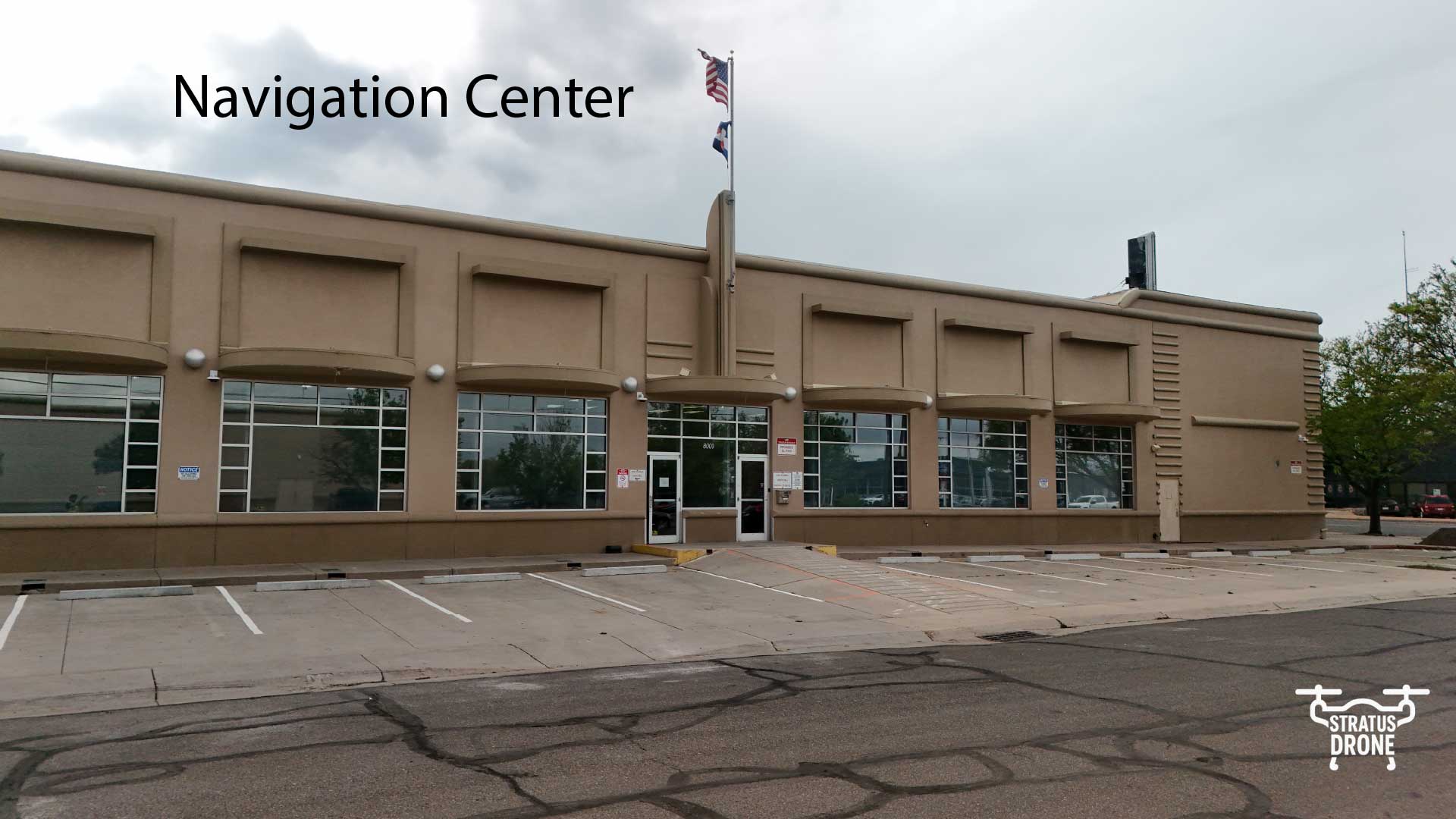
In another example of Lakewood manipulating the rules, there appears to be no intention to get a special use permit to operate the newly renovated Navigation Center.

Under 2025 zoning rules, a homeless shelter requires a special use permit. Such permit requires a public hearing. The Navigation Center “extreme weather” shelter bypassed this requirement through the “emergency” ordinance, even though there was plenty of time to anticipate winter.

Winter comes every year after all.

In the 2026 zoning ordinance, Lakewood removed the requirement for a special use permit.

Navigation Center Emergency Deal Closes

Lakewood passed another “emergency” ordinance, December 8, 2025, once again showing an inability – or purposeful unwillingness – to properly plan for the Navigation Center. The latest “emergency” was a lease that was months in the making. Lakewood used “emergency” and non-profit non-city meetings to skirt public input.  The new lease and the property sale both rely on new zoning to keep the public in the dark and do spot zoning for favored projects. No one has addressed how the Center will be affected by the potential repeal of the new zoning nor has the declining neighborhood been addressed. During the January 8 meeting, a resident publicly complained about how the Navigation Center was negatively impacting his business.

Upzoning and Homelessness

From savebelmarpark.com

Homelessness, and especially people who are unhoused, is a growing concern in the US.  Upzoning advocates have pointed to the high cost of housing as a key driver of homelessness and that upzoning would make housing more affordable and therefore would reduce the number of unhoused persons in a city.

‘Upzoning’ is a city planning strategy to increase housing density and therefore housing supply via related zoning changes to support the strategy.

Springsteen Wins Injunction on Emory

Anita Springsteen, former Lakewood City Council Member and attorney, has won an injunction filed against Lakewood. The injunction will pause two upcoming votes on Emory,  wherein Lakewood is acting as an agent for the Action Center. It is unclear what, if any, benefit Lakewood will gain through this deal, but it is very clear the city will lose millions. At the same time, the Action Center will gain millions of dollars of property that it could not get without the special privileges of the government middleman. The injunction will pause the vote until after the previously scheduled October 28, 2025, court date.

The Psychology of Living In Decay

From Ramey Johnson’s Newletter The decay and decline in our community are visible, real, growing, and palpable. Driving along 6th Avenue (though managed by CDOT) feels like a scavenger hunt through cans, rags, tires, car parts, cardboard, overgrown weeds, buckets of dirt, broken glass, and filth. On West 14th Avenue and nearby side streets, the scene is equally disheartening: homeless encampments, tents, graffiti, fenced-off vacant lots, trash, needles, and even human feces have become the norm. Colfax has all but collapsed. Every block from Sheridan to beyond Simms is littered with For Sale and For Lease signs, boarded-up buildings, graffiti, shattered storefronts, shuttered businesses, and abandoned shopping carts – sometimes overflowing with belongings. Businesses are fleeing this once-thriving street. But what does it do to the psyche of those of us who call Lakewood home—and pay property taxes – to live amid decay, squalor, and a declining local economy? Having grown up here, I decided to find out. As it turns out, researchers have studied this very thing. The most familiar is the “Broken Windows Theory.” This criminological concept uses broken windows as a metaphor for anti-social behavior and civil disorder. It draws a stark contrast between caring and apathy toward the physical appearance of a neighborhood. Visible signs of crime and neglect, like broken windows, create an environment that encourages further crime and disorder. The theory suggests that addressing small offenses and maintaining physical order can help prevent more serious crimes. Rooted in the idea of social disorder, Wilson and Kelling argue that such disorder erodes community cohesion and the sense of safety among residents, making neighborhoods an easy target for criminals. Whoa. I needed to know more. As I dug deeper, I discovered that the psychology of living in a decayed environment has been studied extensively, and it offers sobering insights into the psyche of those who call such areas home. Here’s what I found: A 2010 study even found that wives who perceived their homes as cluttered had higher cortisol levels. That one struck a chord with me. CORTISOL – the so-called “stress hormone” produced by the adrenal glands – plays a key role in regulating metabolism, immune response, and blood pressure. But when cortisol levels remain high over time, the health consequences can be serious. After reading these findings, I realized: this isn’t just about potholes, weeds, or trash. The residents of Lakewood may be experiencing a profound shift in our communal psyche, and it’s not in our best interest. As for me, I feel embarrassed and even ashamed to show out-of-town guests my city. Every time I drive down 6th Avenue, I’m hit with irritation and anger. I see people stop caring for their own properties, and I understand why. Why should anyone care when they live next to a “city right of way” where weeds grow five feet tall and filth piles up along the roadside? When we live amid decay and squalor, it becomes easier to toss trash out the car window. If our city is crumbling and its leaders aren’t addressing the degradation, what difference does it make? For some, instead of continuing to fight for our city by writing letters, showing up at meetings, and pleading with city council, they choose flight. Longtime residents are leaving if they have the means. For those who don’t, the symptoms I outlined earlier only deepen and spread. Many questions, but no answers: At the end of the 2024 legislative session, Governor Polis introduced HB24-1313, which designates a half-mile on either side of light rail lines as “Transit-Oriented High Density” zones. It passed. Applied to Lakewood, that half-mile swath encompasses Colfax and 14th Avenue. Meanwhile, six Colorado cities, Arvada, Aurora, Glendale, Greenwood Village, Lafayette, and Westminster, are suing Governor Polis and the state over recent housing legislation (HB24-1313), claiming it violates their home-rule authority. They argue the new laws infringe on their ability to govern local land use. One bill focuses on dramatically increasing density near transit. WHY hasn’t Lakewood joined this lawsuit? We are a home-rule city too. Zoning is a local issue. This bill never should have been introduced by the governor – or passed. No two cities are alike. And yet, both of our state representatives, Monica Duran and Rebekah Stewart, voted YES. Does supporting a lame-duck governor hold more value for them than representing the best interests of the people who elected them? WHY? In the end, we must all ask ourselves: Has the decay and deterioration surrounding us in Lakewood become our personal norm? The majority of this neglect falls squarely at the feet of our city government. The question is: Are we willing to keep fighting—or will we flee? If you’re as concerned as I am, let’s not stay silent. Contact our city council, demand answers, and refuse to let Lakewood’s decline continue unchecked. Together, we can hold our leaders accountable and fight for the city we deserve. Thank you for taking the time to read this newsletter. I welcome and appreciate your comments. With warm regards,Ramey Johnson

Sacrificing Neighborhoods Allows Homeless Funding

Why the big rush to change the zoning code? Follow the money. The money trail leads to state grant funding, which primarily supports homeless and sustainability initiatives. Without that agenda, Lakewood could decide for itself which, if any, of the state initiatives make sense locally. Colorado has decided to override local zoning in a power grab against local home rule. Other cities are fighting back against Colorado with legal cases. But Lakewood will not fight for home rule. They are not only implementing the state law but going further in densification, all while citing the need to comply with state law Lakewood receives millions of dollars in state grants for initiatives like sustainability and the new navigation center. The purchase and renovation of the old Harley Davidson building was done using state grants. To continue funding sustainability and homeless initiatives, Lakewood must either fund it internally (a political impossibility) or comply with state zoning codes. And if the state zoning codes are not what Lakewood residents had in mind when they discussed “affordable housing” solutions, that’s a sacrifice Lakewood is willing to make on your behalf. Note: For the purposes of this article, “Lakewood” means the majority opinion of city officials. It is hard to tell who is speaking in public workshops, there is a lot of backroom personal communications, as well as conflicting explanations given in ward meetings. To establish personal beliefs, please contact your city official with detailed questions that are beyond the scope of this article. Lakewood’s proposed zoning code sacrifices existing neighborhood stability in the hopes of creating affordable housing. Occupancy limits everywhere are eliminated so there can be 20, unrelated, non-owner residents in a house. The house nextdoor may be torn down and replaced with a duplex or a cottage court*. Small retail is now allowed, mixing business with residential. Every property in Lakewood is now a transition zone. *Cottage Court: According to a 2022 report from AARP, cottage courts are defined as a small collection of bungalow-style homes that are “typically 1 to 1½ stories tall and are oriented around a courtyard that serves as an outdoor community space in lieu of rear yards.” – HousingWIre There is no guarantee that any of these changes will achieve their desired goals. Studies abound on both sides. However, Lakewood has already been promised affordable housing since the 2012 zoning rewrite that spawned the term “Soviet-style apartment blocks” with zero new “affordable” units created. Is there any reason to think this big change will be different? Lakewood’s proposed zoning code is not ready for first reading yet, so residents don’t know all the details. The latest redline is from May 19. However, residents do know that know matter what is in there, it is good and necessary because City Council passed a resolution saying so in December of 2024. Lakewood’s navigation center is a contentious issue that hinged largely on the ability to get “free money” from the state. Many homeless and sustainability measures that were supported by the state did not go through a full public policy debate because that wasn’t necessary if Lakewood wasn’t spending its own money. Now that decision is coming back to haunt Lakewood residents, who will be paying for that money by sacrificing their neighborhood stability.

Lakewood Navigation Center Closes for Renovations

The Navigation Center in Lakewood is closed for renovations to make it suitable for a permanent shelter. When this building was purchased, it was supposed to be a resource center that, if feasible and approved for permit, would be used as a shelter. That story changed immediately upon purchase and it started operating as an emergency shelter while facilities were tested and renovations evaluated. The scope of the renovations increased, the plumbing difficulties increased, and the need for a full-time shelter accelerated. Lakewood residents have not yet had a meeting to share public comment or approval on the shelter. Lakewood’s City Manager continues to operate the shelter on an “emergency” basis rather than go through the special use permit process. Lakewood assures residents that they will have time to be heard – later, when it’s irrelevant, because the building was purchased and the renovations will be complete. This is similar to the public comment planned for the purchase of Emory Elementary on behalf of the Action Center. Residents will be heard – later. The following article has a thorough update, including an update on MountainView Flats. That purchase was also funded with ARPA grants that are no longer expected to continue. Homeless navigation center in Colorado closes amid renovations, with goal of creating full-time shelter By Andrew Haubner at cbsnews.com RecoveryWorks in Lakewood has been a central gathering point for the area’s homeless population in need of resources. The navigation center, which sits on the corner of W Colfax Avenue and Allison Street, provides services such as behavioral health aid, medical help or just a hot meal. But, for the next six months, the center is closed as RecoveryWorks renovates the space.  The hope, executive director James Ginsburg says, is a 103-bed, full-time overnight shelter to help get people off the street and provide a more consistent and reliable resource to add in the transition from homelessness to housing.  RecoveryWorks is operating out of MountainView Flats, a transitionary or “bridge” housing community in Lakewood. Registered Nurse Shawn Marzan and his street medical team at STRIDE Community Health Center have set up shop in one of the rooms, planning their day and being a medical resource for those that live there.  “If [people are] in a centralized location where we know where they’re gonna be, you can provide them medical, you can provide them behavioral health,” Marzan told CBS Colorado. “You can provide not just the medical piece but the social piece too.” Read the rest of the article at cbsnews.com

What Is the Government Solution to Homeless

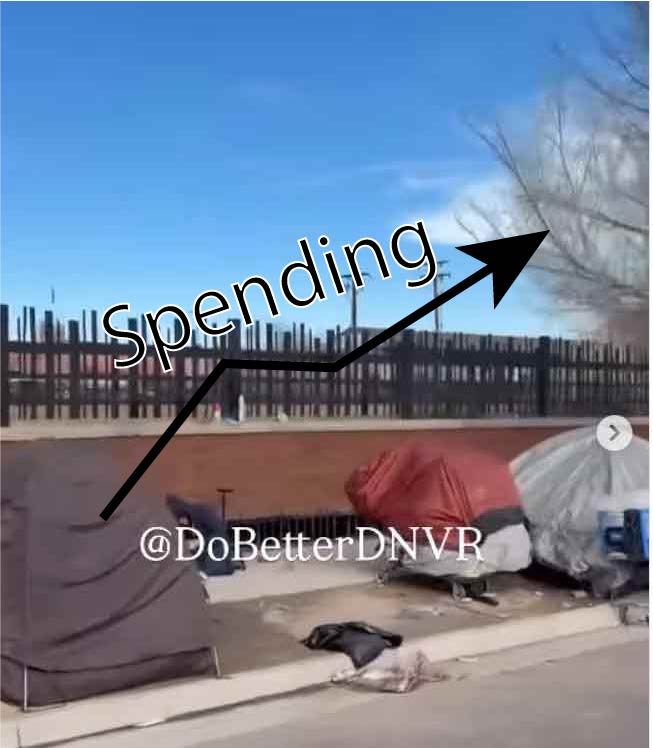
Lakewood residents reach out for a government solution to homeless encampments, as written about on kdvr.com by Alliyah Sims. Lakewood says encampments like these are the reason to open more shelters and offer more resources. But not everyone takes the resources offered. The problem, as noted in the article, is that these encampments (not all) are located in an area that caters to homeless. Lakewood’s Navigation Center is half a mile away, the Action Center less than a mile away, outpatient services near this encampment at 14th and Vance, and others close by. But what if the unhoused do not want the resources provided? Governments can force taxpayers to provide resources but they can’t force people to utilize them as intended. Lakewood police say help has been offered but not often accepted. As the author of San Fransicko wrote, ““Homeless is a propaganda word” because it also describes the open-drug scene. Because when you say homeless you think it’s a housing problem and people who only have housing problems are the easiest populations to help. The overwhelming problem with the homeless is street addiction and untreated mental health crises.”  – Michael Shellenberger Cities like San Francisco and Denver have been experimenting with government solutions but the only continuing metric of success is the amount of people served and money spent. The increasing number of homeless in these cities is disregarded as irrelevant. From kdvr.com: “Neighbors living in Lakewood are calling for the city to come up with a permanent solution to homeless encampments popping up in their neighborhoods. “They say the sites near 14th Avenue and Vance Street have been a problem within the last year, but they have seen it grow with the recent cleanup at the 6th Avenue and Wadsworth Boulevard interchange that happened last week.‘Long time coming’: Lakewood homeless encampment cleared “Lakewood police say while they are aware of the camp, they can not confirm if it’s the same people from the 6th and Wadsworth clean-up. “They say they offered help to everyone living there, but a lot of times it’s just not accepted, creating an endless cycle. “I’ve been at this location for almost 10 years now, and we love the work we do and love helping others,” said Marie Archambault.” Read the full article….

‘Long time coming’: Lakewood homeless encampment cleared

From https://kdvr.com/, by Alliyah Sims, LAKEWOOD, Colo. (KDVR) — After nearly two weeks of pushing for answers and two years of neighbors dealing with a growing homeless encampment at the 6th Avenue and Wadsworth Boulevard interchange in Lakewood, crews cleared the site Wednesday. Mounting trash, fires being started, needles found in neighbors’ backyards, and contamination in a waterway that feeds into the Platte River were all big concerns. Cleanup started around 9 a.m. on Wednesday and lasted about 8 hours. Read the full article from KDVR

Fire in Lakewood Raises Policy Concerns

As reported by CBS News, a fire in an abandoned gas station on February 3 endangered 20-30 homeless people who were using the building as a shelter. The situation underscores the need to re-examine several ongoing strategies, such as: Which of these policies were effective in de-escalating the ongoing safety situation? From CBS News, by Karen Morfitt Fire in vacant Colorado gas station doubling as shelter for unhoused highlights concerns of neighbors At around 10 p.m. on Monday night a fire tore through a vacant Colorado building that was once used as a gas station. The building at the corner of Alameda Avenue and Harlan Street in Lakewood was being used as a shelter. A resident of the apartment building next door captured video of flames shooting out of the building’s windows. “Thank God the response was quick,” Victor Garibay said. Garibay didn’t take the video, but he lives in the same apartment building. He and his neighbors raised concerns about people coming and going from the building several times. “A lot of people have gone to the police have gone to the fire department and told them about the issues here — people coming in and out. The drug use, of course. The police have come, the fire department has come but they never seem to really be able to do anything about it,” he said. Read article from CBS…

Scroll to top