Lakewood Informer

Resident generated news about Lakewood, Colorado

Lakewood Informer

Resident generated news about Lakewood, Colorado

Entrenched Bureaucracy

Likely Defect Identified in Planning Commission Software

From savebelmarpark.com The 777 S Yarrow public hearing is very close on: May 7th at 7:00 PM at 480 S Alison Parkway, Lakewood, CO You may now enter public comments online at: https://lakewoodspeaks.org/meetings/869. You may have to click on item 3. Unfortunately, a likely defect in the Planning Commission’s online file upload process has been identified and was reported via a follow-up public comment.  However, that public comment was rejected by Lakewood for violating comment policy. It appears the comment was rejected out of an assumption that the Planning Commission software could not possibly be broken. The city clerk was also very helpful in providing examples of other comments with attachments that were publicly posted as proof that the upload process is not broken. Notably, NONE of the examples provided by the clerk included the .doc file extension. Therefore, because Lakewood was obviously not going to investigate a reported defect that could potentially have been suppressing public comment file attachments for a long time, perhaps years, I investigated. It turns out that the Planning Commission does NOT accept all of the file extensions specified on the file upload dialogue (which is shown in the image at the top of page). Once I converted the .doc file to a .pdf file, then the upload process was successful! If you upload a file with a supported  .doc file extension, for example, it appears to work properly. However, if your comment is approved for publication, the attachment is never displayed. This is a material error because members of the public may reasonably assume their upload was successful since no error message is ever produced at any point in time during this process.   Nor does the moderation process capture file upload errors and notify users.   Nor are members of the public ever advised that the software may be unreliable and may silently dispose of file uploads. Upon reviewing public comments just this morning, one person who supports approving the Kairoi project referenced his attached letter.  But no attached letter was displayed.  So his attachment may also have been lost by the software. Therefore, members of the public or any parties with a matter to be heard by a quasi-judicial panel could upload files for the official hearing record and discover after the hearing record is closed that their file uploads were rejected.  Then it is too late to re-submit their files. This problem is also complicated by a significant conflict of interest due to the fact that Mr. Parker, Lakewood’s executive in charge of making development recommendations to the Planning Commission and/or City Council, is also and incredibly an advisor on the executive team of the same software company that is at the crux of possibly suppressing public comment by silently rejecting documents intended for quasi-judicial hearings. We suggest the city is indifferent both to the public perception and the risks of this conflict of interest. We also suggest that as a result of enabling this conflict of interest, the city is also indifferent to the requirement for software quality control. Please consider that a quasi-judicial hearing is a legal proceeding.  What if the clerk of a court periodically discarded or lost documents delivered by litigants without telling anyone?  What do you think would happen to that court clerk if this malfeasance came to light after years of discarding court documents? We are not suggesting any Lakewood employees are disposing of these files.  The comparison is being made to the apparently inconsistent software vs what if an employee hypothetically did the same thing?  We doubt that an employee would get off so easily. But in Lakewood, the software does get off easily. And consequences can be significant if a court is not diligent regarding management of important technology used in processing court documents or evidence. Consider the Colorado Bureau of Investigation and the fiasco over their DNA tests.  It was recently revealed that hundreds of DNA tests were allegedly ‘manipulated’ over a 30-year time period and as a result material facts were omitted from official records even though no DNA matches were falsified.  The CBI Director stated: ““Our actions in rectifying this unprecedented breach of trust will be thorough and transparent.”   Will Lakewood be as forthcoming regarding ignored software defects that potentially corrupted public hearing records? Has this defect been suppressing relevant files for years?  It is possible.  Especially considering Lakewood does not seem responsive to any report that the software does not work properly.  Anyone who has previously reported a problem may have received a similar response that it was user error because other people can upload files – but of a different file type. Therefore, we strongly urge that Mr. Parker be required to recuse from any matter that may eventually involve the Planning Commission or City Council where the PeopleSpeak software is used to accept public comments for any quasi-judicial hearings or city council meetings. In the meantime, any past decisions made by the Planning Commission or City Council where online public comments were accepted from the public should be reviewed and new hearings potentially announced once the software is fixed. Stay tuned and thanks for listening, Steve

Springsteen Files Injunction Regarding Emory

Former Lakewood City Councilor and attorney Anita Springsteen is no stranger to Lakewood’s backroom dealing and use of executive sessions. Springsteen has filed two lawsuits against the city for using “negotiations” as the context for an executive session. Allegedly, those meetings were open meetings violations because they didn’t provide enough detail on the “negotiations” involved. Those allegations are playing out about the purchase of Emory school. Even residents living next to Emory had no idea the city was trying to purchase the school for the Action Center.  Springsteen filed an injunction to prevent the city from voting on the property purchase April 28 but Springsteen says “the Court held that the issue was moot when Council held the vote despite being on notice of the request for injunction.” She plans to refile the motion to prevent further actions by the city. She is also communicating with the Jefferson County Schools so they are on notice of breach of fiduciary duty. Councilor Mayott-Guerrero asked for an attorney to explain why residents have not seen open conversations about purchasing Emory before. The attorney for the city said negotiations are protected by executive sessions so there has been no public notice until now. The April 28 meeting, during which this conversation and vote took place, was duly noticed, he advised. Unfortunately, that still left many residents in Lakewood feeling like they were unprepared, not informed and left in the dark. Which is entirely reasonable since, as Lakewood just admitted, they did not tell residents they were working on this until now. Lakewood did not put the address of the property on which they were negotiating in the notice for executive sessions. City Council and staff were very clear that this was only the first step and that the city needed to proceed in this matter so they could progress to formal negotiations. But then what were they doing in previous executive sessions? Lakewood could have been transparent and told residents in September of 2023 that they were interested in buying the school on behalf of the Action Center, as documents show. Instead of fully explaining the plans for Emory, Lakewood cried “misinformation” and only addressed limited misunderstandings. There are also allegations that Jeffco was hiding talks because they were involved in negotiations to sell the property four months before it was officially disposed of. Council and staff still say that no decisions have been made and that they will listen to resident input at future meetings. Of course, that’s a variation of what they have said for the past year and a half while decisions were being made. There is no indication that plans will change based on resident input at the city level but that may be different at the school district level. There is also the possibility that the expanded interests of the Action Center will persuade people that this is the best use of Emory. The purchase of Emory for the Action Center was a priority for Lakewood since the school’s closing. It was the first and only one on the municipal option list to begin in January of 2024. Springsteen was one of four Councilors who demanded transparency before allowing an executive session to proceed. The session involved the City Manager’s contract renegotiation. The four Councilors calling for transparency prevented a super majority vote, which is required for an Executive Session to proceed.  This forced the contract renewal to take place at a public meeting so that the public could see who voted to renew the City Manager’s contract, which increased her benefits. Springsteen has filed three lawsuits regarding open meetings violations, two of which pertain to property negotiations. Springsteen says “the third case was for an Executive Session involving ‘legal advice’ on a CCU issue that had already been resolved upon appeal a year prior, which calls into question the purpose of the meeting.”

Lakewood’s shady Jeffco Schools business deal

By Jimmy Sengenberger, in the Denver Gazette The backroom deal I warned about last year is now playing out in broad daylight. In February 2024, I asked whether Lakewood was eyeing a bargain on the closed Emory Elementary — a deal that could dodge public input and leave Jeffco taxpayers holding the bag. Fifteen months later, the answer is a resounding yes. On Monday, Lakewood’s City Council authorized a $4 million below-market purchase of the school — a site that got $2.6 million in taxpayer-funded upgrades before Jeffco closed it in 2023. It’s now on track to become the new home of the nonprofit Action Center — courtesy of a taxpayer-funded workaround. The Action Center’s mission may be noble, serving vulnerable families and individuals. But the process? Not so much. It reeks of an almost theatrical disregard for transparency and taxpayer interests — with a straight face. In January 2024, Jeffco Schools quietly introduced a new “Municipal Interest” process giving municipalities like Lakewood first dibs on shuttered schools — without competitive bidding or public input. COO Jeff Gatlin confirmed Lakewood’s “interest in the Emory property,” revealing they were already “working through the municipal interest route.” Translation? A backdoor sale — letting Jeffco Schools unload taxpayer-funded property at a loss. A consultant even advised this process empowered the district to skip community feedback entirely. Read the rest of the article….

Toxic Legacy: Uncovering the Chemical Contamination at the Denver Federal Center – Part 3: The Bend Project and the City’s Blight of Transparency

By Karen Gordey See Part 1 and Part 2 for more background The Lakewood Planning Commission met on January 22, 2025; the day after the West Metro Fire Department Board of Director meeting.   During this meeting, Anne Ricker from Ricker Cunningham presented “The Bend” to the Planning Commission.  Commission Kolkmeier stated, “Just note for folks, listening and reminder to commissions and folks in attendance today that this is an unusual matter that comes before us.  We don’t typically get asked to make a recommendation as it relates to compliance the comprehensive plan on an urban renewal project.  But it is pretty straightforward.  The specific question that we will be discussing today is whether or not the proposal that is presented is in compliance with the comprehensive plan already adopted by the city of Lakewood.  That is the current plan, not the next plan that is still in process.” The documents (located on Lakewood Speaks) provided to the Planning Commission were the following: Where is the Blight Report also known as a Conditions Survey? Why does the Lakewood Planning Commission not know what the actual approval process for Urban Renewal project is?  The blight survey, while mentioned in the presentation, was not presented separately to the Planning Commission.    On February 3rd, I submitted a CORA request and subsequently received the blight report.   It is a 42 page document.  The closest document (shown above) would be the first one titled, “9.11.24 The Bend @ Lakewood Urban Renewal Plan revised 12.30.24 corrected 1.8.2025.  However, that document is only 32 pages and is missing the following pertinent information (and therefore is not the Blight Report/Conditions Survey): The Phase 1 Environmental Site Assessment Environmental remediation Institutional Controls CDPHE findings Any land use restrictions Red Flags in the Blight Report Here are just a few of the inconsistencies: Feel free to look over both documents using this link:  https://drive.google.com/drive/folders/1O0eNIOLdCo833C0xGKrvvRAeH9sUeVez and ask yourself why would this type of pertinent information be omitted from the public documents. Is This Really “Blighted”? Because the property is predominantly open land, the statute requires at least 5 out of 11 blight factors to justify a designation. The planning commission presentation claims the land meets 9 out of 11.  A striking figure, considering the area’s size and federal legacy.  The City Council has yet to vote this as a new urban renewal project so it is not yet officially blighted. Additionally, the deed and the developer both mention an underground storage tank that leaked VOCS and MTBE.  However, do we know where this underground storage tank was located on the DFC?  Historical government documents tell a different story.  They reference TCA, TCE, DCE and never mention MTBE.  Building number at the Denver Federal Center changed over time, so: is the tank even in the location cited?  Is it the same tank? (Editors note: You can research underground storage tank locations at the EPA website) If the full report acknowledges multiple land use restrictions, how did the Lakewood Planning Department approve this development, phased or otherwise? The Missing Piece: Where’s the GAP Analysis? The gap analysis is supposed to justify public financing tools like TIFs. It reveals whether costs; such as contaminated land, demolition, or regional infrastructure make a project financially unfeasible without help. But in this case, no gap analysis exists.  A Colorado Open Records Act (CORA) request was made.  Below you can see the response from the city of Lakewood. This is especially alarming because contamination at the DFC is well documented – and (contamination) has even been used to justify TIFs in other cities (like Castle Rock and the Gates property at Broadway & I-25).  Additionally, I am not sure why the Lakewood Planning Department would think the Federal Government would do a gap analysis on private property for a potential Lakewood Urban Renewal project. Finally, one final question is what portion of the land is the development planning on giving the city for parkland dedication?   Per the latest ordinance, hazardous land cannot be given to the city.  This means that the landfill area with the “no ground disturbance restrictions” cannot be dedicated for parkland.  Yet another reason to do a gap analysis to determine what amount of money this will cost the developer, city, taxpayers etc. Water Woes: The Lawsuit You Should Know About Lincoln Properties has been trying to obtain a commitment to water and sewer service from the Green Mountain Water Board (GMWSD)  since approximately July 6, 2023.  Because a decision has not been made, Lincoln Properties has filed a lawsuit against the Green Mountain Water Board.  In court filings from Jefferson County District Court, Lincoln claims that the district has withheld service, or at least failed to act, on its application for water and sewer hookups since July 6, 2023. GMWSD did receive a 74 page environmental report from Trihydro in August of 2024. However, no new testing has been conducted since the board could not decide how to proceed, including no testing for the 26 chemicals in the consent decrees.  I attended the April 8, 2025 board meeting and spoke during public comment.  In short, I explained I am not anti-growth but rather I am for common sense growth.  Lakewood will not go back to being the bedroom community we were years ago.  The northern piece of the property has a build restriction and the entire property has a groundwater restriction. There are additional questions that need to be answered: It will be interesting to see how the GMWSD court case plays out.  City Council is meeting on this topic during a study session on April 21, 2025 which is a virtual meeting.  Per the agenda and the accompanying materials, they will be learning about metro districts and TIFS.  Additionally, the builder is seeking guidance from the city on availability of sewer services from the city.   How much is that going to cost the taxpayers of Lakewood? As you can see, there are a lot of unanswered questions that need to be answered.  Maybe

Lakewood greenlights Kairoi to introduce invasive plants to BelmarPark

Photo by Regina Hopkins From Savebelmarpark.com In case you are wondering, the Irongate Complex at 777 S Yarrow Street has been converted to rubble by the demolition crew.  Large piles of concrete rubble await removal. Moving on to the topic of the day, a portion of Belmar Park is designated for grading on the developer’s grading plan.  We estimate the area of the park to be graded amounts to thousands of square feet assuming the grading plan mentioned does not change. However, Lakewood’s Planning Department states the opposite: “The proposed development of this property does not involve or include any parkland…” Obviously, any area of the park destroyed by heavy equipment activities related to the Kairoi market-priced housing project will have to be fully restored to original or better condition, right?  Wrong again. According to the Erosion Control Report submitted to Lakewood by Kairoi’s civil engineers, only 70% of a restored area needs to be restored with ‘vegetation visible’ according to p.22.  There is no requirement that the park be fully restored to original or better condition!   Let’s say someone crashed into your parked car and does significant damage.  After body shop repairs, only 70% of the damage is repaired.  Are you OK with that?  If you are, apply for a job at the City of Lakewood where that level of completion is apparently acceptable when it comes to requiring developers to do the right thing. Once an area has been graded, the developer will usually attempt to restore the area. Read the entire newsletter…

Site Plan for the Ex-Superfund Landfill

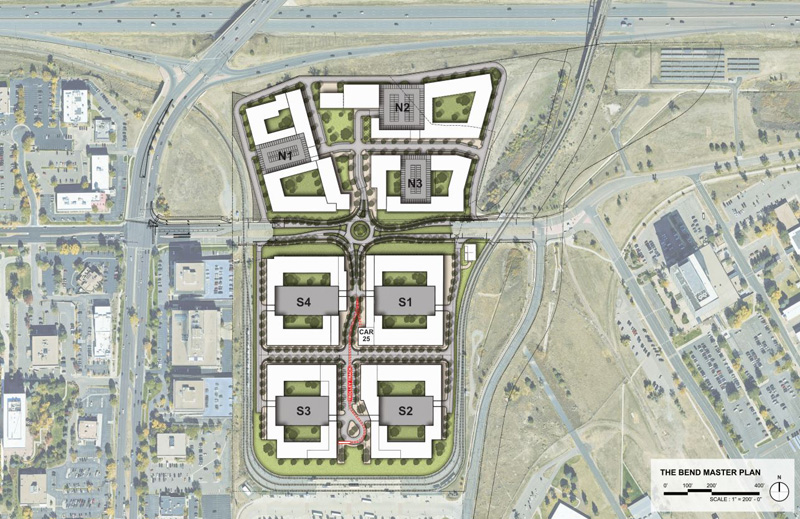
Thanks to a Lakewood Informer reader and local resident, the site plan for The Bend has been revealed! Contrary to previous reporting, plans have indeed been laid but when discussed in public meetings, those plans were “punted” till later. The north half was not a focus for the City because the planning department granted the developer a phased development status since remediation plans have not been set. Our reader supplied a full list of instructions to access this information online, which were not provided with Lakewood’s CORA response. To view the plans, the public must register with the eTRAKiT site and login. The address associated with the project is 11601 W 2nd Pl. In eTRAKiT, search for the following project numbers: The master plan reveals the area north of 4th Ave that is currently labeled “do not disturb” will eventually have more residential housing than the south end, totaling about 2000, rather than 2000 only on the south end. There is currently no public plan for remediation or start times while the developer, Lincoln Properties, works to secure the pieces necessary to get a metropolitan district approved. The metro district will be used as a funding mechanism, rather than a service mechanism, and nothing can proceed without funding. The difference between a funding mechanism and service mechanism is important because metropolitan districts are granted government privileges based on providing public services. To get any kind of infrastructure built on the landfill, the site will need remediation. The safety of the future residents would dictate that full site remediation be completed before building. It’s possible the profits from the south side will be used to fund the north side, or be used to repay developer investment before moving on to the more costly north side. A bank or private investors might demand remediation first since the success and cost of remediation will dictate overall project success. Federal grants are available to assist, which in this case is only right since the federal government caused the contamination. State grants are also available, many of which are pass-through for federal funds. Much of the rest of the funding will come through Lakewood’s Urban Renewal financing and metro district bonds. With Lakewood-approved, government-backed guarantees through metro districts, the developer can privatize the benefits while socializing the risks. The benefit to the public will be the ability to live on this revitalized land. In this case, there is no public living there and asking for a democratic vote on public services. Those future residents are depending on the city to represent their interests. There is no direct representation for taxation.

Update: Manager’s Salary Even Higher

Lakewood resident Bob Adams brings receipts! Lakewood Informer news stated that City Manager Cathy Hodgson made a base salary of $280,000, as stated during the December 19, 2022 City Council meeting. Mr. Adams made an open records request to find out that the City Manager’s 2024 annual base salary was $335,949. This does not include benefits. The adjustment could be year-over-year increases, which would be a 20% increase over two years. It could also be that the original $280,000 stated during council meetings was incorrect, if so, my apologies. Many City Councilors justify this high salary based on Manager Hodgson’s 15 years of experience. There is, understandably, no public discussion on personnel matters. However, the review used to be tied to a metric like resident satisfaction. With declining satisfaction, the resident survey came out with less frequency and is no longer a performance metric. From Bob Adams, 2023, open records request from Lakewood:

New zoning rules propose to take Lakewood back to “bedroom” community concept

Repost from Dave Weichman On top of everything else going on these days, the Lakewood establishment is planning to change the city’s comprehensive plan and zoning codes to allow for more population density and cheaper housing. As usual there is way too much devil in the details to wrap one’s head around. However, there is one area that gives me a deja vu. Back when I was on City Council (in 2012) there was a major change in zoning. One of the innovations was the concept of “mixed-use” zones. We on Council bought into the idea there could be buildings with multiple uses. The example we were sold on was a vision where the first floor of the building could have commercial uses like restaurants or shops. The second floor could be offices for businesses. The third and fourth floors could be apartments or condos for residential use. Therefore there could be three different types of uses within the same building. This would reduce the need for traveling to different zones for a range of uses – i.e. one could work, shop, play and live all within a single building. So city zoning was changed to create “mixed-use” zones that would allow for several different types of uses within the same structure. However, when it came time to actually build this type of zoning ALL these buildings were 100% housing. Commercial uses and offices remained located in other parts of the metro area. The City argued mixed-use did not mean there actually had to be more than one use going on in a building but rather there was a range of possible uses to choose from. According to this line of reasoning, the builder could choose to either build all housing, or all commercial or all offices. When voters complained about this bait and switch tactic, there was an effort to require that mixed-use buildings actually have more than one use going on. There was a major City Council effort led by Ward 4’s David Skilling to change the zoning rules for properties in Mixed-Use Employment (MU-E) districts. Mr. Skilling was able to pass an ordinance that changed MU-E zones to prohibit more than 50% of the building being used for housing. However, since developers never had any intention of building mixed use projects but rather were just interested in finding a way to build housing in zones previously limited to commercial or office use, not a single project was eventually build using this model. After these zoning rules went into effect, developers with properties zoned as MU-Employment came back to the city and requested permission to re-zone these properties into a category that would allow them to build 100% housing. Fast forward to 2025. The current proposed “reform” of the City’s zoning codes seeks to just get rid of the 50% limit on housing in MU-E zones. That way developers could continue to just focus on building more housing. As for commercial and office uses, the proposed zoning would go back to the old scheme of making Lakewood the “bedroom” community for metro Denver. So this new zoning is essentially a GOING BACK to the glory days of multi-family residential housing and riding the train into Denver for work or shopping.

City Manager’s Annual Review

By Lenore Herskovitz On Monday, March 24 the City Council will hold the first of 2 Special Meetings regarding the Annual Review of the City Manager, Kathy Hodgson. Residents are not privy to the standards or metrics that are used to evaluate the job performance of our most powerful and most highly compensated city officials. At one time, the City of Lakewood Community Survey was issued every 2 to 3 years which included approval ratings for the city’s performance. In 2010, when Kathy Hodgson took office this approval rating was 67%. By 2022, this had dropped to 38%. Since then, this survey has not circulated. Until 2022 these survey results were included in the evaluation process (See Lakewood Informer news report from 2022). On Dec. 19, 2022, the City Council met to amend the City Manager’s 2014 Employment Agreement and establish the 2022 Employment Agreement. This was supposed to be discussed on Dec. 5 in an Executive session but 4 Councillors (Able, Springsteen, Olver, and Janssen) opposed the session because they felt they had not been provided enough information in advance of the meeting. At the Dec. 19 meeting there was confusion about whether the representatives were voting solely on the amendments or on the new contract because the packet that was presented only included a staff memo and the resolution containing the proposed amendments. There was no redlined version showing what had been removed from the 2014 contract or any copy of what the new contract would be in its entirety. One thing that had been eliminated was any use of the community survey results when determining the City Manager’s compensation. Only City Council would make that determination moving forward. In spite of the fact that no complete copy of the 2022 contract was provided, the majority of council members voted to pass it. Those voting in favor included our present mayor then Councilor Strom, Mayor Pro Tem  (then Councilor) Shahrezaei, and Councilor Mayott-Guerrero. Those opposed were the same 4 who voted against the Dec. 5 executive session which forced the public hearing on the 19th. As a result, the determination regarding the City Manager’s review and compensation rests in the hands of our elected council members. How often do these individuals hold the City Manager accountable? Is there really any oversight when department heads fail to comply with city codes or ordinances? For example, when the previous Director of Community Resources failed to evaluate fees-in-lieu on an annual basis from 2018 to 2023 as required by ordinance, were there any consequences? The City Manager appoints this and other directorial positions and is responsible for supervising them. Recently, it was discovered that perhaps the Chief of Sustainability and Community Development and his staff had not been following the 2018 Parkland Dedication ordinance, which can be seen in a letter dated October 23, 2024 on page 2 of this document under Item 11 Parkland Dedication, the developer, who had not yet been issued a building permit, was being charged the old fee of $254,545 an acre as opposed to the $432,727 fee that went into effect on June 1, 2024. Are ordinances mere suggestions rather than laws to be followed under this City Manager? Is discretion to reinterpret the law acceptable now? Who, if anyone, is providing oversight and accountability from department heads, or do mistakes just get scapegoated or buried altogether? After years of complaints, meetings are still posted on the wrong site. There still is no consolidated, easily accessible City Directory to identify employees by department and their city contact information. At the annual planning session, councilors have requested better communication between themselves and staff. The City Manager was supposed to provide in-person quarterly updates on goals set at the retreat. Instead, there are updates on the city dashboard in addition to a workshop that was held in person (with no recording available to the public who couldn’t attend). For years, City Council has seemed willing to overlook these shortfalls. If you wish to share your views about the City Manager’s performance feel free to contact: CityCouncilMembers@Lakewood.orgYou can also contact your individual councilors through the link provided (https://www.lakewood.org/Government/City-Council/City-Council-Members)

The Bend Development Incomplete Site Plan

16 March, 2025 Thanks to a reader who provided new information, this post requires a major rewrite. Please stop reading now and stay tuned! What will Lincoln Property Company (LPC) do with the toxic landfill on The Bend development at 4th and Union? No one knows. One part of the property has development plans, including the area SOUTH of 4th Ave. This area is supposedly free of contamination and can be developed by following safety rules. The area NORTH of 4th Ave is where no development can occur because it wasn’t fully remediated, only covered with dirt. There has been no plan filed for this land so the site plan is incomplete. The city needs the plan for the entire parcel of land to design adequate resources and to reassure residents the area is safe. But if anyone knows the full site plans, Lakewood Informer can’t find them. Lakewood Informer filed an open records request for the site plan. Instead of supplying the document, the city said to get it online. To be fair, knowing where to find the documents yourself is a valuable tool for any government website, which always seems convoluted. The Urban Renewal application materials were posted for the meeting back in January. However, there was no site plan included.  (Thank you to the city staff who handle requests) Going to the eTRAKiT development site revealed no permits or projects for that parcel ID. There is obviously a site plan, pre-development application, development application, or whatever is applicable according to Lakewood property development steps. Lakewood and LPC have been working on this site for years. And perhaps there is a good reason why I can’t get the material myself online. But regardless, I do not have that information to share. Public statements from LPC confirm that they will decide what to do with that land later. They have acknowledged that there is no plan for land right now, even as a concept. How can the city approve a site plan that doesn’t include the entire site? How can the city let homes be developed across the street, literally, from an acknowledged environmental hazard site, without getting some kind of plan for that land? Aside from the safety factor to the people living there, the city needs a full site plan to develop adequate infrastructure. This site is anticipated to include almost 2,000 homes, which will impact traffic, water, fire and police resources. Are the resources currently being planned enough for the entire parcel? Or only half? Why not disclose the plans for the entire site?

Scroll to top