Lakewood Informer

Resident generated news about Lakewood, Colorado

Lakewood Informer

Resident generated news about Lakewood, Colorado

comprehensive plan

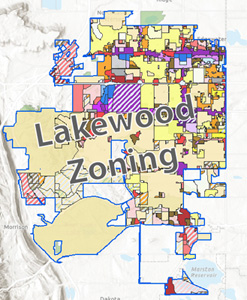
Zoning- What Hasn’t Been Told

Guest post from Lenore Herskovitz
Although the City has touted their 2 year effort to produce and inform the public about the updated zoning code, there remains a large number of residents who are unaware of the upcoming special election challenging the zoning changes that were passed by the City Council at the end of last year. Ballots will be mailed out on March 16 but how many people will know why they are receiving one? Why did communication efforts fail? Did the City ever reach out to its residents and ask what would be the most effective way to notify them about policies, meetings, developments that would affect their lives? Perhaps that is something the City should consider doing moving forward.

Recreation Centers Could Be Closed and Consolidated

Recreation Centers Could Be Closed and Consolidated Your neighborhood recreation center could be closed and consolidated to be replaced by a “destination”, “regional”, or “multi-use” center. Closures have already been identified. Combine this knowledge with proposed zoning changes that would allow warehouse-sized distribution centers in any area, or high-density housing anywhere, and it is hard not to speculate what will happen to current rec center properties. For example, why is Lakewood buying Emory on behalf of the Action Center when beloved, large lot, city property may be destined to face the same fate as closed schools? No definitive plans have been made public. The details below come from several sources, much like the initial details that emerged about Lakewood purchasing Emory Elementary. When asked about Emory, for months, Lakewood officials would answer that there were “no current plans” or that Lakewood “had no direct control” over school buildings. All the while, backroom discussions were taking place. Only time will tell when and what will happen to Lakewood recreation centers. Lakewood says a centralized center is years away. Historical Planning Timeline: In 2022, Lakewood began asking residents whether they were interested in a new recreation facility. Residents said yes, not knowing that meant giving up their current facilities. More people were interested in improving existing facilities than starting new ones. In May 2023, City Council approved the Imagine Tomorrow! Parks and Recreation Plan as presented by staff. The recommendation to close and consolidate was not presented or discussed. So, unless you read the entire document, a person would not know from public discussion that this was underway. THE PLAN DOCUMENTS INCLUDED THE RECOMMENDATION TO ELIMINATE AND CONSOLIDATE FACILITIES: Page 12 of Imagine Tomorrow! Parks plan Votes FOR Imagine Tomorrow Plan: Adam Paul, Sophia Mayott-Guerrero, Barb Franks, Wendi Strom, Mary Jannsen, Jeslin Shahrezaei, Sharon Vincent, Charlie Able. Votes AGAINST were Rich Olver and Anita Springsteen. As previously reported, the Parks department continued with this plan through the 2024 budget planning session: “IMPORTANT NOTICE: Without details, the Director gave notice that Parks will also start looking at condensing or efficiency operations that may include closing open space/parks/pools, public safety and recreation centers. (see September 18, 2023 meeting, 1hr 19 min). “ – From Lakewood Informer news on budget recap Shortly after that budget meeting, amidst a rising problem with the Belmar Park development, Parks Director Kit Newland resigned. The rec center consolidation has not been discussed during the staff turnover. Plans are still Active However, plans are still active. More recently, Lakewood snuck in a provision about recreation center centralization into the comprehensive plan. That plan was passed unanimously on July 28, 2025. From Lakewood’s comprehensive plan “Envision Lakewood 2040“ Using the strategies above, as approved twice by City Council, neighborhood recreation centers can be closed and consolidated. Facility Impact LAKEWOOD LINK RECREATION CENTER, GREEN MOUNTAIN RECREATION CENTER, AND CARMODY RECREATION CENTER were identified as needing costly improvements and, therefore, most likely to close. Carmody is currently undergoing extensive renovation so may no longer be a target for closure. The consolidation strategy remains active as of July 2025. The suggested place for a new “destination”, “multiuse,” “regional” recreation center is unoccupied parkland at Addenbrooke Park. “Addenbrooke Park, located at 600 S. Kipling Parkway, should be reviewed as a location for a new, regional recreation center.The Addenbrooke Park Master Plan from 1984 identified the northwest corner of the park as an ideallocation for a recreation center” — Page 12 of Imagine Tomorrow! Public Trust The potential consolidation of recreation centers that was not publicly discussed is an area that City Council and staff will say they HAVE TO continue work on because it got in the comprehensive plan. For other issues, like maintaining neighborhood character, Council and staff can, and already have, disregarded the comp plan and, in fact, made the plan non-binding. In other words, the comp plan will be binding ONLY when Lakewood chooses, even though the plan itself is required by the state to be a vetted and researched document. City of Lakewood responded to an inquiry to say that the new destination rec center may be a few years out. While technically true, that does not mean plans are not in place, as suggested by both the recently passed Parks and Comprehensive plans. Residents can look at the timeline for Emory Elementary for proof of how Lakewood operates. Plans were made behind closed doors months before the public was aware and the final plans took years to enact. “While the topic of a new destination recreation center has been discussed, there are not any current plans to pursue one in the next several years. We are currently focused on maintaining our existing recreation centers and making repairs and improvements where needed. If we do focus on building a new recreation center, there will be an extensive public engagement period to ensure the community has the chance to provide input throughout the process. Please feel free to reach out if you have additional questions.” – “Brent Berninger, Recreation and Golf Manager, City of Lakewood

The Comprehensive Plan Bait and Switch

Comprehensive plans are easily readable documents that explain a vision for the future of the city in a moment of time. It speaks in plain English to what the zoning code describes in technical detail. The problem is that the zoning code details are what carry the force of law and because technical details are harder to read, it is easy for residents to overlook inconsistencies in proposed zoning compared to plans. This is otherwise known as a bait and switch. For instance, in the comprehensive plan, Lakewood promises to maintain neighborhood character; while in the zoning code, Lakewood implements high-density urbanization which resulted in the destruction of Belmar Park-adjacent property. Pieces of Lakewood’s Comprehensive Plan were used as evidence to fight against the Belmar Park development. Lakewood officials discounted all such arguments. Now that residents have caught on to the inconsistencies, Lakewood staff argues against using the Comprehensive Plan to guide zoning. Instead, Lakewood proposes changing the ordinance so that the zoning code is no longer tied to the comprehensive plan. With this change, residents could not form legal challenges based on compliance with the comprehensive plan and there is less room to fight against maximum buildout in adjacent properties. Do Residents Need a “Vision” Document Why have a comprehensive plan at all? This is a long-term plan that locks in the vision for this moment in time. It includes aspirational goals with no implementation details. Therefore, the details are filled in by staff using their discretion to interpret the zoning code. Technically, one government cannot bind future governments to its decisions. If tomorrow’s City Council wanted to change the vision of Lakewood, it could choose to do so. However, having a long-range plan laid down by yesterday’s Council is a roadblock that is not easily overcome. Residents would better understand the zoning code if each change had to be justified with open debate. Instead, as is currently occurring, the entire zoning code can be changed by saying the code matches the ambiguous goals of the comprehensive plan. For example, the as-yet unapproved Comprehensive Plan seeks affordable housing. Therefore, City Council reasons that ANY CHANGE to the zoning code will be acceptable as long as affordable housing is the intent, not necessarily the outcome. There is no need for an updated 100-page vision plan document to update 300 pages of zoning code. Why not just introduce one little change at a time that is easily understood by the residents, and easily tested for effectiveness? The proposed zoning changes are still being discussed and changed. City Council have taken months to understand these detailed changes. Residents will have a couple weeks. However, residents did spend months providing input into the comprehensive plan, that will no longer have much meaning. The Proposed Change Lakewood intends to remove the binding zoning code connection to the Comprehensive Plan. As first noted by savebelmarpark.com: Lakewood zoning code currently states that the Comprehensive Plan is the foundation for the Zoning Ordinance. However, the proposed redline removes the “consistency with the goals and policies of the Comprehensive Plan”. When the new zoning passes, all the aspirational goals laid out in the plan can be disregarded at will. Which really is no different than today, as shown by the Belmar Park debate except that today such a decision could be legally challenged and tomorrow it can’t. This specific change to the zoning code was not discussed at any public meeting. Comprehensive Plan Goals Not Followed The Comprehensive Plan states (pg 4-10): “Through the site plan review process and design guidelines, ensure that new multifamily, mixed use, and commercial developments adjacent to single-family neighborhoods are compatible by incorporating appropriate design, scale, height transition, and connectivity to seamlessly integrate with the neighborhood.” Residents compiled argument after argument to show that 777 S Yarrow St does not integrate with the neighborhood and does not meet environmental goals from the plan. Residents can clearly see that the Comprehensive Plan promises integration with the neighborhood. Residents can also clearly see that is not what staff implemented be allowing trees cut down to develop to the lot line near Belmar Park and new high-density apartments that don’t match the nearby buildings. . 15-minute Cities In other communities, residents are also waking up to this bait and switch. An opinion piece in the Boulder Daily Camera highlights this problem by examining Boulder’s 15-minute cities. This is particularly relevant since Lakewood leadership constantly mentions their desire for 15-minute city amenities. The proposed zoning code allows retail in residential zones for 15-minute planning.   Steve Pomerance, in the Boulder Daily Camera, addresses this issue: “The underlying problem with this whole conceptual framework is the self-contradictory assumption that we can have commercial centers in neighborhoods that provide an adequate variety of goods, services and transit, all within 15 minutes of where people live, but still keep our relatively low-density neighborhoods intact. This is simply not supported by the economics or the geography.” – Steve Pomerance Read the rest of that article to understand the same sense of contrasting values Lakewood is “selling” to residents. The new development at The Bend is promising 15-minute city amenities. “Selling” is the appropriate term used here because the zoning was contracted before the comprehensive plan was finalized. In another eerie coincidence with Boulder, Pomerance wrote, “It’s as if those who wrote these objectives had already decided that the results of the cost/benefit study would support implementing this concept, and thus support the massive densification required to create such neighborhoods. Community Input Into Zoning Up to this point, residents have had no input. It was not a resident-driven development.   Lakewood’s Chief of Sustainability and Community Development, Travis Parker, has been attending ward meetings to educate and also to promote the good points of the new zoning code — as if there are no other options. No one has addressed the dissatisfaction with the current densification in Lakewood. Does a desire for affordable housing mean automatic agreement to sacrifice current neighborhoods? More

New zoning rules propose to take Lakewood back to “bedroom” community concept

Repost from Dave Weichman On top of everything else going on these days, the Lakewood establishment is planning to change the city’s comprehensive plan and zoning codes to allow for more population density and cheaper housing. As usual there is way too much devil in the details to wrap one’s head around. However, there is one area that gives me a deja vu. Back when I was on City Council (in 2012) there was a major change in zoning. One of the innovations was the concept of “mixed-use” zones. We on Council bought into the idea there could be buildings with multiple uses. The example we were sold on was a vision where the first floor of the building could have commercial uses like restaurants or shops. The second floor could be offices for businesses. The third and fourth floors could be apartments or condos for residential use. Therefore there could be three different types of uses within the same building. This would reduce the need for traveling to different zones for a range of uses – i.e. one could work, shop, play and live all within a single building. So city zoning was changed to create “mixed-use” zones that would allow for several different types of uses within the same structure. However, when it came time to actually build this type of zoning ALL these buildings were 100% housing. Commercial uses and offices remained located in other parts of the metro area. The City argued mixed-use did not mean there actually had to be more than one use going on in a building but rather there was a range of possible uses to choose from. According to this line of reasoning, the builder could choose to either build all housing, or all commercial or all offices. When voters complained about this bait and switch tactic, there was an effort to require that mixed-use buildings actually have more than one use going on. There was a major City Council effort led by Ward 4’s David Skilling to change the zoning rules for properties in Mixed-Use Employment (MU-E) districts. Mr. Skilling was able to pass an ordinance that changed MU-E zones to prohibit more than 50% of the building being used for housing. However, since developers never had any intention of building mixed use projects but rather were just interested in finding a way to build housing in zones previously limited to commercial or office use, not a single project was eventually build using this model. After these zoning rules went into effect, developers with properties zoned as MU-Employment came back to the city and requested permission to re-zone these properties into a category that would allow them to build 100% housing. Fast forward to 2025. The current proposed “reform” of the City’s zoning codes seeks to just get rid of the 50% limit on housing in MU-E zones. That way developers could continue to just focus on building more housing. As for commercial and office uses, the proposed zoning would go back to the old scheme of making Lakewood the “bedroom” community for metro Denver. So this new zoning is essentially a GOING BACK to the glory days of multi-family residential housing and riding the train into Denver for work or shopping.

Scroll to top