Lakewood Informer

Resident generated news about Lakewood, Colorado

Lakewood Informer

Resident generated news about Lakewood, Colorado

Development

Lakewood greenlights Kairoi to introduce invasive plants to BelmarPark

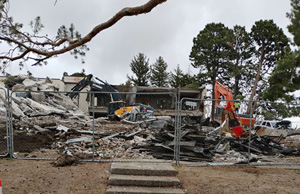
Photo by Regina Hopkins From Savebelmarpark.com In case you are wondering, the Irongate Complex at 777 S Yarrow Street has been converted to rubble by the demolition crew.  Large piles of concrete rubble await removal. Moving on to the topic of the day, a portion of Belmar Park is designated for grading on the developer’s grading plan.  We estimate the area of the park to be graded amounts to thousands of square feet assuming the grading plan mentioned does not change. However, Lakewood’s Planning Department states the opposite: “The proposed development of this property does not involve or include any parkland…” Obviously, any area of the park destroyed by heavy equipment activities related to the Kairoi market-priced housing project will have to be fully restored to original or better condition, right?  Wrong again. According to the Erosion Control Report submitted to Lakewood by Kairoi’s civil engineers, only 70% of a restored area needs to be restored with ‘vegetation visible’ according to p.22.  There is no requirement that the park be fully restored to original or better condition!   Let’s say someone crashed into your parked car and does significant damage.  After body shop repairs, only 70% of the damage is repaired.  Are you OK with that?  If you are, apply for a job at the City of Lakewood where that level of completion is apparently acceptable when it comes to requiring developers to do the right thing. Once an area has been graded, the developer will usually attempt to restore the area. Read the entire newsletter…

Site Plan for the Ex-Superfund Landfill

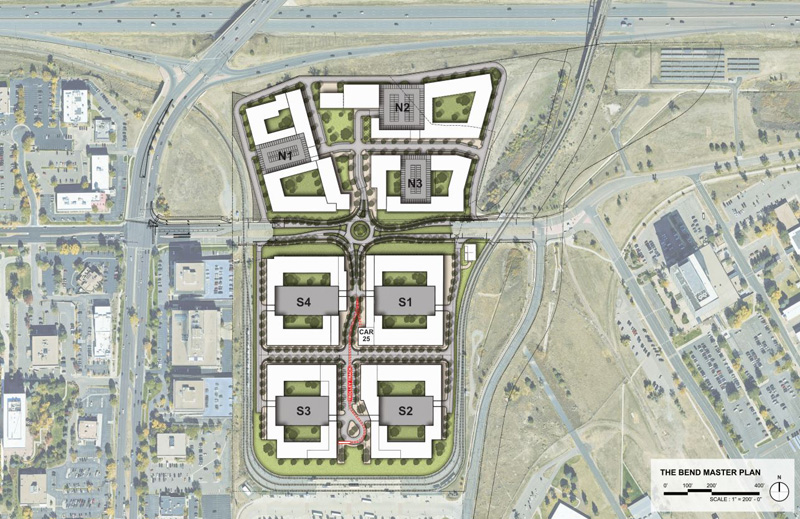
Thanks to a Lakewood Informer reader and local resident, the site plan for The Bend has been revealed! Contrary to previous reporting, plans have indeed been laid but when discussed in public meetings, those plans were “punted” till later. The north half was not a focus for the City because the planning department granted the developer a phased development status since remediation plans have not been set. Our reader supplied a full list of instructions to access this information online, which were not provided with Lakewood’s CORA response. To view the plans, the public must register with the eTRAKiT site and login. The address associated with the project is 11601 W 2nd Pl. In eTRAKiT, search for the following project numbers: The master plan reveals the area north of 4th Ave that is currently labeled “do not disturb” will eventually have more residential housing than the south end, totaling about 2000, rather than 2000 only on the south end. There is currently no public plan for remediation or start times while the developer, Lincoln Properties, works to secure the pieces necessary to get a metropolitan district approved. The metro district will be used as a funding mechanism, rather than a service mechanism, and nothing can proceed without funding. The difference between a funding mechanism and service mechanism is important because metropolitan districts are granted government privileges based on providing public services. To get any kind of infrastructure built on the landfill, the site will need remediation. The safety of the future residents would dictate that full site remediation be completed before building. It’s possible the profits from the south side will be used to fund the north side, or be used to repay developer investment before moving on to the more costly north side. A bank or private investors might demand remediation first since the success and cost of remediation will dictate overall project success. Federal grants are available to assist, which in this case is only right since the federal government caused the contamination. State grants are also available, many of which are pass-through for federal funds. Much of the rest of the funding will come through Lakewood’s Urban Renewal financing and metro district bonds. With Lakewood-approved, government-backed guarantees through metro districts, the developer can privatize the benefits while socializing the risks. The benefit to the public will be the ability to live on this revitalized land. In this case, there is no public living there and asking for a democratic vote on public services. Those future residents are depending on the city to represent their interests. There is no direct representation for taxation.

Kentner on Mandy Connell for Belmar

From Mandy Connell’s blog WHAT DO YOU DO WHEN GOVERNMENT WON’T LISTEN? That is the situation that many Lakewood residents find themselves in when it comes to the conflict over green space vs. development. This time it’s Belmar Park, where developers want to build right up the boundaries and pay dispensation money instead of actually honoring green space that is required. I’ve got Cathy Kentner with Save Belmar Park on at 1 to chat about it. Find out more about their cause by clicking here. Lakewood’s Cathy Kentner did a great job of explaining how this goes beyond growth arguments and into honoring plans to maintain community standards. Thank you Cathy and Mandy for highlighting this issue! Listen to the interview here

New zoning rules propose to take Lakewood back to “bedroom” community concept

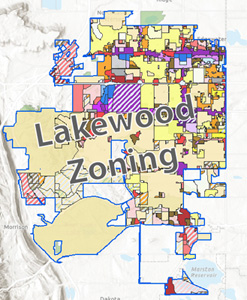
Repost from Dave Weichman On top of everything else going on these days, the Lakewood establishment is planning to change the city’s comprehensive plan and zoning codes to allow for more population density and cheaper housing. As usual there is way too much devil in the details to wrap one’s head around. However, there is one area that gives me a deja vu. Back when I was on City Council (in 2012) there was a major change in zoning. One of the innovations was the concept of “mixed-use” zones. We on Council bought into the idea there could be buildings with multiple uses. The example we were sold on was a vision where the first floor of the building could have commercial uses like restaurants or shops. The second floor could be offices for businesses. The third and fourth floors could be apartments or condos for residential use. Therefore there could be three different types of uses within the same building. This would reduce the need for traveling to different zones for a range of uses – i.e. one could work, shop, play and live all within a single building. So city zoning was changed to create “mixed-use” zones that would allow for several different types of uses within the same structure. However, when it came time to actually build this type of zoning ALL these buildings were 100% housing. Commercial uses and offices remained located in other parts of the metro area. The City argued mixed-use did not mean there actually had to be more than one use going on in a building but rather there was a range of possible uses to choose from. According to this line of reasoning, the builder could choose to either build all housing, or all commercial or all offices. When voters complained about this bait and switch tactic, there was an effort to require that mixed-use buildings actually have more than one use going on. There was a major City Council effort led by Ward 4’s David Skilling to change the zoning rules for properties in Mixed-Use Employment (MU-E) districts. Mr. Skilling was able to pass an ordinance that changed MU-E zones to prohibit more than 50% of the building being used for housing. However, since developers never had any intention of building mixed use projects but rather were just interested in finding a way to build housing in zones previously limited to commercial or office use, not a single project was eventually build using this model. After these zoning rules went into effect, developers with properties zoned as MU-Employment came back to the city and requested permission to re-zone these properties into a category that would allow them to build 100% housing. Fast forward to 2025. The current proposed “reform” of the City’s zoning codes seeks to just get rid of the 50% limit on housing in MU-E zones. That way developers could continue to just focus on building more housing. As for commercial and office uses, the proposed zoning would go back to the old scheme of making Lakewood the “bedroom” community for metro Denver. So this new zoning is essentially a GOING BACK to the glory days of multi-family residential housing and riding the train into Denver for work or shopping.

No Permits For Kairoi Demolition?

From savebelmarpark.com Update 3/19/25: Permits were straightened out (very quickly) and demolition on track Greetings Supporters of Save Belmar Park, This is an update on the attempted demolition of the Irongate Campus we told you about yesterday. The top image is 777 S Yarrow Street in Lakewood, CO after 24 hours of illegal demolition. We now know that Kairoi Residential had moved forward with the attempted illegal demolition without obtaining proper permits. Kairoi Residential attempted to illegally demolish the Irongate Office Campus at 777 S Yarrow Street. Local activists intervened and the city ultimately had to shut down the illegal project. So please consider this. If you happen to be in the construction business, obtaining permits is standard operating procedure.  At least for any business that intends to obey the law. Even if you want an electrician to install a circuit in a residence, you need a permit. The idea a company that has been involved in the construction industry in Colorado and other states for many years does not know how to properly permit the demolition phase of a project raises some questions. Especially considering that their own civil engineers at Kimley-Horn prepared a large document titled: “EROSION AND SEDIMENT CONTROL REPORT” that included great detail on the topic: “SEQUENCE OF CONSTRUCTION ACTIVITIES” The first listed responsibility in the Kimly-Horn document is: “The city does not authorize any work to be performed until the City Grading, Erosion, and Sediment Control Permit has been issued.” Did Kairoi bother to obtain a grading permit?  NO. Did they plan to intentionally proceed with this illegal major demolition project? Given these facts, it seems quite possible that their bad behavior was intentional. But it also could be that they are so incompetent, they really do not know what they are doing in the first place including not knowing about the permitting process? Because the Planning Department certainly seems that incompetent.  The Planning Department even proclaims today on their website that: “Demolition of the existing building has begun under a demolition permit issued by the city.” Obviously, either the City Of Lakewood has no clue about properly permitting a project or they conspired with the developer to intentionally approve an illegal demolition project. Which is it? And we live in a city that is more likely to arrest citizens for clapping at a city council meeting than they are to slap a fine on Kairoi. And a city where they city attorney tells city council they cannot discuss a proposed ordinance because they are only ‘administrative officers’ and are not even allowed to talk about it. Basically, a city with more clowns than the circus.  To be diplomatic about it. Why would any well-run city want such a rag tag developer doing anything within the city limits? Stay tuned and thanks for listening, Steve View original email here

People catching onto the “affordable housing” scam

A pair of articles in the Denver Post show that Colorado residents are catching onto the fact that “affordable housing” isn’t the universal panacea that is being promised. New housing is not affordable, unless it’s government-backed, while higher densities are killing the very reason that people enjoyed their city in the first place. Pro-development progressives in Boulder won’t solve the housing crisis “Building a lot more housing won’t reduce prices because there’s an unlimited supply of people nationwide who’ll pay whatever it takes to live here. Boulder is a unique blend of access to culture and nature in a small city. There are plenty of people who want to move here and have the means to do so.” This sentiment also applies to Lakewood, revealing the lie to all the promises that more housing will solve problems. Denser housing vs. the ’burbs “While Colorado lawmakers require upzoning and offer incentives in their push for denser housing concentrated at Regional Transportation District bus and train hubs, thousands of metro Denver residents like the Wellners are migrating to suburbs. They give multiple reasons for their moves: affordability, elbow room, quietness, safety and parks — things that transit-oriented development (TOD) often lacks.” Many people moved to Lakewood for exactly this reason – wanting elbow room and safety. But Lakewood aspires to become more like urban Denver, in the name of affordability. Meanwhile, there are plenty of people who will pay “whatever it takes to live here.” Lakewood is planning on changing the zoning code to increase density even more. The Planning Director is already out talking about the change. It was baked into the results of the latest comprehensive plan, whether residents wanted it or not. Those people who do not want increased densification have until the new code is adopted to object.

Lakewood Informer Joins Mandy Connell Show

Mandy Connell, Host of The Mandy Connell Show on KOA and iHeart Media, challenged her listeners to rat out shenanigans at the local level. Thanks to you, wonderful readers who are also her wonderful listeners, Mandy invited Karen Morgan on for a discussion of crime and housing. We also talked about Lakewood’s new propensity of going over the heads of Lakewood residents to change state law rather than listening to residents. Thank you Mandy for being so much fun, very well researched and getting the word out to everyone! Just a heads up that Mandy may have another Lakewood guest next week so keep listening. Listen to the whole segment from The Mandy Connell Podcast on KOA iHeartRadio.

Out of Control Demolition has started at the Irongate Complex

From savebelmarpark.com Greetings Supporters of Save Belmar Park, The Kairoi Belmar project is moving forward with no active citizen objections.  Will this rogue demolition mess be a wake-up call? The top image is 777 S Yarrow Street in Lakewood, CO after 24 hours of demolition. The Demolition Permit was approved on March 12 by Lakewood so the city is fully aware of what is happening. However, the contractor has not installed any erosion control devices, silt fence, etc. as required by the Kimley-Horn specifications shown in the second image above. They began demolition on March 13 in violation of their own established Sequence Of Construction Activities as specified by Kimley-Horn engineers.   We assume this is OK with the city manager and city council because the city would have approved everything at the REQUIRED MEETING before demolition begins as stated on page 11 of the Erosion and Sediment Control Report : Read the full Savebelmarpark email from the source

The Bend Development Incomplete Site Plan

16 March, 2025 Thanks to a reader who provided new information, this post requires a major rewrite. Please stop reading now and stay tuned! What will Lincoln Property Company (LPC) do with the toxic landfill on The Bend development at 4th and Union? No one knows. One part of the property has development plans, including the area SOUTH of 4th Ave. This area is supposedly free of contamination and can be developed by following safety rules. The area NORTH of 4th Ave is where no development can occur because it wasn’t fully remediated, only covered with dirt. There has been no plan filed for this land so the site plan is incomplete. The city needs the plan for the entire parcel of land to design adequate resources and to reassure residents the area is safe. But if anyone knows the full site plans, Lakewood Informer can’t find them. Lakewood Informer filed an open records request for the site plan. Instead of supplying the document, the city said to get it online. To be fair, knowing where to find the documents yourself is a valuable tool for any government website, which always seems convoluted. The Urban Renewal application materials were posted for the meeting back in January. However, there was no site plan included.  (Thank you to the city staff who handle requests) Going to the eTRAKiT development site revealed no permits or projects for that parcel ID. There is obviously a site plan, pre-development application, development application, or whatever is applicable according to Lakewood property development steps. Lakewood and LPC have been working on this site for years. And perhaps there is a good reason why I can’t get the material myself online. But regardless, I do not have that information to share. Public statements from LPC confirm that they will decide what to do with that land later. They have acknowledged that there is no plan for land right now, even as a concept. How can the city approve a site plan that doesn’t include the entire site? How can the city let homes be developed across the street, literally, from an acknowledged environmental hazard site, without getting some kind of plan for that land? Aside from the safety factor to the people living there, the city needs a full site plan to develop adequate infrastructure. This site is anticipated to include almost 2,000 homes, which will impact traffic, water, fire and police resources. Are the resources currently being planned enough for the entire parcel? Or only half? Why not disclose the plans for the entire site?

Lakewood City Council approved a new land use scheme that overturns citizen initiative

From Save Open Space – Lakewood 2/24 Lakewood Mayor, Mayor Pro Tem, backed by dark money, continue City’s long history of choosing development over environment Council’s action threw out the wishes of over 8,000 community members who signed the Save Open Space Lakewood Green Initiative petition 2/24 Lakewood Council approved a new land use scheme reinstating a loophole that allows developers to pay a fee in lieu of land donation On February 24, 2025, Lakewood City Council voted to repeal and replace the citizens’ initiated Save Open Space Lakewood (SOS Lakewood) Green Initiative with City Hall’s anti-environmental, no-transparency, developer-friendly ordinance.  “The City’s vote reinstates the practice of back-door deals where fees are prioritized over parks and open spaces. It is also a slap in the face to petitioners whose pleas not only went unheard, but who also faced personal attacks by a well-orchestrated campaign against the initiative,” said Cathy Kentner, petition representative. At the heart of the initiative was eliminating the provision that allowed large developments to pay a fee-in-lieu of creating a one third acre or larger “pocket park.”  By wrongfully withholding building permits from projects that had already paid a fee and by wrongfully requiring land dedication for smaller projects, City Hall was successful in fabricating a “crisis” that they “heroically” solved. They used the “unintended consequences” suffered by the smaller projects to put back in place all of the problems that led to the initiative – back-door deal making and a scheme where paying a fee is always more of an incentive than providing the open space. And there is no oversight for even the largest of development projects. The irony is that the majority of city councilors boast their support for sustainability and parks but their actions enable corporate greed to rule. Or perhaps they are making good on unspoken promises to campaign donors.  More than half of the money spent to elect Mayor Pro-Tem Jeslin Shahrezaei to Council, or tens of thousands of dollars, came from the Metro Housing Coalition and the National Association of Realtors which, in 2020, apologized for its long-standing racist policies. In addition to being heavily funded by those same organizations, Mayor Wendi Strom was also supported by One Main Street Colorado, recently described in The Denver Post as a “dark money” group. Former Lakewood City Councilor, now State Representative Rebekah Stewart, received money from these same developer dark money groups. She has already sponsored two bills that favor developers and propose to make citizen initiatives more difficult. Speaking on behalf of Save Belmar Park, attorney Patricia Mellen said, “This ordinance experience has raised more questions than it has answered. What happened to the great oversight ideas from the study session a month ago? What happened to the ideas from last March? Why does the discretion and power always return to the staff? Why was the staff’s moratorium on building permits allowed when the City had months to create contingency plans about what would happen if the ordinance gathered enough votes? Why did the City staff not use waivers for affordable housing and single family homeowners? Why was a self-inflicted crisis the strategy? Save Belmar Park’s frustration is with the same issues in this ordinance that exist in the zoning ordinance where there is a lack of transparency, a lack of accountability, a lack of elected official oversight, a lack of public input, a lack of appeal options about decisions.” A Denver Post editorial (2/16) proclaimed “Lakewood’s Messy Fight Can Be Solved.”  But instead of finding a simple solution, as suggested by the Post, and instead of keeping their word to make amendments without changing the overall intent of the initiative, City Hall pulled a bait and switch, revealing a developer friendly ordinance that incentivises a fee in lieu in every case. Kentner said, “Instead of accepting responsibility for the chaos they had created, City Hall launched a campaign of misinformation to scapegoat the initiative for problems that they labeled ‘unintended consequences.’ The petition was falsely labeled ‘anti-growth,’ yet it was the City that withheld building permits, causing numerous people to suffer needlessly. The ordinance passed this week does not honor the wishes of many thousands of constituents who signed a petition asking the City Council to eliminate the option for developers to pay a fee instead of providing parkland and to apply it to all projects that haven’t already met the requirement. The default should be land dedication for parks and open spaces; not a fee that is many years old and is never commensurate with the price of the land. Oversight is not a ‘barrier’ to development. It is a ‘guardrail’ to big money corporations buying out of our land use requirements.” This week’s vote overturned the initiative, keeping none of the citizen requested provisions.


Scroll to top