Lakewood Informer

Resident generated news about Lakewood, Colorado

Lakewood Informer

Resident generated news about Lakewood, Colorado

Author : Lakewood News from Karen

Proposed Zoning is not for “Lakewood” residents

The intent of the proposed Lakewood rezoning eliminates the words “of the City of Lakewood” so that the code reads to be for general purposes of anyone anywhere. In the current version, stating “Lakewood” may seem redundant or inherently understood, but why take it out? By taking it out, the new inherent question is “for whom”? In the redline below from section 17.1.2 of the proposed code, if the zoning code is not to ensure the economic vitality of the city, whom is it for? Even worse is where the wording changes from “citizen of Lakewood” to “resident.” Perhaps Planning Commissioner Elena Overall articulated it best when she said: “We must allow more housing to be built, and that’s not to the comfort of the existing property owners, um, who are here. There are many people who are not here because they are not here yet.” In other words, the zoning code doesn’t need to change for the people of Lakewood. It needs to change to bring in others. Even though Lakewood officials owe representation and allegiance to the residents of Lakewood, concerns about REMOVING “citizens of the City of Lakewood” are valid. Perhaps this is a little detail, but with this change, it will be entirely possible for Lakewood to justify a development like The Bend because it ensures economic vitality -– for that developer. The city will subsidize development by sacrificing taxes and has now assumed liability for future environmental impacts. This move did not ensure the economic vitality of the City of Lakewood. So it’s time to change the rules. We have too much legislating by clamor, by tumult, by pressure. Representative government ceases when outside influence of any kind is substituted for the judgment of the representative. — Calvin Coolidge

Housing v. Affordability Crisis

From Lenore Herskovitz In Lakewood, do we have a housing crisis or an affordability crisis? These terms are often used interchangeably, but there is a difference. A housing crisis refers to a broad situation where there is a systemic shortage of available housing. An affordability crisis focuses on the financial strain of housing costs regardless of the overall availability of housing units. The latter seems the most applicable to our city. A Zillow tabulation posted on June 30, 2025 for Lakewood indicated that there were 768 available rental units with a price range of $0-$1800 a month. This increased to 1098 units when the price range was expanded to $1600-$3000 a month. Additionally, there were 568 houses for sale. These figures would seem to indicate that there is not a supply shortage. Demand is low, at least in part, because of a lack of affordability. Even with rent reductions and other enticements, vacancies continue. So, what exactly is the definition of affordable housing? As defined by HB-1304, rental housing is affordable to a household with an annual income of at or below 60% of the area median income (AMI) and that costs a household less than 30% of its monthly income. Affordable housing also means for-sale housing that could be purchased by a household with an annual income of at or below 100% of the AMI, for which the mortgage payment costs the household 30% or less of its monthly income. Because the state has determined that there is a ”housing crisis” any new construction should help mitigate the problem, so higher density is promoted. Increase the supply, decrease the price, increase the demand. The theory of supply and demand. Yet that is not what is happening. According to a property manager with 25 years of experience, Lakewood does not have a supply deficit but demand is low. The 2012 zoning code rewrite removed density limitations, which caused concerns years before the Strategic Growth Initiative (SGI) appeared. Community members, more than a decade ago, worried about the effects of increased development on the environment, traffic and infrastructure. Has progress been made or does the City keep blaming others for the affordability crisis without providing any substantial solutions? There are certainly a lot of meetings, conversations, and consultants but what has actually changed? We continue to offer enhancement menus and perks to entice developers to build more affordable units without any guarantee that they will follow through. We have an abundance of market/luxury rate, high-density apartment projects with more planned for the future. The Bend proposal would consist of over 2000 units at the federal center site with 200 designated as ”affordable” and 1800 added to the market rate housing pool. HB 24-1313 had targeted increasing density in transit zones, yet nothing in the bill addresses affordability requirements for the buildings. As a result, the 300+ apartment building at 12th and Wadsworth (plagued with problems and still a work in progress) will not have any affordable units, although it is adjacent to the light rail and blocks away from Colfax. The Kairoi development in Belmar is within a transit area, yet none of its 400+ units will be affordable. And there are more to come. If they proceed with plans for an 800-unit development on W. Colfax, a food desert will be added to the mix that creates more luxury apartments. What are the tools being used to fix our affordability problem and how effective are they? There is no doubt that the challenge is complex and difficult. According to Councilor Sinks at the June Ward 1 meeting, Jefferson County has a shortage of 22,000 affordable units. One of many suggested solutions is inclusionary zoning which would require a developer to incorporate a certain percentage of affordable units in a proposed project. During the June 18, 2025 Housing Policy Commission meeting, the participating councilors decided on a 6% requirement. The consultant hired by the City had recommended a 5% starting point. Would that mean that the developers of The Bend could reduce the number of affordable units from 10% to 6%? Sources to fund affordable housing are needed. These include fees-in-lieu and revenues from the lodging tax, the marijuana tax and sales tax. Government subsidies are another part of the equation. (See memo from June 18 meeting). Additionally, the City is supporting aligning the zoning code with inclusionary zoning by increasing density and reducing lot size and parking to offset any increased cost to developers. The public has been told that ADUs  (accessory dwelling units) and STRs (short-term rentals) could help address affordability. STRs would provide extra income so a single parent could afford to stay in their home and ADUs would provide a home for aging parents. It has evolved into something quite different since the laws were passed. For ADUs, you can rent out the ADU and even the main home as long as it remains the primary but not necessarily only residence. STRs no longer require the owner to be on the property. At times, ADUs are being used as STRs if the owner has difficulty finding long-term renters. Great moneymakers for established homeowners, while lower earners continue to struggle to find a path to affordable ownership. In December of last year, Travis Parker, the Chief of Sustainability and Community Development, introduced the idea of a Housing Credit program to the Housing Policy Commission. This program is presently in place in Aspen and Basalt. This year a consultant was brought in to further the discussion on this complex idea. Several beneficial ideas were part of the soon to be sundowned SGI. Because of a severability clause in the document these suggestions are still viable. One is a means of expediting the permitting process. Another provides for oversight for developments greater than 40 units. This would require developers for larger projects to come before Council and justify the community need for their project. This would impede the continued proliferation of unwanted market-rate/luxury apartments. There will be Council members

Local Lakewood Artist to be featured at the 45th Annual Cheyenne Frontier Days™

This summer, the Cheyenne Frontier Days™ Old West Museum invites you to celebrate a milestone: the 45th Annual Cheyenne Frontier Days™ Western Art Show & Sale, running from July 17 to August 10, 2025. This long-standing tradition honors the enduring spirit and imagery of the American West while showcasing the country’s top Western artists. No other show captures the West quite like this one. From sweeping landscapes to dynamic wildlife, and from powerful portraits to intricate sculptures, this exhibit brings together over 50 renowned artists whose work reflects the heart, grit, and beauty of Western life. This year, we are proud to include local Lakewood artist, Jennifer Johnson, a Western oil painter. Since 1981, the Western Art Show has raised over $3 million in support of the Museum’s Art, Education, Exhibits, Collections, and Operating funds whose mission is to preserve and share the heritage of the American West as experienced through the celebration of Cheyenne Frontier Days™. The public exhibition runs July 18 through August 10 and is included with regular Museum admission. Want an early look? Join us for the Opening Reception on July 17, where guests will enjoy an elegant evening complete with dinner, open bars, a special reception at the Governor’s Residence, and the first opportunity to see and purchase the art. Tickets are available now at cfdartshow.com or by calling the Museum at 307-778-7243. Come be part of one of the most celebrated Western art traditions in the nation – and experience the West through the eyes of some of its most talented artists. Quick Facts:  What: 45th Annual Cheyenne Frontier Days™ Western Art Show & Sale When: July 17 (Opening Reception) 3:00pm – 9:30pm MDT; July 18-August 10 (Public Viewing) see Museum website for times. Where: Cheyenne Frontier Days™ Old West Museum, 4610 Carey Ave, Cheyenne, WY 82001 Cost: Opening Reception Tickets are $185 per Museum member, $215 per non-Museum member, or $250 per person after July 10. Public Viewing available beginning July 18 with Museum admission. How: cfdartshow.org or call the Museum Office at 307-778-7243

Sacrificing Neighborhoods Allows Homeless Funding

Why the big rush to change the zoning code? Follow the money. The money trail leads to state grant funding, which primarily supports homeless and sustainability initiatives. Without that agenda, Lakewood could decide for itself which, if any, of the state initiatives make sense locally. Colorado has decided to override local zoning in a power grab against local home rule. Other cities are fighting back against Colorado with legal cases. But Lakewood will not fight for home rule. They are not only implementing the state law but going further in densification, all while citing the need to comply with state law Lakewood receives millions of dollars in state grants for initiatives like sustainability and the new navigation center. The purchase and renovation of the old Harley Davidson building was done using state grants. To continue funding sustainability and homeless initiatives, Lakewood must either fund it internally (a political impossibility) or comply with state zoning codes. And if the state zoning codes are not what Lakewood residents had in mind when they discussed “affordable housing” solutions, that’s a sacrifice Lakewood is willing to make on your behalf. Note: For the purposes of this article, “Lakewood” means the majority opinion of city officials. It is hard to tell who is speaking in public workshops, there is a lot of backroom personal communications, as well as conflicting explanations given in ward meetings. To establish personal beliefs, please contact your city official with detailed questions that are beyond the scope of this article. Lakewood’s proposed zoning code sacrifices existing neighborhood stability in the hopes of creating affordable housing. Occupancy limits everywhere are eliminated so there can be 20, unrelated, non-owner residents in a house. The house nextdoor may be torn down and replaced with a duplex or a cottage court*. Small retail is now allowed, mixing business with residential. Every property in Lakewood is now a transition zone. *Cottage Court: According to a 2022 report from AARP, cottage courts are defined as a small collection of bungalow-style homes that are “typically 1 to 1½ stories tall and are oriented around a courtyard that serves as an outdoor community space in lieu of rear yards.” – HousingWIre There is no guarantee that any of these changes will achieve their desired goals. Studies abound on both sides. However, Lakewood has already been promised affordable housing since the 2012 zoning rewrite that spawned the term “Soviet-style apartment blocks” with zero new “affordable” units created. Is there any reason to think this big change will be different? Lakewood’s proposed zoning code is not ready for first reading yet, so residents don’t know all the details. The latest redline is from May 19. However, residents do know that know matter what is in there, it is good and necessary because City Council passed a resolution saying so in December of 2024. Lakewood’s navigation center is a contentious issue that hinged largely on the ability to get “free money” from the state. Many homeless and sustainability measures that were supported by the state did not go through a full public policy debate because that wasn’t necessary if Lakewood wasn’t spending its own money. Now that decision is coming back to haunt Lakewood residents, who will be paying for that money by sacrificing their neighborhood stability.

The Comprehensive Plan Bait and Switch

Comprehensive plans are easily readable documents that explain a vision for the future of the city in a moment of time. It speaks in plain English to what the zoning code describes in technical detail. The problem is that the zoning code details are what carry the force of law and because technical details are harder to read, it is easy for residents to overlook inconsistencies in proposed zoning compared to plans. This is otherwise known as a bait and switch. For instance, in the comprehensive plan, Lakewood promises to maintain neighborhood character; while in the zoning code, Lakewood implements high-density urbanization which resulted in the destruction of Belmar Park-adjacent property. Pieces of Lakewood’s Comprehensive Plan were used as evidence to fight against the Belmar Park development. Lakewood officials discounted all such arguments. Now that residents have caught on to the inconsistencies, Lakewood staff argues against using the Comprehensive Plan to guide zoning. Instead, Lakewood proposes changing the ordinance so that the zoning code is no longer tied to the comprehensive plan. With this change, residents could not form legal challenges based on compliance with the comprehensive plan and there is less room to fight against maximum buildout in adjacent properties. Do Residents Need a “Vision” Document Why have a comprehensive plan at all? This is a long-term plan that locks in the vision for this moment in time. It includes aspirational goals with no implementation details. Therefore, the details are filled in by staff using their discretion to interpret the zoning code. Technically, one government cannot bind future governments to its decisions. If tomorrow’s City Council wanted to change the vision of Lakewood, it could choose to do so. However, having a long-range plan laid down by yesterday’s Council is a roadblock that is not easily overcome. Residents would better understand the zoning code if each change had to be justified with open debate. Instead, as is currently occurring, the entire zoning code can be changed by saying the code matches the ambiguous goals of the comprehensive plan. For example, the as-yet unapproved Comprehensive Plan seeks affordable housing. Therefore, City Council reasons that ANY CHANGE to the zoning code will be acceptable as long as affordable housing is the intent, not necessarily the outcome. There is no need for an updated 100-page vision plan document to update 300 pages of zoning code. Why not just introduce one little change at a time that is easily understood by the residents, and easily tested for effectiveness? The proposed zoning changes are still being discussed and changed. City Council have taken months to understand these detailed changes. Residents will have a couple weeks. However, residents did spend months providing input into the comprehensive plan, that will no longer have much meaning. The Proposed Change Lakewood intends to remove the binding zoning code connection to the Comprehensive Plan. As first noted by savebelmarpark.com: Lakewood zoning code currently states that the Comprehensive Plan is the foundation for the Zoning Ordinance. However, the proposed redline removes the “consistency with the goals and policies of the Comprehensive Plan”. When the new zoning passes, all the aspirational goals laid out in the plan can be disregarded at will. Which really is no different than today, as shown by the Belmar Park debate except that today such a decision could be legally challenged and tomorrow it can’t. This specific change to the zoning code was not discussed at any public meeting. Comprehensive Plan Goals Not Followed The Comprehensive Plan states (pg 4-10): “Through the site plan review process and design guidelines, ensure that new multifamily, mixed use, and commercial developments adjacent to single-family neighborhoods are compatible by incorporating appropriate design, scale, height transition, and connectivity to seamlessly integrate with the neighborhood.” Residents compiled argument after argument to show that 777 S Yarrow St does not integrate with the neighborhood and does not meet environmental goals from the plan. Residents can clearly see that the Comprehensive Plan promises integration with the neighborhood. Residents can also clearly see that is not what staff implemented be allowing trees cut down to develop to the lot line near Belmar Park and new high-density apartments that don’t match the nearby buildings. . 15-minute Cities In other communities, residents are also waking up to this bait and switch. An opinion piece in the Boulder Daily Camera highlights this problem by examining Boulder’s 15-minute cities. This is particularly relevant since Lakewood leadership constantly mentions their desire for 15-minute city amenities. The proposed zoning code allows retail in residential zones for 15-minute planning.   Steve Pomerance, in the Boulder Daily Camera, addresses this issue: “The underlying problem with this whole conceptual framework is the self-contradictory assumption that we can have commercial centers in neighborhoods that provide an adequate variety of goods, services and transit, all within 15 minutes of where people live, but still keep our relatively low-density neighborhoods intact. This is simply not supported by the economics or the geography.” – Steve Pomerance Read the rest of that article to understand the same sense of contrasting values Lakewood is “selling” to residents. The new development at The Bend is promising 15-minute city amenities. “Selling” is the appropriate term used here because the zoning was contracted before the comprehensive plan was finalized. In another eerie coincidence with Boulder, Pomerance wrote, “It’s as if those who wrote these objectives had already decided that the results of the cost/benefit study would support implementing this concept, and thus support the massive densification required to create such neighborhoods. Community Input Into Zoning Up to this point, residents have had no input. It was not a resident-driven development.   Lakewood’s Chief of Sustainability and Community Development, Travis Parker, has been attending ward meetings to educate and also to promote the good points of the new zoning code — as if there are no other options. No one has addressed the dissatisfaction with the current densification in Lakewood. Does a desire for affordable housing mean automatic agreement to sacrifice current neighborhoods? More

DISCOUNT TIRE CELEBRATES NATIONAL TIRE SAFETY WEEK WITH COMPLIMENTARY TIRE SAFETY CHECKS NATIONWIDE

From Discount Tire From June 30 through July 3 during National Tire Safety Week, Discount Tire, a leading independent retailer of tires and wheels, is offering free tire safety and air pressure checks across more than 1,200 locations in 39 states nationwide. Last year, AAA estimated 70.9 million people were going to travel for Independence Day weekend. As one of the busiest travel holidays of the year, Discount Tire recommends taking a moment to check your vehicle, as tires can be the difference in arriving at a destination safely. “National Tire Safety Week is an opportunity for us to team up with partners like the U.S. Tire Manufacturers Association to elevate our No. 1 priority message: tire safety,” said Tom Williams, chief experience officer at Discount Tire. “Drivers often overlook the fact that tires are the only part of their vehicle that makes contact with the road. Having properly maintained tires is crucial, especially during hot and heavy travel months.” Discount Tire recommends drivers keep the following tips top of mind for safe driving habits: During National Tire Safety Week, drivers can schedule a complimentary tire safety check online at any Discount Tire or America’s Tire location. Discount Tire partners with the U.S. Tire Manufacturers Association to spread driver safety education year-round. For drivers who need or are shopping for new tires, Discount Tire is offering up to $80 instant savings on select tires and wheels from June 28 through July 4 to celebrate Independence Day. For more information, visit discounttire.com. ABOUT DISCOUNT TIREDiscount Tire is a leading independent retailer of tires, wheels, and windshield wipers. Founded in 1960 by Bruce T. Halle, the company serves customers at more than 1,200 stores in 39 states. The company does business as Discount Tire in most of the U.S. and as America’s Tire in parts of California and Pennsylvania. Treadwell, Discount Tire’s proprietary online tire-buying guide, uses decades of data and individual driving habits to recommend the right tires for each driver’s unique needs. Discount Tire has two locations in Lakewood:  2000 S Kipling Pkwy and 9690 W Colfax Ave

Save the Land at the Old Lutheran Hospital

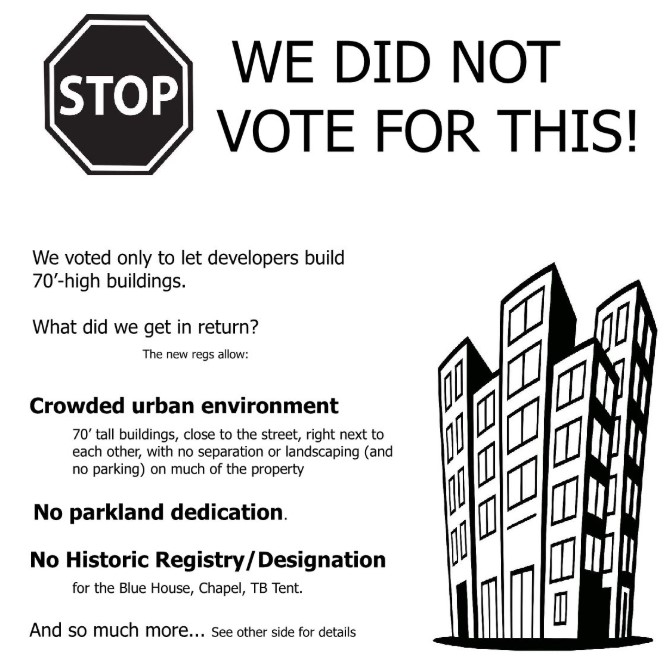
Wheat Ridge is facing the same pressures as Lakewood. Both cities want to turn established neighborhoods and properties into something completely different with little public input. Does any of this sound like the Belmar Park problem to you? High-density, no setback, no parking… a big change that the city has to make big changes for while not listening to big public pushback. Update: A quick count of the days shows that Wheat Ridge is giving residents 9 days to petition instead of 10 because July 4 is a holiday. There’s always another challenge. Let your Wheat Ridge friends know to get over to sign soon! From Stop Zoning of High Density Housing in old Lutheran Hospital Save the land at the Old Lutheran Hospital from becoming a high-density housing project! 1,200 Signatures needed. Wheat Ridge residents: Meet at The Historic Blue House @ Old Lutheran Hospital to sign June 24-July 3 , 7am-7pm What’s up with the new zoning of the old Lutheran campus?Here’s what people are saying: A change of this magnitude should be voted on by all citizens of Wheat Ridge. Allows the creation of a crowded urban environment on much of the property: More than 2,000 housing units can be built, according to the developer. [Sec. 26-1404]Maximal building coverage. [Sec. 26-211, 26-1405] No setbacks. [Sec 26-1405] Minimal landscaping and open space [Sec. 26-1405; 26-1409, 26-502]. No parkland dedication to the City is required. [Sec. 26-414] Minimal parking [Sec. 26-1407, wheatridgespeaks.org/items/1522] Variances from even these minimal standards are allowed, including variances of morethan 50%. [Sec 26-1416] No Historic Designation or Registry of the Blue House, Chapel or Tuberculosis Tent. Nothing about affordable homeownership. [It’s not found anywhere in MU-LLC regs.] No limit on the number of units that can be rentals. [It’s not in the MU-LLC regulations.] NO traffic studies have been done. Read more about this issue on their facebook page And find time to sign their petition at one of the meeting times: at The Historic Blue House @ Old Lutheran Hospital to sign June 24-july 3 , 7am-7pm

The community potluck was a fantastic success!

I am overwhelmed by the many people who came because they are concerned about Lakewood’s direction. We had loads of great food – I will never worry about participation again. You are all wonderful! The majority of people who came were very concerned about the new zoning changes. Many of them had not heard anything about them until Karen Gordey posted a summary about how Lakewood is Selling Out Its Neighborhoods. There are a lot more explanations to give about that and we didn’t dive into many of the other shenanigans going on due to lack of time. Please take a look at the Lakewood Informer and if you don’t find the information you are looking for, please contact me. I will schedule a phone call or get an article out so that everyone can find the answers to these questions. Summaries and answers to questions: Next Steps: July 28 – First Reading on Zoning Karen Gordey is leading the charge against the undesired zoning changes. Please come to silently protest. Wear a white shirt and bring a sign. Please be respectful, take a seat if there is one and do not block the exits. This is how Littleton SUCCESSFULLY fought against the exact same zoning changes there. Thank you once more to everyone who participated, to our fabulous group leaders and to everyone who helped make this a success.

Jedi Mind Tricks – The New Zoning Code WILL BE Good

The widespread zoning changes Lakewood made in 2013 resulted in a resident-initiated movement known as “strategic growth.” Residents were unhappy with the increased, high-density residential units being built that unbalanced the economic growth of the city. Ten years later, city leaders are still not listening to residents. On December 9, 2024, Lakewood City Council passed a resolution stating the city will have a “zoning rewrite that is bold, imaginative, embraces innovation, and the diversity of needs for the full City of Lakewood.“ This resolution is not normal procedure. Normally, there is a proposal presented to the public that will show specific plans on promoting homes for the unhoused, increased density, and decreased greenhouse gas emissions. This is not that. Rather, it is a declaration that the city already has its mind made up to implement these changes. And because they seek to be “bold”, the Council will approve whatever the contractor recommends, whether or not the public likes it. It’s like Lakewood is playing a Jedi mind trick. Lakewood leaders want a zoning code to accomplish a bold new agenda and they are saying: you can’t see the code but it will be good for you. You will like it. Residents are waking up to the fact that the “anti-growth” narrative was just a way to belittle those who disagreed with the establishment. Look at how residents react to the proposed developments at Whippoorwill and Belmar for proof that no one is asking to stop all development. They just want it done reasonably and in line with existing neighborhoods. Residents are also waking up to the fact that the “affordable housing” narrative is false because Lakewood doesn’t have a housing shortage. These two narratives are how Lakewood justifies the need for this zoning code change. Lakewood needs to pass this resolution and zoning code before more residents wake up. Going through proper public discussion took years for a short-term rental policy and the zoning code is much more significant. Being “bold” seems to be a new political buzzword meaning leaders are crossing a line. Bold is fast-moving, which could be dangerous in government designed to work slowly through public discussion. In this case, as you can see below, the new zoning code will potentially destabilize neighborhoods by extensively changing the rules to densify development in every code. The zoning code was established to keep neighborhoods stable, so residents know the type of neighborhood they are moving into. With these proposed changes, the zoning code can even be used to expedite spending for the homeless, which is a budgetary process normally outside the scope of zoning. The resolution cites the new comprehensive plan as proof that residents approve of this zoning code change. This is disingenuous at best because: Read the resolution below and see how wonderful it sounds. For each bulleted objective from the resolution, there is an example (in white italics) that shows how it could be twisted into something that residents would not like, most of which have been mentioned by city and state leadership. The revised Zoning Code will: The Lakewood resolution was written at the direction of the City Manager, thus by-passing public input. This allowed City Council to “signal” residents that this bold change was coming. That way there is nothing for residents to oppose until it’s too late to make changes. The reality is Lakewood does not have a shortage of housing. Changing the zoning code in the name of affordable housing is misleading. Read “The Totally 100% Fake Housing Shortage”.

Limiting New Gas Stations

Lakewood passed a new ordinance to reduce new gas stations in order to increase public health, January 13, 2025. Not only will this decrease the number of future gas stations, the ordinance demands the new gas stations provide electric charging stations, one of which must be the latest, fastest technology. This is will substantially increase the cost to construct a new gas station while benefitting a diminishing number of customers who are purchasing electric vehicles. Lakewood also eliminated two zoning codes from permitting gas stations. If Lakewood’s plans to bring in thousands more residents through affordable housing efforts pay off, everyone in Lakewood can anticipate waiting longer in lines. Gas stations are one of the few businesses that are still thriving in Lakewood. Rather than re-inventing the wheel, please read the article below for more of the adverse effects of similar legislation in Denver. In another parallel move, Denver passed the same legislation as Lakewood, a week before Lakewood voted (correction 1/15/25 – Denver’s ordinance only passed to committee) Lakewood’s ordinance is more extreme than Denver’s because of Lakewood’s market manipulation in demanding charging stations, even dictating the type of stations, but otherwise the legislation is similar. The adverse effects were not discussed by Council. Sharf: Denver gas station ban a swipe at car mobility January 13, 2025 By Joshua Sharf, Complete Colorado Denver city councilors last summer proposed to limit the construction of gasoline stations in in the city, ostensibly in response to a citizen outcry a deluge of new gas stations being built on land that could instead be used for housing. Actual legislation has now been okayed by the city planning board, and is worse than imagined. A sweeping ban The ordinance would enjoin new gas stations from the overwhelming majority of Denver, including near areas where new, higher-density housing is being built.  It is hard to escape the conclusion that the proposed legislation is part of the city council’s campaign to make driving in Denver as miserable as possible. Sponsored by council members Paul Kashmann and Amanda Sawyer, the bill would ban new gas stations within ¼ mile of any existing gas station, within ¼ mile of a light rail station, and within 300 feet of any protected districts, zoned for low-density housing. A staff study from last May discussed exempting gas stations catty-corner to existing stations, but now there will be no such exemption.  There will, however, be an exemption for gas stations that are part of new large-sized grocery stores with over 20,000 square feet of space. Read more…

Scroll to top