Lakewood Informer

Resident generated news about Lakewood, Colorado

Lakewood Informer

Resident generated news about Lakewood, Colorado

Development

“Rooted In Littleton” Provides Blue Ribbon Example

Littleton residents claim to be amateurs in the political sphere but you won’t believe it when you see how they have successfully organized against density-driven zoning changes. Rooted in Littleton got density changes postponed in January and kept fighting to recently gather enough signatures for a petition. Their website reads: “We are passionate about preserving the small-town charm and beauty of Littleton. Our deep roots inform the perspective that good things grow slowly and knee-jerk responses to large social issues don’t produce lasting results. Let’s not let increased density usher in a new era of increased traffic, crime and big city-problems in our little town.” Does that sound familiar? They have many of the same objections to densification as Lakewood residents, such as the attempt to “to erode our home-rule rights with a top-down, one-size-fits-all approach that could strip our community of its uniqueness.” Check out their website for excellent material that could be used as a blueprint for others fighting this issue: Survey Have you ever felt that Lakewood presents data on “housing density and housing shortages in 2024 [that] was insufficient and skewed toward City Council insiders”? That’s what Rooted in Littleton wrote but Lakewood residents have also been making that point for months. The argument really gained traction after the Belmar Park fiasco. (See these articles from savebelmarpark.com: Lakewood’s Housing Affordable Surplus, Lakewood’s 10-year Housing Surplus, Denver Has Enough Housing.) Instead of just complaining about it, Rooted in Littleton organized a survey of their own and provided it for the public. Unsurprisingly, they found that 45% of Littleton residents felt that densification is NOT the best solution The survey they conducted showed that “76% of the survey participants said they want a voice in all major housing legislation, especially as it relates to adding duplexes, triplexes and multiplexes in currently zoned single family residential neighborhoods.” They also found that a majority of people DO NOT believe in the “benefits” of the proposed densification, as shown below: This group is truly inspiring. I can’t tell you how many times I have heard Lakewood residents share the same sentiments that Rooted in Littleton share: Lakewood residents love Lakewood for the existing characteristics. Just like Rooted in Littleton likes their city. Check out their website and spread the word if you know people in Littleton.

The Psychology of Living In Decay

From Ramey Johnson’s Newletter The decay and decline in our community are visible, real, growing, and palpable. Driving along 6th Avenue (though managed by CDOT) feels like a scavenger hunt through cans, rags, tires, car parts, cardboard, overgrown weeds, buckets of dirt, broken glass, and filth. On West 14th Avenue and nearby side streets, the scene is equally disheartening: homeless encampments, tents, graffiti, fenced-off vacant lots, trash, needles, and even human feces have become the norm. Colfax has all but collapsed. Every block from Sheridan to beyond Simms is littered with For Sale and For Lease signs, boarded-up buildings, graffiti, shattered storefronts, shuttered businesses, and abandoned shopping carts – sometimes overflowing with belongings. Businesses are fleeing this once-thriving street. But what does it do to the psyche of those of us who call Lakewood home—and pay property taxes – to live amid decay, squalor, and a declining local economy? Having grown up here, I decided to find out. As it turns out, researchers have studied this very thing. The most familiar is the “Broken Windows Theory.” This criminological concept uses broken windows as a metaphor for anti-social behavior and civil disorder. It draws a stark contrast between caring and apathy toward the physical appearance of a neighborhood. Visible signs of crime and neglect, like broken windows, create an environment that encourages further crime and disorder. The theory suggests that addressing small offenses and maintaining physical order can help prevent more serious crimes. Rooted in the idea of social disorder, Wilson and Kelling argue that such disorder erodes community cohesion and the sense of safety among residents, making neighborhoods an easy target for criminals. Whoa. I needed to know more. As I dug deeper, I discovered that the psychology of living in a decayed environment has been studied extensively, and it offers sobering insights into the psyche of those who call such areas home. Here’s what I found: A 2010 study even found that wives who perceived their homes as cluttered had higher cortisol levels. That one struck a chord with me. CORTISOL – the so-called “stress hormone” produced by the adrenal glands – plays a key role in regulating metabolism, immune response, and blood pressure. But when cortisol levels remain high over time, the health consequences can be serious. After reading these findings, I realized: this isn’t just about potholes, weeds, or trash. The residents of Lakewood may be experiencing a profound shift in our communal psyche, and it’s not in our best interest. As for me, I feel embarrassed and even ashamed to show out-of-town guests my city. Every time I drive down 6th Avenue, I’m hit with irritation and anger. I see people stop caring for their own properties, and I understand why. Why should anyone care when they live next to a “city right of way” where weeds grow five feet tall and filth piles up along the roadside? When we live amid decay and squalor, it becomes easier to toss trash out the car window. If our city is crumbling and its leaders aren’t addressing the degradation, what difference does it make? For some, instead of continuing to fight for our city by writing letters, showing up at meetings, and pleading with city council, they choose flight. Longtime residents are leaving if they have the means. For those who don’t, the symptoms I outlined earlier only deepen and spread. Many questions, but no answers: At the end of the 2024 legislative session, Governor Polis introduced HB24-1313, which designates a half-mile on either side of light rail lines as “Transit-Oriented High Density” zones. It passed. Applied to Lakewood, that half-mile swath encompasses Colfax and 14th Avenue. Meanwhile, six Colorado cities, Arvada, Aurora, Glendale, Greenwood Village, Lafayette, and Westminster, are suing Governor Polis and the state over recent housing legislation (HB24-1313), claiming it violates their home-rule authority. They argue the new laws infringe on their ability to govern local land use. One bill focuses on dramatically increasing density near transit. WHY hasn’t Lakewood joined this lawsuit? We are a home-rule city too. Zoning is a local issue. This bill never should have been introduced by the governor – or passed. No two cities are alike. And yet, both of our state representatives, Monica Duran and Rebekah Stewart, voted YES. Does supporting a lame-duck governor hold more value for them than representing the best interests of the people who elected them? WHY? In the end, we must all ask ourselves: Has the decay and deterioration surrounding us in Lakewood become our personal norm? The majority of this neglect falls squarely at the feet of our city government. The question is: Are we willing to keep fighting—or will we flee? If you’re as concerned as I am, let’s not stay silent. Contact our city council, demand answers, and refuse to let Lakewood’s decline continue unchecked. Together, we can hold our leaders accountable and fight for the city we deserve. Thank you for taking the time to read this newsletter. I welcome and appreciate your comments. With warm regards,Ramey Johnson

How the West Is Being Lost

From Alex at Somebody Should Do Something A note: Originally, the article was published on YourHub at https://yourhub.denverpost.com/blog/2022/09/politics-and-development-in-colorado/296507/ We had hand delivered a copy of of it to Jared Polis, Brittany Pettersen, and Ed Perlmutter at some get-together the progressive thought leaders were having in Lakewood: The “representatives” immediately studied the input from the citizens, and drew up a comprehensive set of policies addressing the input. Just kidding. Polis has doubled down on squashing the local governments’ right to govern (as long as corporate-owned rentals continue to be built), in addition to driving the state to a billion-ish dollar budget shortfall this year, while trying to dog-whistle the public with a bridge to nowhere and that nobody had asked for. Pettersen has been shilling for the real estate industry and Mr. Perlmutter is off to… Not sure what – may or may not have something to do with lobbying. The irony of the latest spat of policies trying to squash the home rule rights of cities and towns around Colorado is that when we had reached out to the governors office in 2018 about the actions of the local governments that were destroying the economic potential of the Rooney Valley, we were told that the governor’s office “does not get involved in local land use decisions.’’ I guess, the times are a changing. On to the origional post. “Mortgage lenders are starting to look at the risks of lending for somewhere that doesn’t have a water supply, as that’s not a good investment. Capital markets are getting wise to this stuff. We are seeing the limits to growth and housing affordability and the impacts of poor-quality decision making of where and how to build. We are paying the price for all that now.” Read https://www.theguardian.com/us-news/2022/jul/20/us-fastest-growing-cities-risk-becoming-unlivable-climate-crisis Despite the “growth is good” mantra, we are faced with closing schools, massive fires within the city limits, rising crime, polluted air, lackluster public transit system, and a slew of other problems, such as the dying Colorado River. To see where we could be heading next, look at the work by a group of MIT scientists called “Limits to Growth.” Numerous city council members and other representatives in Colorado have continuously ignored the citizens’ pleas and suggestions when it comes to development. Instead they cater to the providers of the largest campaign donations, constantly using diversion tactics such as “affordable housing”. Yet, nobody has provided an explanation as to how the high-priced rentals, rising crime, more traffic, lack of true city planning and economic development, along with thousands of dollars (per unit, per year) in metro district fees, are affordable. Affordable housing and other political dog whistles have become doublespeak for privatizing the profits for those who donate the most to the “representatives”, while socializing the costs the citizens have to pay in the form of taxes, fees and their time to: Additionally, millions are spent on city and county unelected bureaucrats (think planning, zoning, legal, “economic development”, and the managers’ offices) who, instead of working for the citizens, spend their time pushing through projects which further contribute to the stress on the already-crumbling infrastructure, limited water resources and do not create localized, well-paying jobs. Perhaps, if the money was not wasted on those proactively working against the public, the public would be more open to lifting some of the TABOR limits to pay for things the public actually needs. In Lakewood and Jefferson County, such failures are unfolding in real time. The majority on the city council and others have ensured that Lakewood has made next to no progress in the areas of: They have corrupted the democratic process, pandering to the one-sided narrative, which is already resulting in financial and ecological impacts on the city and the county. A sea of houses with exorbitant metro district fees and high-density rentals is being built to bolster big money profits, instead of doing actual business development and city planning. Thousands have to drive across the Metro for better paying jobs, while the city has been proactively destroying a local business corridor and making excuses as to why barely any local high-tech/software jobs have been brought to the city in the last decade, especially when compared to other cities in Colorado. The dog whistle of “public transit” has not helped as RTD and Colorado are decades behind Boston and New York in public transit and additional decades behind most cities in Europe and other parts of the world. A trip on a well-planned and well-built-out public transit system should be financially and temporally better than using a car, which is not the case with RTD. We are also constantly reminded how growth is good for us and how we need to conserve water. What good is conservation if, instead of retaining the conserved amounts for real economic development and the day when there is a severe drought or to ensure healthy waterways, that water is, instead, used for more unbridled growth? https://www.nbcnews.com/politics/politics-news/feds-declare-first-colorado-river-shortage-order-water-cuts-2022-n1276934 https://phys.org/news/2022-06-colorado-river-reservoirs-western-states.html You may think that “your” candidate will fix it. There is no “your” candidate. There are those who take large campaign contributions, and a few people who will be pushed out in the next election if they dare to truly stand up for people’s interests. Have a look at who donates to whom; do not presume that those who talk about affordability, fiscal responsibility or climate change intend to address them. The public has already lost in a lot of areas, and what’s left is slipping away rapidly. The degrading quality of life in Colorado along with the ongoing collapse of the Colorado River Basin and Colorado forests is only the beginning. One can only hope that very soon the younger generations will realize what the politicians (and bureaucrats) of all stripes have done to them and will start holding them responsible. Perhaps, that’s what you can do – start campaigns to enact reforms to hold mayors, council people, city staff, and state legislators liable for blatant pandering to those who donate the most to their

Zoning Fact Sheet Summary

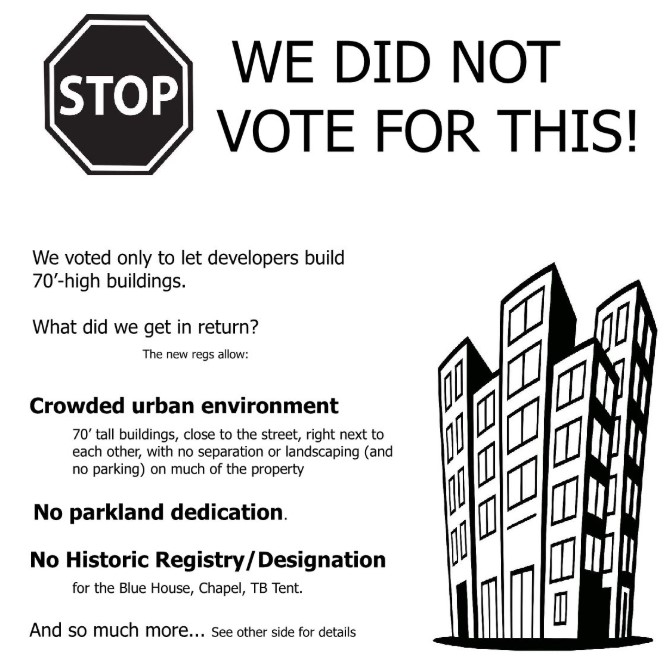
Below is a one-page summary of zoning code changes and concerns from Lakewood residents. Lakewood Informer authors have posted multiple pages of content and more will be coming but this is a starting point to communicate with neighbors. Feel free to share and help people understand the issues. The fact that there is more to say than can fit on one page is a great indication that the changes are overly complex for a single vote by City Council. It’s very hard for residents to understand all the ways this will affect our neighborhoods, especially with no trials and everything changing at once. Much like the last zoning change which the city promised would solve problems and make things wonderful. In real life, the changes sparked backlash that last to this day. To this day, the city is not correcting those problems, just moving forward with bigger, denser growth. Other articles for more information: For a quick handout, the page below is available:

1031 S. Union Blvd. Subdivision

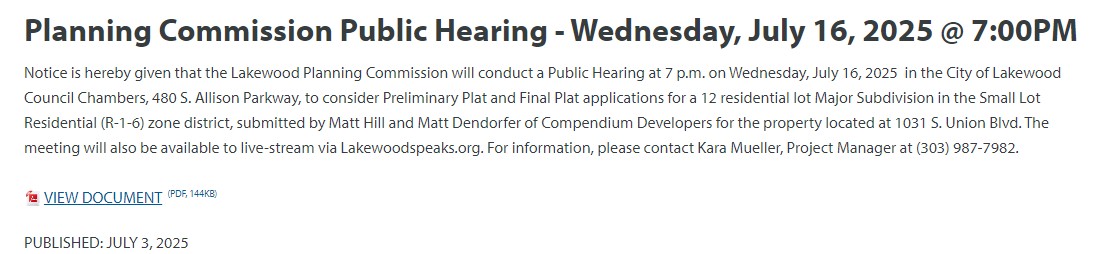
For those interested, the property at 1031 S. Union Blvd., next to the Green Mountain Swim Club, will have a public hearing for subdivision on Wednesday, July 16, 2025 @ 7:00PM. “Notice is hereby given that the Lakewood Planning Commission will conduct a Public Hearing at 7 p.m. on Wednesday, July 16, 2025  in the City of Lakewood Council Chambers, 480 S. Allison Parkway, to consider Preliminary Plat and Final Plat applications for a 12 residential lot Major Subdivision in the Small Lot Residential (R-1-6) zone district, submitted by Matt Hill and Matt Dendorfer of Compendium Developers for the property located at 1031 S. Union Blvd. The meeting will also be available to live-stream via Lakewoodspeaks.org. For information, please contact Kara Mueller, Project Manager at (303) 987-7982.” This lot is next to Green Mountain Elementary but does not involve the closed school. The single-family housing has been planned for about three years.

The Comprehensive Plan Bait and Switch

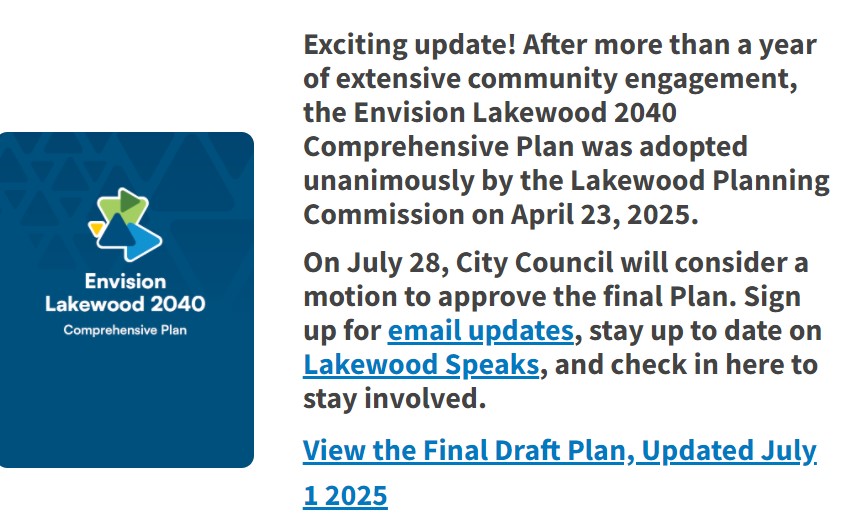
Comprehensive plans are easily readable documents that explain a vision for the future of the city in a moment of time. It speaks in plain English to what the zoning code describes in technical detail. The problem is that the zoning code details are what carry the force of law and because technical details are harder to read, it is easy for residents to overlook inconsistencies in proposed zoning compared to plans. This is otherwise known as a bait and switch. For instance, in the comprehensive plan, Lakewood promises to maintain neighborhood character; while in the zoning code, Lakewood implements high-density urbanization which resulted in the destruction of Belmar Park-adjacent property. Pieces of Lakewood’s Comprehensive Plan were used as evidence to fight against the Belmar Park development. Lakewood officials discounted all such arguments. Now that residents have caught on to the inconsistencies, Lakewood staff argues against using the Comprehensive Plan to guide zoning. Instead, Lakewood proposes changing the ordinance so that the zoning code is no longer tied to the comprehensive plan. With this change, residents could not form legal challenges based on compliance with the comprehensive plan and there is less room to fight against maximum buildout in adjacent properties. Do Residents Need a “Vision” Document Why have a comprehensive plan at all? This is a long-term plan that locks in the vision for this moment in time. It includes aspirational goals with no implementation details. Therefore, the details are filled in by staff using their discretion to interpret the zoning code. Technically, one government cannot bind future governments to its decisions. If tomorrow’s City Council wanted to change the vision of Lakewood, it could choose to do so. However, having a long-range plan laid down by yesterday’s Council is a roadblock that is not easily overcome. Residents would better understand the zoning code if each change had to be justified with open debate. Instead, as is currently occurring, the entire zoning code can be changed by saying the code matches the ambiguous goals of the comprehensive plan. For example, the as-yet unapproved Comprehensive Plan seeks affordable housing. Therefore, City Council reasons that ANY CHANGE to the zoning code will be acceptable as long as affordable housing is the intent, not necessarily the outcome. There is no need for an updated 100-page vision plan document to update 300 pages of zoning code. Why not just introduce one little change at a time that is easily understood by the residents, and easily tested for effectiveness? The proposed zoning changes are still being discussed and changed. City Council have taken months to understand these detailed changes. Residents will have a couple weeks. However, residents did spend months providing input into the comprehensive plan, that will no longer have much meaning. The Proposed Change Lakewood intends to remove the binding zoning code connection to the Comprehensive Plan. As first noted by savebelmarpark.com: Lakewood zoning code currently states that the Comprehensive Plan is the foundation for the Zoning Ordinance. However, the proposed redline removes the “consistency with the goals and policies of the Comprehensive Plan”. When the new zoning passes, all the aspirational goals laid out in the plan can be disregarded at will. Which really is no different than today, as shown by the Belmar Park debate except that today such a decision could be legally challenged and tomorrow it can’t. This specific change to the zoning code was not discussed at any public meeting. Comprehensive Plan Goals Not Followed The Comprehensive Plan states (pg 4-10): “Through the site plan review process and design guidelines, ensure that new multifamily, mixed use, and commercial developments adjacent to single-family neighborhoods are compatible by incorporating appropriate design, scale, height transition, and connectivity to seamlessly integrate with the neighborhood.” Residents compiled argument after argument to show that 777 S Yarrow St does not integrate with the neighborhood and does not meet environmental goals from the plan. Residents can clearly see that the Comprehensive Plan promises integration with the neighborhood. Residents can also clearly see that is not what staff implemented be allowing trees cut down to develop to the lot line near Belmar Park and new high-density apartments that don’t match the nearby buildings. . 15-minute Cities In other communities, residents are also waking up to this bait and switch. An opinion piece in the Boulder Daily Camera highlights this problem by examining Boulder’s 15-minute cities. This is particularly relevant since Lakewood leadership constantly mentions their desire for 15-minute city amenities. The proposed zoning code allows retail in residential zones for 15-minute planning.   Steve Pomerance, in the Boulder Daily Camera, addresses this issue: “The underlying problem with this whole conceptual framework is the self-contradictory assumption that we can have commercial centers in neighborhoods that provide an adequate variety of goods, services and transit, all within 15 minutes of where people live, but still keep our relatively low-density neighborhoods intact. This is simply not supported by the economics or the geography.” – Steve Pomerance Read the rest of that article to understand the same sense of contrasting values Lakewood is “selling” to residents. The new development at The Bend is promising 15-minute city amenities. “Selling” is the appropriate term used here because the zoning was contracted before the comprehensive plan was finalized. In another eerie coincidence with Boulder, Pomerance wrote, “It’s as if those who wrote these objectives had already decided that the results of the cost/benefit study would support implementing this concept, and thus support the massive densification required to create such neighborhoods. Community Input Into Zoning Up to this point, residents have had no input. It was not a resident-driven development.   Lakewood’s Chief of Sustainability and Community Development, Travis Parker, has been attending ward meetings to educate and also to promote the good points of the new zoning code — as if there are no other options. No one has addressed the dissatisfaction with the current densification in Lakewood. Does a desire for affordable housing mean automatic agreement to sacrifice current neighborhoods? More

Save the Land at the Old Lutheran Hospital

Wheat Ridge is facing the same pressures as Lakewood. Both cities want to turn established neighborhoods and properties into something completely different with little public input. Does any of this sound like the Belmar Park problem to you? High-density, no setback, no parking… a big change that the city has to make big changes for while not listening to big public pushback. Update: A quick count of the days shows that Wheat Ridge is giving residents 9 days to petition instead of 10 because July 4 is a holiday. There’s always another challenge. Let your Wheat Ridge friends know to get over to sign soon! From Stop Zoning of High Density Housing in old Lutheran Hospital Save the land at the Old Lutheran Hospital from becoming a high-density housing project! 1,200 Signatures needed. Wheat Ridge residents: Meet at The Historic Blue House @ Old Lutheran Hospital to sign June 24-July 3 , 7am-7pm What’s up with the new zoning of the old Lutheran campus?Here’s what people are saying: A change of this magnitude should be voted on by all citizens of Wheat Ridge. Allows the creation of a crowded urban environment on much of the property: More than 2,000 housing units can be built, according to the developer. [Sec. 26-1404]Maximal building coverage. [Sec. 26-211, 26-1405] No setbacks. [Sec 26-1405] Minimal landscaping and open space [Sec. 26-1405; 26-1409, 26-502]. No parkland dedication to the City is required. [Sec. 26-414] Minimal parking [Sec. 26-1407, wheatridgespeaks.org/items/1522] Variances from even these minimal standards are allowed, including variances of morethan 50%. [Sec 26-1416] No Historic Designation or Registry of the Blue House, Chapel or Tuberculosis Tent. Nothing about affordable homeownership. [It’s not found anywhere in MU-LLC regs.] No limit on the number of units that can be rentals. [It’s not in the MU-LLC regulations.] NO traffic studies have been done. Read more about this issue on their facebook page And find time to sign their petition at one of the meeting times: at The Historic Blue House @ Old Lutheran Hospital to sign June 24-july 3 , 7am-7pm

Why should habitats including Belmar Park be protected?

From SaveBelmarPark.com Because “biological annihilation” is happening NOW according to Stanford biologists Paul Ehrlich, Rodolfo Dirzo and colleague Gerardo Ceballos.  Key quotes from the paper: “Earth’s sixth mass extinction episode has proceeded further than most assume.” What is Lakewood City Council doing locally to help the planet deal with this crisis? Lakewood’s answer is to ignore science and promote luxury housing that will harm a riparian habitat while citing the fake ‘housing shortage’. Yet the city council wants everyone to think there is not enough housing for a ‘growing’ population.  City council, when does your denial of reality cross the line from being misinformed to being blatantly dishonest? The county has lost 4% of population in 4 years.  The local school district has closed 21 schools since 2021.  School buildings are actually up for sale in Lakewood.   Lakewood’s housing pipeline already has a 10-15 year supply based on the city’s own study!  Zillow shows over 1,500 rentals advertised in Lakewood today including hundreds of units within walking distance of Belmar Park. Council members, if this summation is not correct, then please explain why you refuse to protect habitats including Belmar Park.  Eminent domain is at your service if needed. Yes, the Kairoi Belmar housing project, as planned without a science-based raptor buffer zone, will harm the rare riparian wildlife habitat at Belmar Park. Lakewood City Council cannot fix a global problem.  But they can show leadership and be a model for how cities can play an important role. City Council, please do not take comfort just because you are not alone in participating in the sixth mass extinction event and stealing from the future of our children. Lakewood, this is exactly how to give the children a planet struggling to support human life.  Or worse. Colorado Parks and Wildlife recommends a raptor buffer zone at Belmar park based on ‘best available science’!   Is that too much to ask? Some might say why worry?  There is plenty of wildlife in Africa, so let’s eat, drink and be merry and forget about protecting habitats here.  The planet is too big for humans to ever ruin it. Unfortunately, Dr. Lawrence Frank is quoted above regarding the ‘horrific’ loss of wildlife in Africa over the last 200 years. He spent decades tracking and studying lions in Africa.  He started back before GPS tracking collars for lions were even available.   Back then, once you had a collar on a lion, you had to drive around off road in Kenya to try and get in radio range of the collars using a YAG antenna to track and count the animals.  He told me bouncing around on that terrain was very hard on his back.   He explains during the Q&A at the end of the video that as humans continue to encroach on habitats in Africa, what wildlife still remains has a very uncertain future. Dr. Ehrlich’s paper points out that species extinctions over the last 200 years should have taken 10,000 years! What is happening is a global crisis.  Protecting habitats will be the best and probably the only way out of it. Some might cite the recent example of the dire wolf that was supposedly extinct but brought back to life via genetic engineering by a company called Colossal Biosciences.  The hope the company was claiming is that other species could be resurrected from extinction using the same technology.   But the company’s chief scientist has now admitted just a few weeks ago the animal was not a true dire wolf but simply a grey wolf with a few modified traits to make it resemble the appearance of a dire wolf. Humans make up less than 0.5% of the total biomass of the planet, yet we are responsible for the ongoing 6th extinction event.   Wild mammals make up even less of the total biomass than we do! It is up to us stop it.   The Ehrlich paper explains that ecosystem services essential to civilization are already being eroded and damaged. There are 20 to 30 years at most to stop the mass extinction event. It is time to wake up.  That includes you, City Council.  Wake up.   You are responsible for protecting habitats in Lakewood.  Please do your job for the sake of your own children. Thanks for listening, Steve

Zoned Out: How Lakewood is Selling Out its Neighborhoods

By Karen Gordey You’d be forgiven if you missed it — after all, the City didn’t exactly roll out the red carpet for public input — but Lakewood is in the middle of completely rewriting its zoning code. And on May 21st, the Planning Commission passed 16 amendments in one night. Sixteen. Because who doesn’t want to restructure the entire city with the speed and clarity of a late-night city hall cram session? Here’s the kicker: Lakewood is a home rule city, meaning we have the power to make our own land use decisions. But instead of using that power to protect neighborhoods or push back on one-size-fits-all state mandates, the City Council passed a resolution last year (Resolution 2024-62) that basically says, “Tell us what you want, Colorado — we’ll make it happen.” Meanwhile, six other cities are suing the state to protect their local control. Lakewood? We’re sending engraved invitations to the bulldozers. If you’re not paying attention yet, you should be. Because staff expects these changes to take effect in September and if residents don’t start showing up and speaking up, we’ll be stuck with zoning we didn’t ask for, can’t undo, and won’t recognize. “Home Rule vs Statutory Rule” Before we go any further, it is important to understand the difference between statutory rule and home rule.  So that there is no confusion, I went to the Colorado Municipal League’s website (www.cml.org).  The following is their explanation of the two:  “Colorado cities and towns operate under provisions of Colorado state statutes (and are referred to as “statutory” cities and towns) unless voters adopt a municipal charter to become a “home rule” city or town. Home rule is based on the theory that the citizens of a municipality should have the right to decide how their local government is to be organized and how their local problems should be solved. Municipal home rule derives its authority directly from the Colorado Constitution. It affords residents of cities and towns that adopt a local charter freedom from the need for state-enabling legislation and protection from state interference in “both local and municipal matters.”  The Lakewood City Charter was established on November 1, 1983.  While it has been modified by the voters 5 times (the latest on November 2, 2004, we are still a home rule city.  Lakewood City Charter and Lakewood Together Page 27 of the City Charter talks about planning and zoning.  According to the charter, the city council could have established Ward Advisory Committees to try to corral all these changes but instead are using Lakewood Together for community input.  In fact, I attended the Ward 5 meeting on June 14th and Councilman LaBure said that he tried to create committees last year and did not have support for this.  Let’s take a look at the Lakewood Together site.  On the front page of the zoning updates section (Lakewood Together Zoning Updates), it clearly references the state law requirements and again we are a home rule city so we are allowed to do what is best for our community. This will be important to remember when I talk about the 16 amendments. The 2024 City Council Resolution: Pre-Commitment to State Zoning Goals The City Council passed a resolution Resolution 2024-62 that sounds harmless — values like affordability, walkability, and sustainability — but when you read the details, it’s a blueprint for surrendering home rule. The resolution adopts state-level zoning goals before zoning code revisions or public feedback were complete. That includes: Bottom line: Lakewood didn’t just “revise” its zoning goals; it absorbed the state’s playbook wholesale.  This was covered briefly by the Lakewood Informer: Jedi Mind Tricks – The New Zoning Code WILL BE Good Why Didn’t Lakewood Join the Lawsuit with Other Home Rule Cities?  Good question! Recently, six Colorado cities banded together to sue the state over its new zoning mandates — arguing that the laws violate their constitutional rights as home rule municipalities. (6 Front Range cities sue over housing laws, governor’s threat to withhold state funds) Lakewood? We sat that one out. At the Ward 5 meeting on Saturday, June 14th, I asked our Councilors a simple question: Was our absence because of Resolution 2024-62, which essentially pre-commits Lakewood to implementing state zoning goals? And if the lawsuit is successful, meaning those cities win back their rights to local control, won’t we be stuck with sweeping zoning changes we didn’t have to make? Councilman LaBure responded: “We are a home ruled city but we are also a state entity. The state passes things all the time that encroach on local control. The argument has been historically well zoning and parking issues and all those things are matters of local concern and not the state concern. And Judiciary had tended to draw a line there. However, the state has increasingly been making the argument that there is a housing crisis statewide so we need more and more control over local zoning issues because it is actually a matter of state concern. I would have been happy to have jumped on that lawsuit however, other cities already did it and we are part of the Colorado Municipal League (CML). And CML has supported that lawsuit and in that sense we are member and if not the largest so in some sense we are part of that because of our CML affiliation. And it is a fair question to ask about if the lawsuit is successful, then we would be stuck with zoning changes that were not needed.” Translation: we could have stood up for home rule; but we’ll just let other cities take the heat and hope our dues to the Colorado Municipal League somehow cover us by association. Councilor Nystrom added that she did ask the City Attorney the same question but didn’t get a clear answer. She also pointed out that HOAs aren’t safe from this zoning overhaul either. While HOA covenants are seen as contracts between homeowners and their associations, local

Disproportionate Development of MultiFamily

A new analysis shows an overwhelmingly disproportionate amount of new apartment buildings. A Lakewood resident developed the pie chart above by researching Lakewood’s current project list. This is something that has been obvious to resident for awhile but it helps to see the graphic and we at Lakewood Informer appreciate the insight. Thank you. Statistically, 95% of current projects are for high-density, multi-family units. 88% are for apartments and 7% are for condos. Low-density, multi-family townhomes account for 5%. Continuing this projection, this many new multi-family units will quickly change the voting patterns and priorities of Lakewood residents. Lakewood management hopes to accelerate this trend of thousands of new units through the new zoning code that will substantially change neighborhoods. The narrative of “affordable housing” is clashing with the desire to maintain Lakewood’s natural character. This has caused some residents to question the need for government interference in the housing market. This also shows the lack of balance in bringing new jobs to the area with no commercial economic development.

Scroll to top